Role Specialization — Planner, Critic, Executor, Verifier
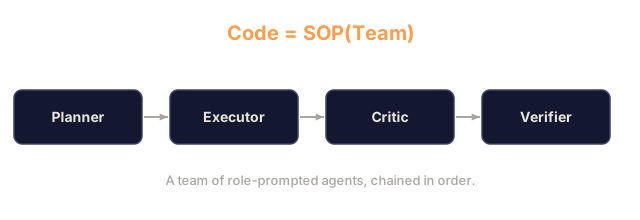
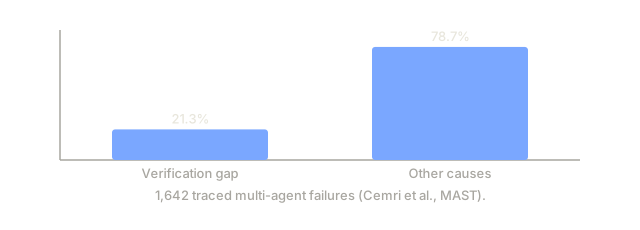
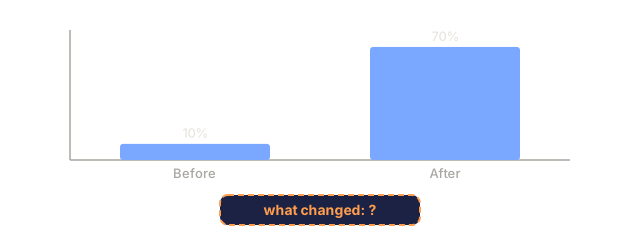
The most common multi-agent decomposition in 2026: one agent plans, one executes, one critiques or verifies. MetaGPT (arXiv:2308.00352) formalizes this as SOPs encoded into role prompts (Product Manager, Architect, Project Manager, Engineer, QA Engineer), following `Code = SOP(Team)`. ChatDev (arXiv:2307.07924) chains designer, programmer, reviewer, tester through a "chat chain" with "communicative dehallucination" (agents explicitly request missing details). The verifier is load-bearing: Cemri et al. (MAST, arXiv:2503.13657) found verification gaps behind 21.3% of traced failures, and many of the rest trace back to a check that failed silently or never ran. PwC reported a 7× accuracy gain (10% → 70%) from structured validation loops in CrewAI.
Learning Objectives
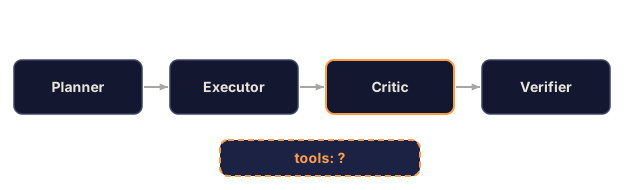
- Name the four canonical roles (planner, executor, critic, verifier) and the tools and output each one gets.
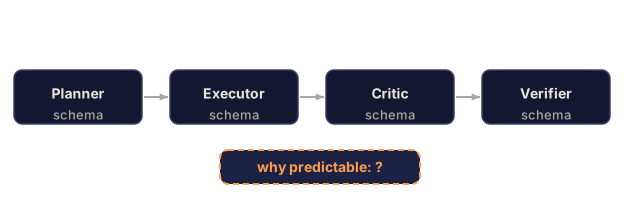
- Explain how MetaGPT's SOP pattern and ChatDev's communicative dehallucination make role prompts predictable.
- Distinguish a subjective critic from a deterministic verifier, and say why a pipeline needs at least one verifier decided by code.
- Run the four-role toy pipeline and read why the critic approves buggy code while the verifier rejects it.
- Apply the Ship It checklist (critic before verifier, a 2-round revision budget) to a role roster for a new task.
Problem
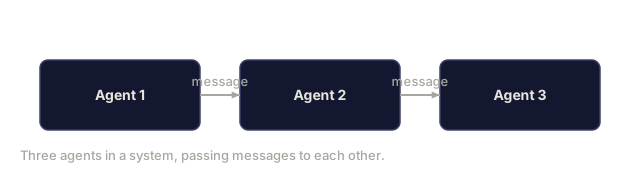
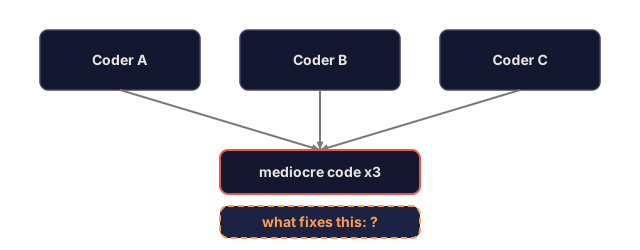
Generic multi-agent systems produce generic output. Three coders in a group chat write three flavors of the same mediocre code. You can add more agents, add more rounds, and still not cross the quality threshold.
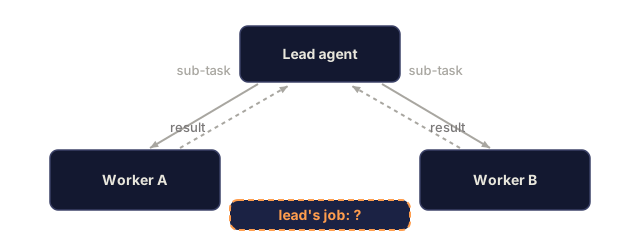
The fix is different agents, not more of them. Assign distinct roles. Give the critic tools the planner does not have. Give the verifier an objective test suite. Now the system has internal disagreement with grounded correction, not just parallel guessing.
Concept
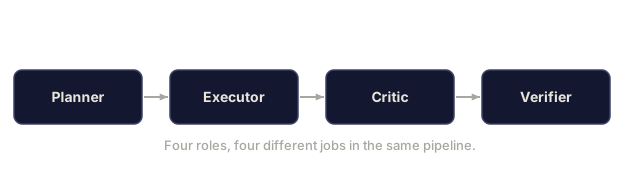
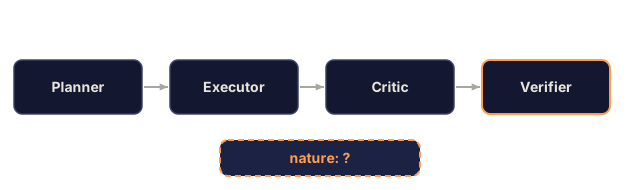
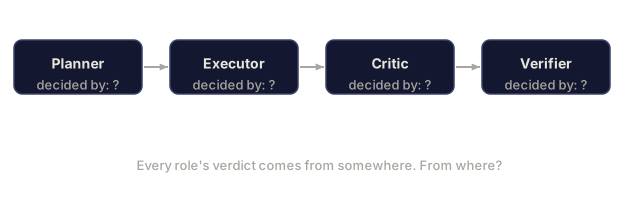
The four canonical roles
Planner. Reads the goal, produces a step list or a spec. Tools: knowledge retrieval, docs. Output: structured plan.
Executor. Reads one plan step at a time, produces the artifact. Tools: the actual work tools (code compiler, shell, API client). Output: the artifact.
Critic. Reads the executor's output against the planner's intent. Tools: read-only access to the artifact, static analysis. Output: accept/reject with reasons.
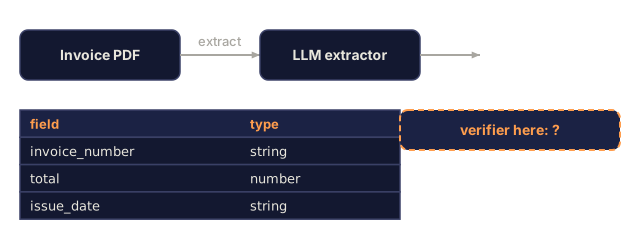
Verifier. Reads the artifact and runs a deterministic check. Tools: test runner, type checker, schema validator. Output: pass/fail with evidence.
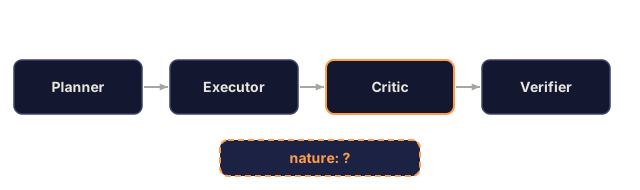
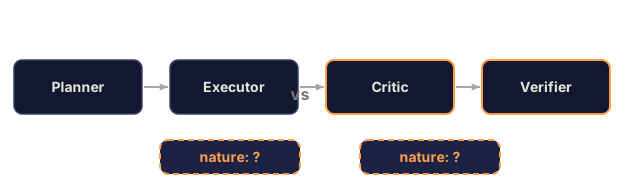
Critic is subjective, opinionated, often LLM-based. Verifier is objective, deterministic, often code-based. They are different roles.
MetaGPT's SOP pattern
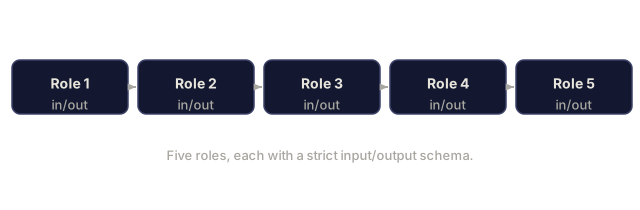
MetaGPT (arXiv:2308.00352) encodes software engineering SOPs as role prompts:
- Product Manager writes the PRD.
- Architect produces the system design.
- Project Manager splits tasks.
- Engineer implements.
- QA Engineer runs tests.
Each role has a strict input/output schema. The role prompt says what the role is and what it must produce. The Code = SOP(Team) formulation says that deterministic SOPs turn a team of LLMs into a predictable pipeline.
ChatDev's communicative dehallucination
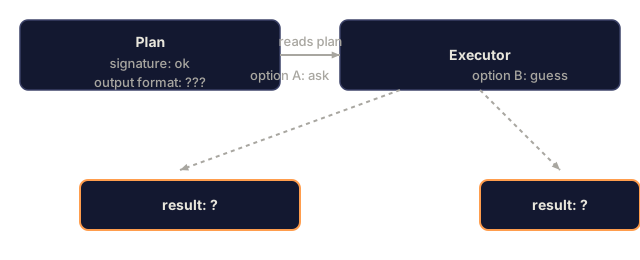
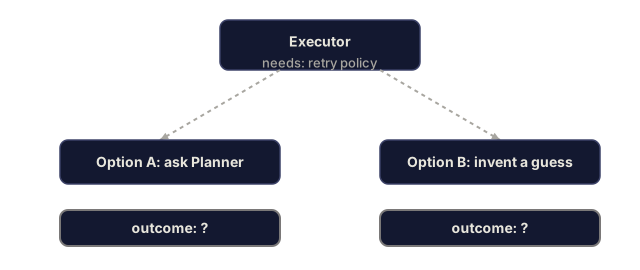
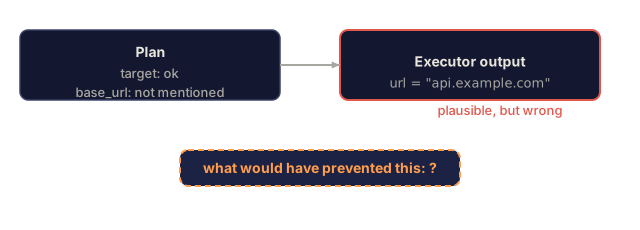
ChatDev adds a key move: when an executor needs a specific detail that was not in the plan, it explicitly asks the designer before continuing. This prevents the classic LLM failure of plausibly inventing the detail.
Implementation: the role prompt includes "when you need specific information you were not given, ask the relevant role by name before producing output."
Why verifier matters most
Cemri et al. (MAST) traced 1642 multi-agent execution failures. 21.3% were verification gaps: the system shipped an answer no one had checked. The remaining 79% often trace back to a check that failed silently or was never run. Verification is the load-bearing role.
PwC reported (CrewAI deployments, 2025) that adding a structured validation loop moved accuracy from 10% to 70%. That is a 7× gain from adding one role.
Critic vs verifier
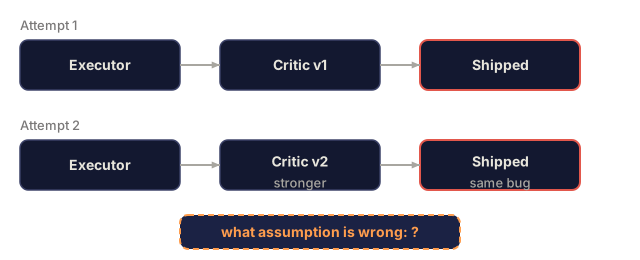
- A critic is an LLM reviewing an artifact for quality. Subjective. Can be fooled by plausible prose.
- A verifier is a deterministic program running on the artifact. Objective. Gives pass/fail with evidence.
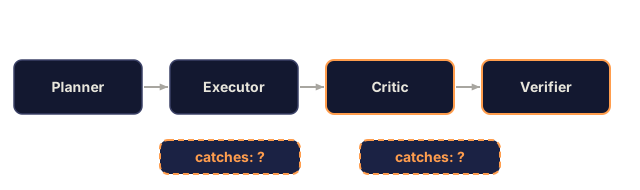
Use both. Critic catches taste issues the verifier cannot articulate. Verifier catches bugs the critic cannot see because they show up only at runtime.
The anti-pattern
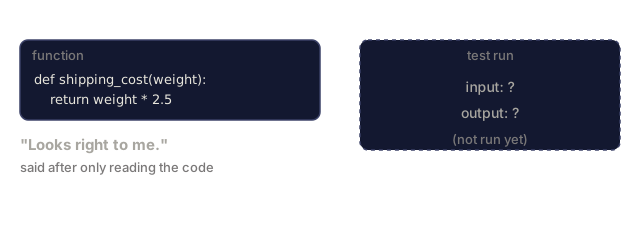
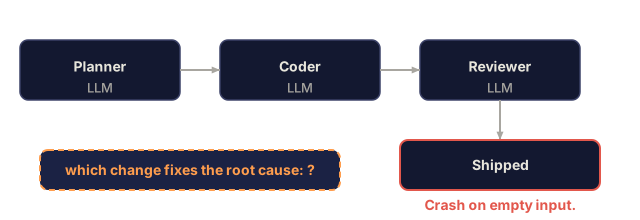
Every role in your system is an LLM, and each one's output is "looks good to me." This is the classic MAST failure mode. Add at least one verifier whose pass/fail is decided by code, not by an LLM.
Framework mappings
- CrewAI:
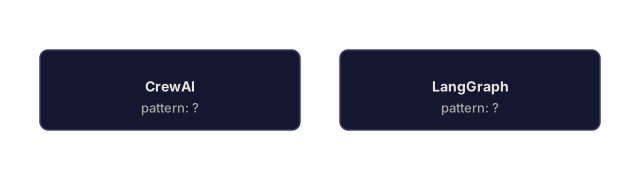
Agent(role, goal, backstory)is the textbook specialization surface. - LangGraph: nodes can have specialized prompts; edges enforce the pipeline.
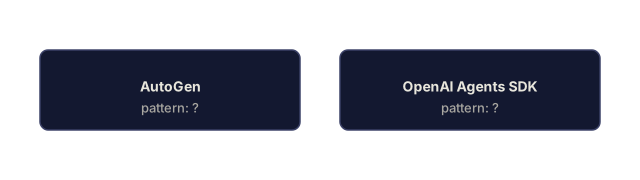
- AutoGen: role-specific ConversableAgents with one-word names in a GroupChat.
- OpenAI Agents SDK: handoff tools between role-specialized Agents.
Build It
code/main.py implements a 4-role pipeline for a simple Python function, add_two:
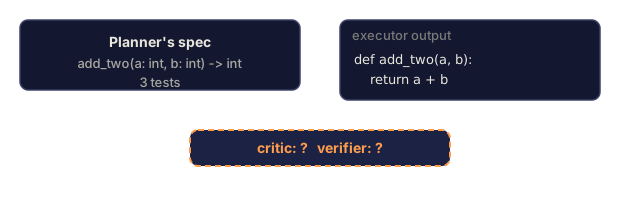
- Planner returns a hardcoded spec: a signature and three test cases.
- Executor returns a code string. There are two versions, one correct and one buggy.
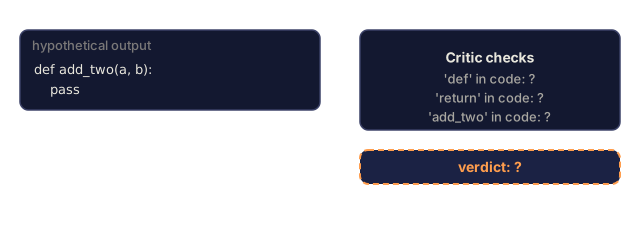
- Critic is a string match standing in for an LLM reviewer. It checks that
def,return, and the function name from the spec appear in the code. - Verifier runs the generated code with
execin a fresh namespace and calls the function on each test case.
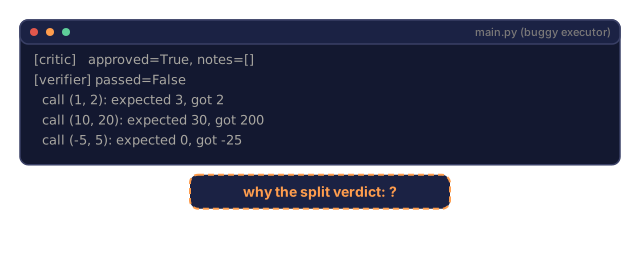
The demo runs twice. In the first run the executor writes a + b, and critic and verifier both pass. In the second it writes a * b. The critic approves it because all three of its checks pass on plausible-looking code, and the verifier catches it because all three tests fail.
Run:
python3 code/main.py
Use It
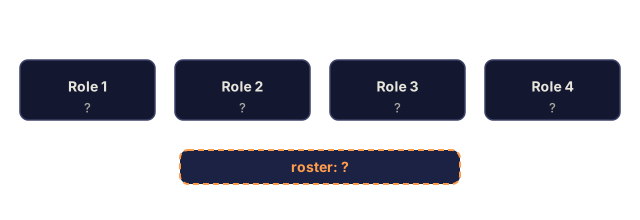
outputs/skill-role-designer.md takes a task and produces the role roster (3-5 roles), the input/output schema per role, and the verifier check. Use this before wiring agents into a framework.
Ship It
Checklist:
- At least one deterministic verifier. Don't build the whole pipeline from LLM roles.
- Explicit I/O schema per role. The planner returns a spec, not prose, and the executor reads that schema.
- Communicative dehallucination. The executor asks the planner when info is missing instead of inventing it.
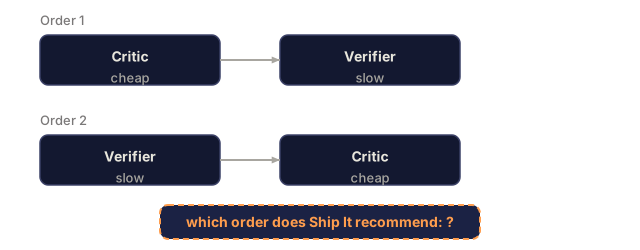
- Critic/verifier ordering. Run the critic first (cheap, catches design issues), the verifier second (slow, catches bugs).
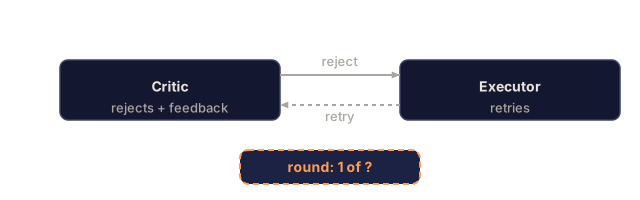
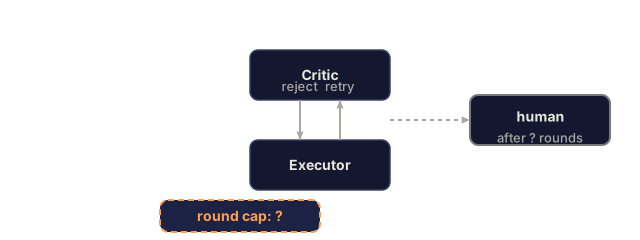
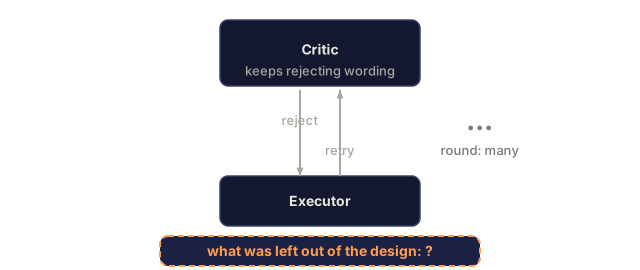
- Loop budget. Max 2 critic-executor revision rounds before escalating to a human.
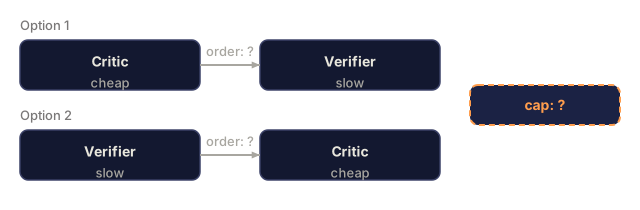
I'd run main.py and read the second run before anything else. The critic approves a * b because its only checks are that def, return, and add_two appear somewhere in the string. The verifier calls the function on the three spec tests, and all three fail, with the expected and actual values printed for each. That output is the argument for a check decided by code, in about 130 lines.
I'd also keep the toy in proportion. The planner returns a hardcoded spec and the executors return fixed strings, so nothing here exercises communicative dehallucination or the 2-round revision budget from Ship It. The pipeline runs the critic and the verifier on each artifact instead of gating the verifier behind the critic, which is an easy change to try. And exec in a fresh dict is not isolation. For code a model actually wrote, I'd run the verifier in a subprocess with a timeout.
Exercises
- Run
code/main.pyand observe how the verifier catches the bug the critic missed. Add a static-analysis check (count occurrences ofreturn) as an additional verifier. What does it catch that the runtime test misses? - Add a 5th role: "requirements analyst" that translates user wish into planner-ready spec. What communicative dehallucination requests should flow up to it?
- Read MetaGPT Section 3 ("Agents"). List the input/output schema of each of MetaGPT's 5 roles.
- Read ChatDev's chat-chain diagram (arXiv:2307.07924 Figure 3). Identify where communicative dehallucination breaks a loop that would otherwise be infinite.
- PwC's 7× accuracy gain came from verification loops. Hypothesize three tasks where adding a verifier would not help, because deterministic checking of correctness is impossible or prohibitively expensive.
Key Terms
| Term | What people say | What it actually means |
|---|---|---|
| Role specialization | "Different agents, different jobs" | Distinct system prompts tuned for planner/executor/critic/verifier roles. |
| SOP pattern | "Encoded standard operating procedure" | MetaGPT's framing: strict I/O schemas per role turn a team into a pipeline. |
| Communicative dehallucination | "Ask before inventing" | ChatDev pattern: executor asks planner when a detail is missing rather than making one up. |
| Critic | "LLM reviewer" | Subjective, opinionated reviewer. Catches taste issues. Can be fooled by plausible prose. |
| Verifier | "Deterministic check" | Code-based pass/fail. Test runner, type checker, schema validator. Cannot be fooled. |
| Verification gap | "No one checked" | 21.3% of MAST failures. Answer shipped without a check that would have caught the bug. |
| Revision loop | "Critic sends it back" | Critic rejection triggers executor re-run with feedback. Needs a budget. |
| All-LLM anti-pattern | "Looks good to me" | Every role is an LLM, no deterministic check. Classic MAST failure. |
Further Reading
- Hong et al., MetaGPT: Meta Programming for Multi-Agent Collaboration: the SOP-as-role-prompt reference paper
- Qian et al., Communicative Agents for Software Development (ChatDev): chat chain + communicative dehallucination
- Cemri et al., Why Do Multi-Agent LLM Systems Fail?: MAST taxonomy; verification gaps are 21.3% of failures
- CrewAI docs: Agent roles: production role specification surface
Code
- main.py (python, 133 lines)