Group Chat and Speaker Selection
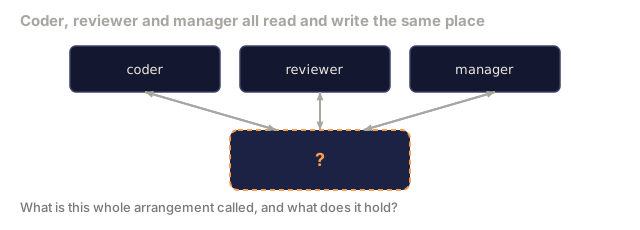
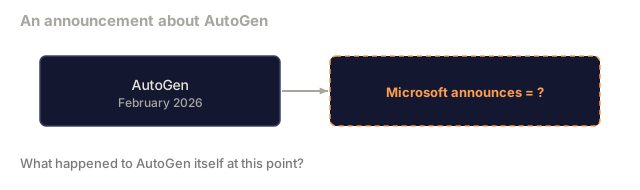
AutoGen GroupChat and AG2 GroupChat share one conversation across N agents, and a selector function (LLM, round-robin, or custom) picks who speaks next. Agents do not know their role in a static graph. They react to the shared pool, which makes this the archetype of emergent multi-agent conversation. AutoGen v0.2's GroupChat semantics were preserved in the AG2 fork, and v0.4 rewrote it as an event-driven actor model. Microsoft put AutoGen into maintenance mode in February 2026 and merged it with Semantic Kernel into Microsoft Agent Framework (RC February 2026). The GroupChat primitive survives in both AG2 and Microsoft Agent Framework, so learn it once and use it in either.
Learning Objectives
- Name the three speaker-selector flavors (round-robin, LLM-selected, custom) and pick one for a given task
- Explain what GroupChat and GroupChatManager each own, and how the manager loops over turns
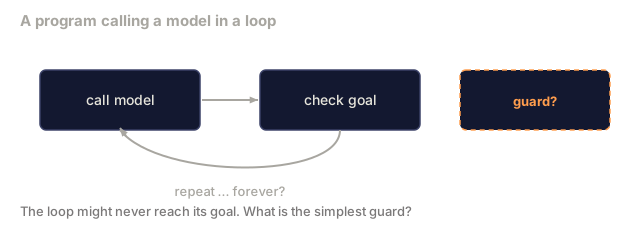
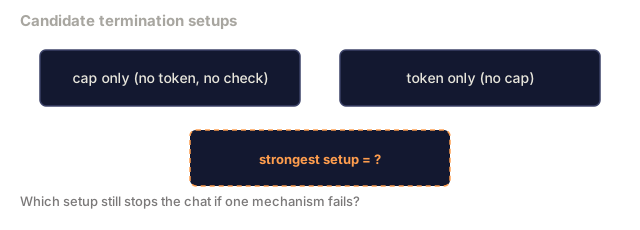
- Choose termination rules (max rounds, TERMINATE token, goal-reached check) for a chat
- Spot the failure modes (hot speakers, sycophancy cascades, context bloat) and the Ship It fixes
- Run the stdlib demo and read the selector trace under round-robin vs context-aware selection
Problem
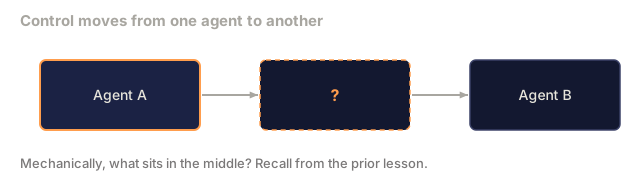
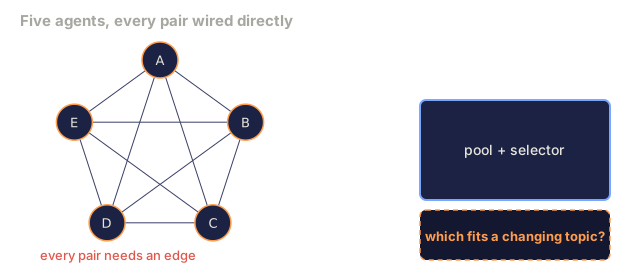
Static graphs (LangGraph) work well when the workflow is known. Real conversations are not static. Sometimes the coder asks the reviewer, sometimes the researcher, sometimes the writer. Hardcoding every possible handoff gives you an edge explosion. What you want is agents reacting to a shared pool, with some function deciding who talks next.
That is what AutoGen GroupChat does.
Concept
The shape
              ┌─── shared pool ────┐
              │   m1  m2  m3  ...  │
              └─────────┬──────────┘
                        │ (everyone reads all)
      ┌───────┬─────────┼─────────┬───────┐
      ▼       ▼         ▼         ▼       ▼
    Agent A  Agent B  Agent C  Agent D  Selector
                                           │
                                           ▼
                                  "next speaker = C"
Every agent sees every message. A selector function is invoked at each turn to pick who speaks next.
The three selector flavors
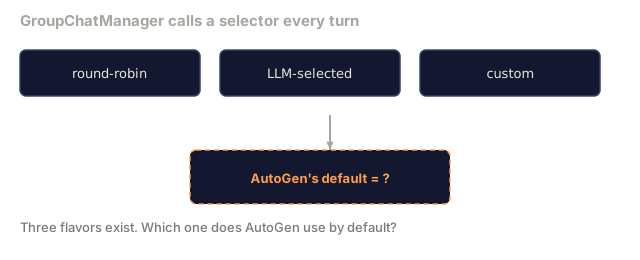
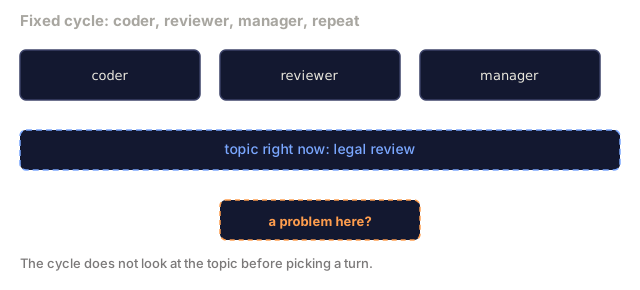
Round-robin. Fixed cycle. Deterministic. Scales linearly in N but ignores context: a coder gets the turn even when the topic is legal review.
LLM-selected. A call to an LLM that reads the recent pool and returns the best next speaker. Context-aware but slow: every turn adds an LLM call. AutoGen's default.
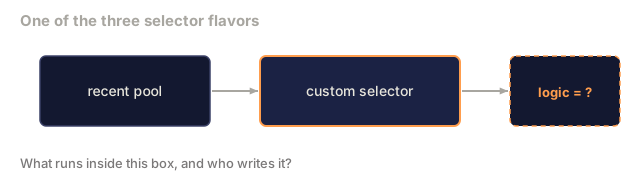
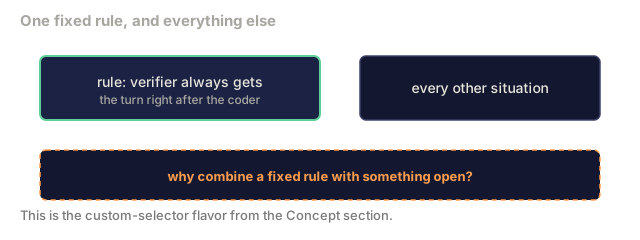
Custom. A Python function with whatever logic you want. Typical: LLM-selected with fallback rules (e.g., "always give the verifier the turn after the coder").
The ConversableAgent API
agent = ConversableAgent(
    name="coder",
    system_message="You write Python.",
    llm_config={...},
)
chat = GroupChat(agents=[coder, reviewer, tester], messages=[])
manager = GroupChatManager(groupchat=chat, llm_config={...})
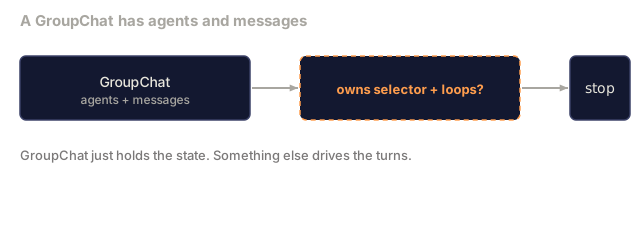
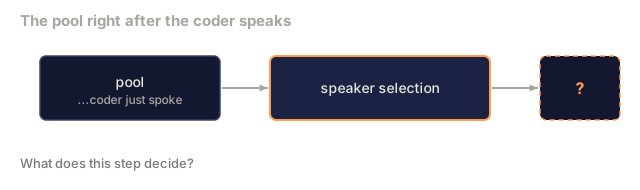
GroupChatManager holds the selector. When an agent completes a turn, the manager calls the selector, which returns the next agent. Loop continues until a termination condition.
Termination
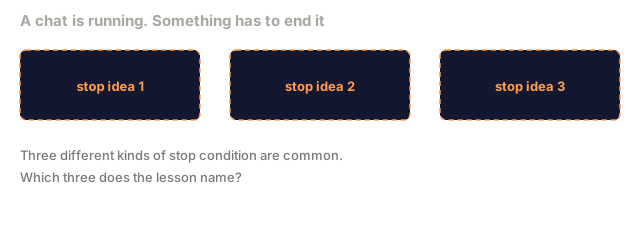
Three common patterns:
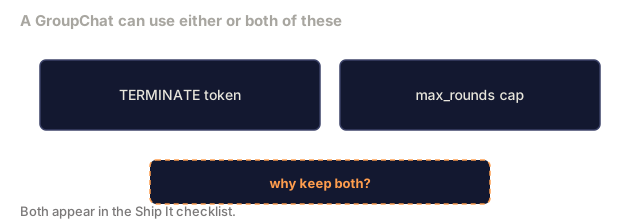
- Max rounds. Hard cap on total turns.
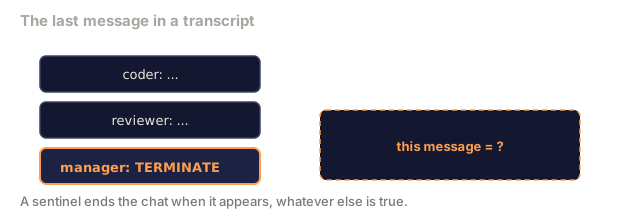
- "TERMINATE" token. Agents can emit a sentinel message; the manager stops when one appears.
- Goal-reached check. A lightweight verifier runs each turn and stops the chat when done.
The AutoGen → AG2 split and the Microsoft Agent Framework merge
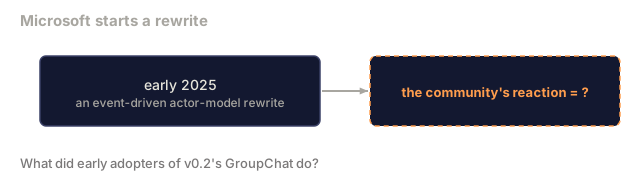
In early 2025, Microsoft began a major rewrite of AutoGen (v0.4) around an event-driven actor model. The community forked AutoGen v0.2's GroupChat semantics as AG2, preserving the API that early adopters had integrated.
In February 2026, Microsoft announced AutoGen would go to maintenance mode, with the event-driven actor model merging into Microsoft Agent Framework (RC February 2026, now merged with Semantic Kernel). The GroupChat concept survives in both tracks; the implementation details differ. AG2 is the preferred upstream for v0.2-compatible code.
When GroupChat fits
- Emergent conversations. You do not want to pre-wire every possible next-speaker.
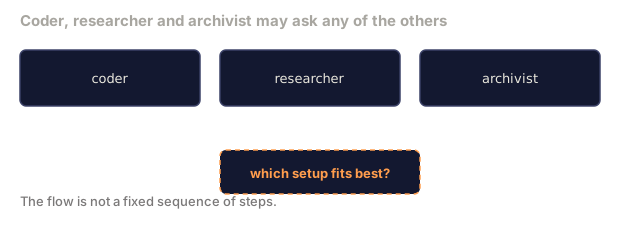
- Role-mixing tasks. Coder asks researcher, researcher asks archivist, archivist asks coder back. Flow is not a DAG.
- Exploratory problem-solving. Think "brainstorm meeting," not "assembly line."
When it fails
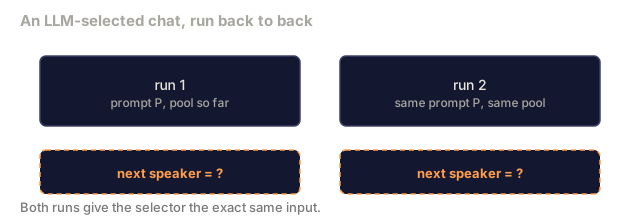
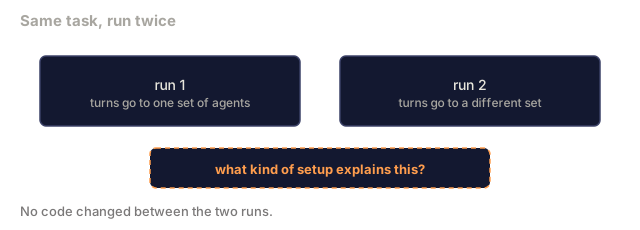
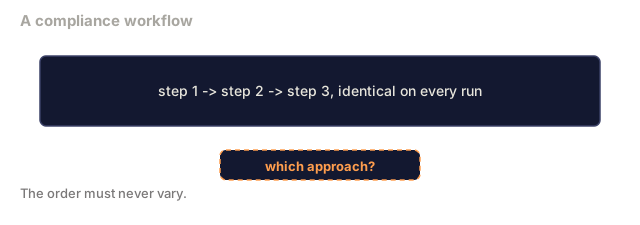
- Strict determinism. The LLM selector can be inconsistent. Same prompt, different runs, different next speakers.
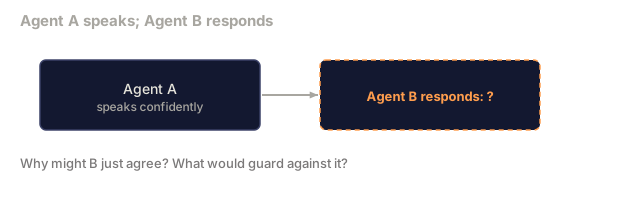
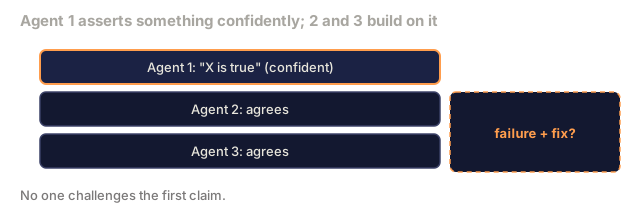
- Sycophancy cascades. Agents defer to whoever spoke most confidently. Counter-prompt explicitly.
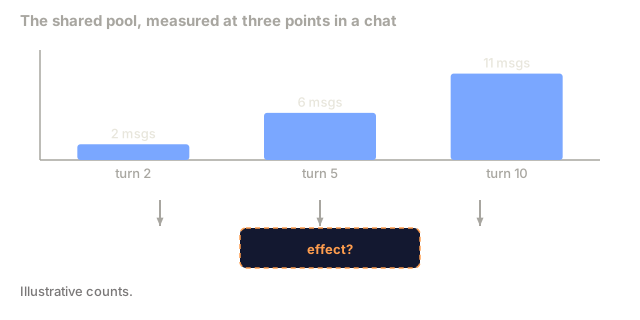
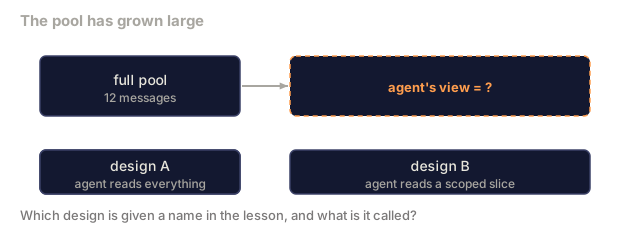
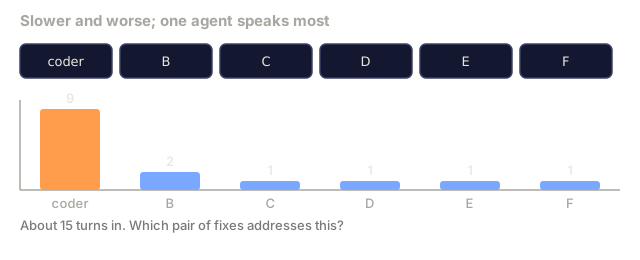
- Context bloat. Every agent reads every message; after 10 turns the context is huge. Use projections (Lesson 15) to scope views.
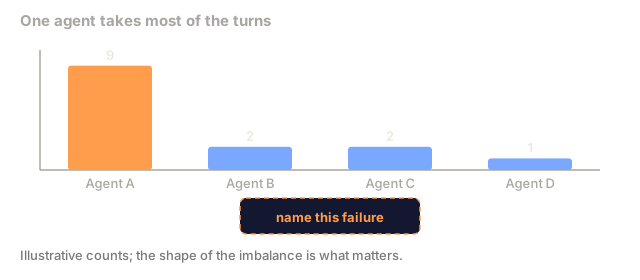
- Hot speakers. One agent dominates the conversation because the selector favors its specialties. Introduce speaker balance as a selector feature.
Group chat vs supervisor
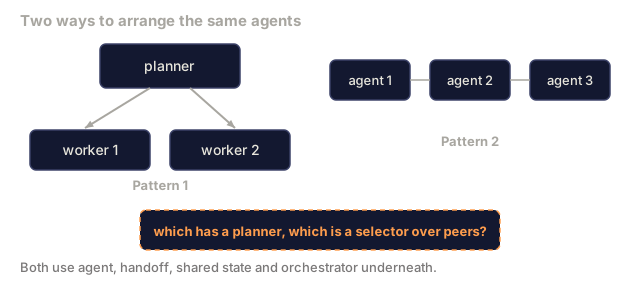
Same primitives, different defaults:
- Supervisor: one agent plans and others execute. Selector is "ask the planner what to do."
- Group chat: all agents are peers; selector is a function over the shared pool.
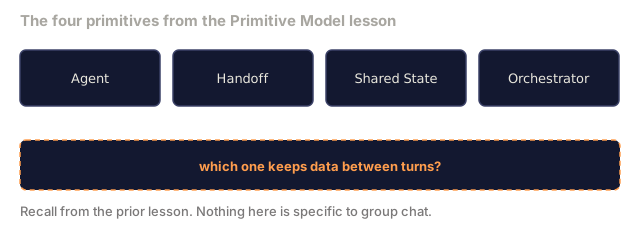
Both use the four primitives from Lesson 04. Group chat defaults to LLM-selected orchestration and full-pool shared state.
Build It
code/main.py implements a GroupChat from scratch in stdlib. Three agents (coder, reviewer, manager), round-robin and LLM-selected variants, and a termination on a TERMINATE token. The LLM-selected variant is simulated with hardcoded rules on the last message's speaker, so the demo runs offline.
The demo prints the conversation transcript plus the selector's decision trace for both variants.
Run:
python3 code/main.py
Use It
outputs/skill-groupchat-selector.md configures a GroupChat selector for a given task: round-robin vs LLM-selected vs custom, and what selector inputs (recent messages, agent specialties, turn counts) to use.
Ship It
Checklist:
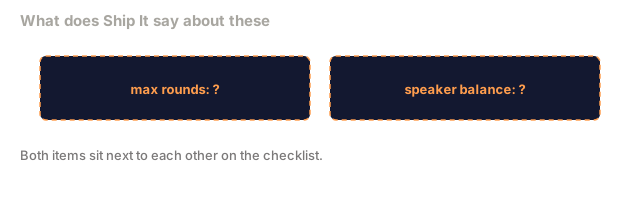
- Max rounds cap. Set one. 10-20 for typical tasks.
- Speaker-balance metric. Track turns per agent; alert when imbalance exceeds a threshold.
- Termination token.
TERMINATEor a dedicated verifier agent. - Projection or scoped memory. After ~10 messages, consider giving each agent only a scoped view to prevent context bloat.
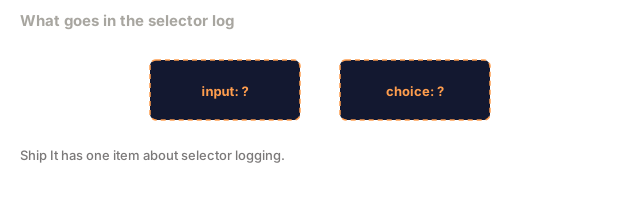
- Selector logging. For LLM-selected variants, log both the selector's input and its choice. Without both, debugging is guesswork.
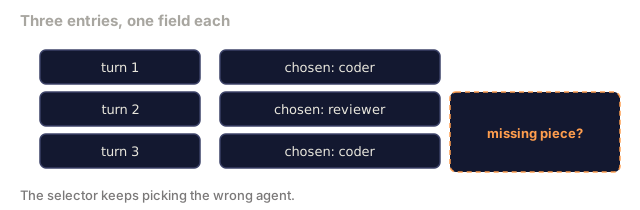
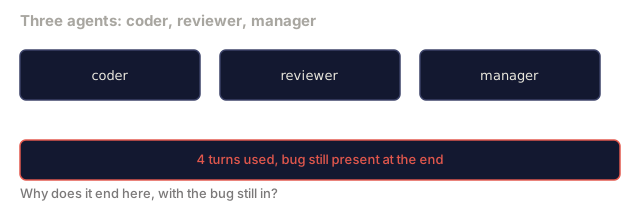
I'd run code/main.py and read the two traces side by side before anything else. Under round-robin the coder posts the buggy a - b, the reviewer flags it, the manager says "continue working", and then the cycle hands the turn back to the coder. The coder's policy only looks at the last three messages, sees the manager's line instead of the reviewer's "please fix", and emits TERMINATE. The chat ends after four turns with the bug still in. Nothing in the demo is broken. A context-blind cycle gave a turn to an agent whose message buried the one that mattered.
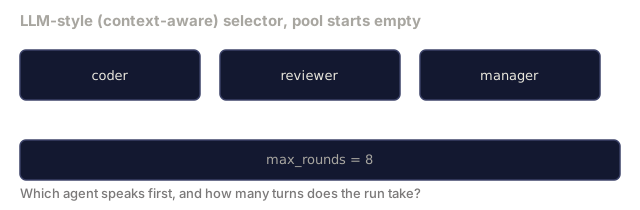
The context-aware run takes six turns, ends when the manager emits TERMINATE after the reviewer's approval, and gives each agent two. I'd be careful about what it proves, though. Its selector is a few hardcoded branches on the last speaker standing in for an LLM call, so the clean trace says nothing about how a real LLM selector behaves across repeated runs. It also spends its first turn on the manager, because the selector returns the manager when the pool is empty.
Neither run reaches max_rounds=8, so the cap never gets exercised. run_groupchat does record the selector's trace, which covers the choice half of the selector-logging item in Ship It. It does not record what the selector saw when it chose. For a real LLM selector I'd add that before anything else.
Exercises
- Run
code/main.py. Compare the conversation under round-robin vs LLM-selected. Which agent dominates under each? - Add a "max-speaks-per-agent" rule in the selector. How does it affect the transcript?
- Implement a goal-reached termination: stop when the reviewer returns "approved." How often does it trigger before the round cap?
- Read the AutoGen stable docs on GroupChat (https://microsoft.github.io/autogen/stable/user-guide/core-user-guide/design-patterns/group-chat.html). Identify the default selector used by
GroupChatManager. - Read the AG2 repo (https://github.com/ag2ai/ag2) and compare its v0.2 GroupChat to the v0.4 event-driven version. What concrete property (throughput, fault-tolerance, composability) does v0.4 add?
Key Terms
| Term | What people say | What it actually means |
|---|---|---|
| GroupChat | "Agents in one chat room" | Shared message pool + selector function. AutoGen / AG2 primitive. |
| Speaker selection | "Who talks next" | The function that picks the next agent. Round-robin, LLM-selected, or custom. |
| GroupChatManager | "The meeting host" | AutoGen component that owns the selector and loops over turns. |
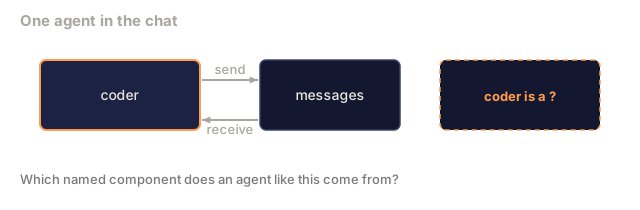
| ConversableAgent | "The base agent" | AutoGen base class; an agent that can send and receive messages. |
| Termination token | "The 'stop' word" | Sentinel string (usually TERMINATE) that ends the chat. |
| Hot speaker | "One agent dominates" | Failure mode where the selector keeps picking the same agent. |
| Context bloat | "Pool grows unbounded" | Each agent reads every prior message; context grows with turns. |
| Projection | "Scoped view" | Role-specific view into the shared pool to prevent context bloat. |
Further Reading
- AutoGen group chat docs: the reference implementation
- AG2 repo: community AutoGen v0.2 continuation
- Microsoft Agent Framework docs: the merged successor, RC February 2026
- AutoGen v0.4 release notes: event-driven actor model rewrite details
Code
- main.py (python, 135 lines)