A2A — The Agent-to-Agent Protocol
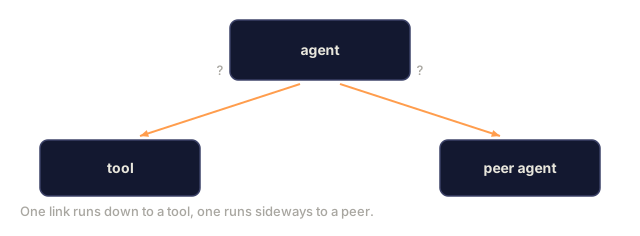
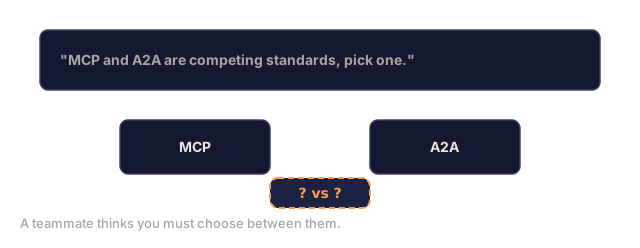
Google announced A2A in April 2025. By April 2026 the spec lives at https://a2a-protocol.org/latest/specification/ and 150+ organizations back it. MCP is vertical (agent ↔ tools, Lesson 13) and A2A is horizontal (agent ↔ agent). It defines Agent Cards for discovery, tasks that produce typed artifacts (text, structured data, video), opaque task lifecycles, and auth. Production systems increasingly pair the two, and Google Cloud added A2A support to Vertex AI Agent Builder during 2025-2026.
Learning Objectives
- Explain how A2A (agent to agent, horizontal) and MCP (agent to tool, vertical) divide the work, and why production systems pair them.
- Read an Agent Card at /.well-known/agent.json and say what a client learns from it: skills, endpoints, modalities and auth.
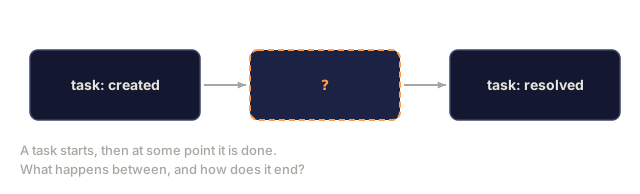
- Trace a task through submitted, working, completed, failed or canceled, and choose between polling and an SSE subscription.
- Run main.py and map its discovery, submit, poll and artifact steps onto the A2A flow, including what the demo leaves out.
- Decide when A2A fits (cross-organization, heterogeneous, long-running work) and when direct RPC is the better choice.
Problem
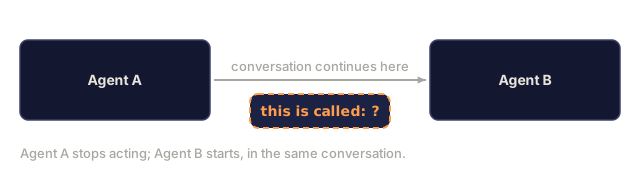
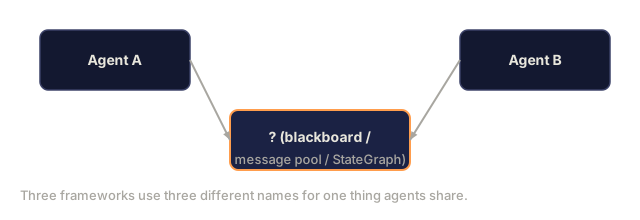
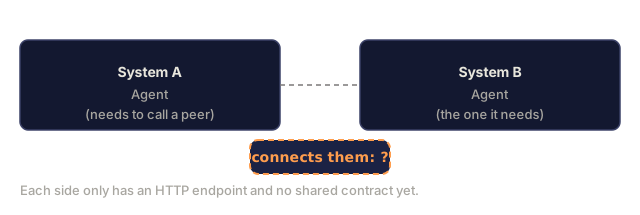
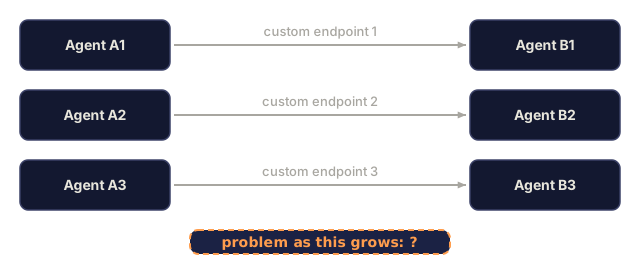
Your agent needs to call another agent on another system. How? You can expose an HTTP endpoint, define a bespoke JSON schema, and hope the other side speaks it. Then the next pair of agents needs its own custom integration.
A2A is a shared wire protocol for that call: standard discovery, task model, transport, and artifacts. Think HTTP+REST, but with agents as first-class citizens.
Concept
The four elements
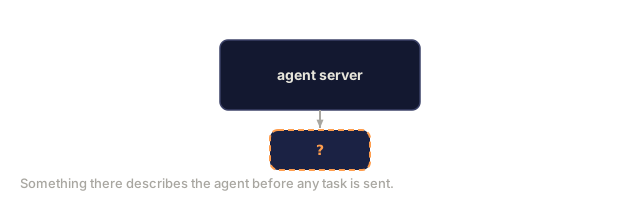
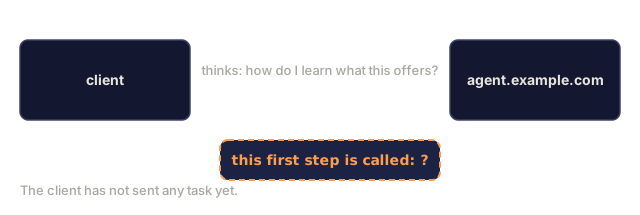
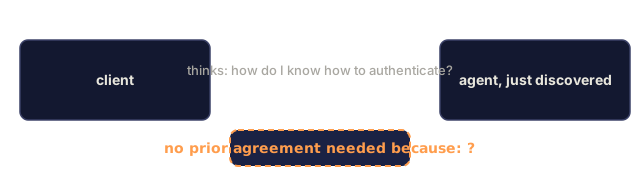
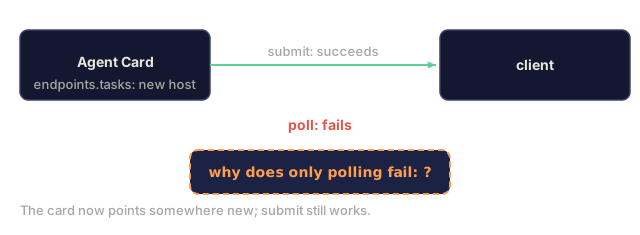
Agent Card. A JSON document at /.well-known/agent.json describing the agent: name, skills, endpoints, supported modalities, auth requirements. Discovery happens by reading the card.
GET https://agent.example.com/.well-known/agent.json
→ {
    "name": "code-review-agent",
    "skills": ["review-python", "review-typescript"],
    "endpoints": {
      "tasks": "https://agent.example.com/tasks"
    },
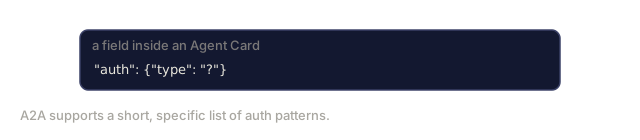
    "auth": {"type": "bearer"},
    "modalities": ["text", "structured"]
  }
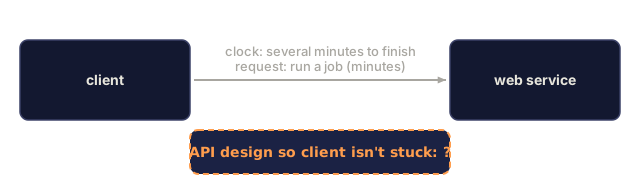
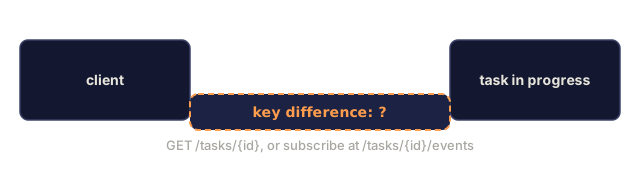
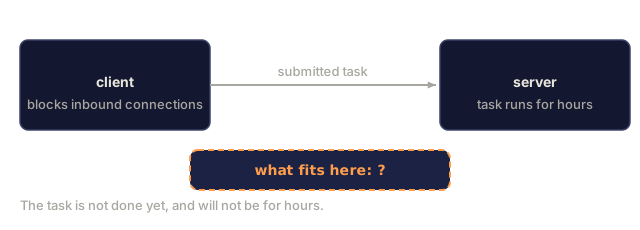
Task. The unit of work. An async, stateful object with a lifecycle: submitted → working → completed / failed / canceled. A client sends a task, polls or subscribes for updates.
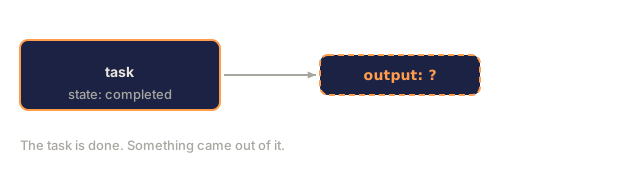
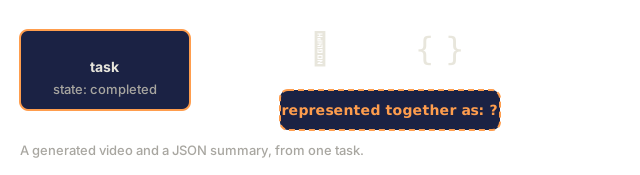
Artifact. The result type produced by a task. Text, structured JSON, image, video, audio. Artifacts are typed so different modalities are first-class.
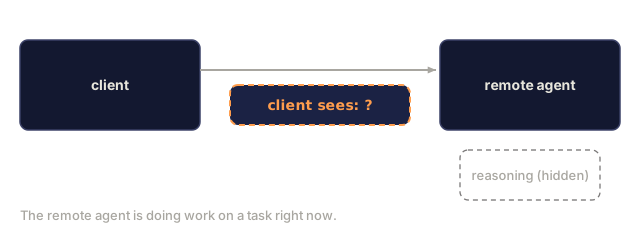
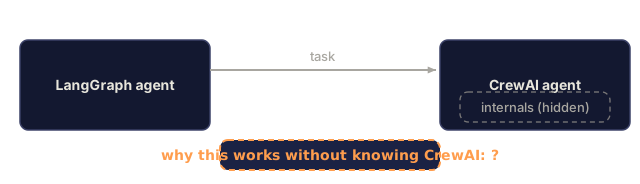
Opaque lifecycle. A2A does not prescribe how the remote agent solves the task. The client sees state transitions and artifacts; the implementation is free to use any framework.
The MCP/A2A split
- MCP (Lesson 13): agent ↔ tool. The agent reads/writes via JSON-RPC to a tool server. Stateless by default.
- A2A: agent ↔ agent. Peer protocol; both sides are agents with their own reasoning.
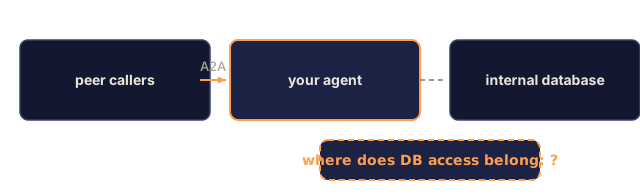
Production multi-agent systems use both. An A2A peer calls MCP tools on its side. The split keeps the two concerns clean.
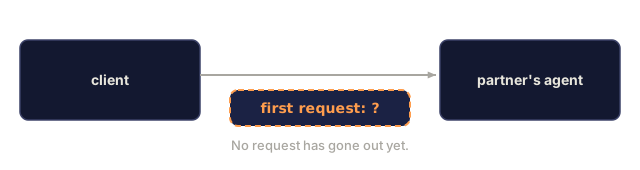
Discovery flow
Client                     Agent server
  ├──GET /.well-known/agent.json──>
  <──Agent Card JSON─────────────
  ├──POST /tasks {skill, input}──>
  <──201 task_id, state=submitted
  ├──GET /tasks/{id}──────────────>
  <──state=working───────────────
  ├──GET /tasks/{id}──────────────>
  <──state=completed, artifacts──
Or with streaming: SSE subscription to /tasks/{id}/events for push updates.
Auth
A2A supports three common patterns:
- Bearer token: OAuth2 or opaque.
- mTLS: mutual TLS, where organizations prove identity to each other.
- Signed requests: HMAC over the payload.
Auth is declared in the Agent Card; clients discover and comply.
150+ organizations by April 2026
Enterprise adoption drove the growth, and A2A became a common way for enterprise agent systems to cross trust boundaries. Google Cloud shipped Vertex AI Agent Builder A2A support; Microsoft Agent Framework supports it; most major frameworks (LangGraph, CrewAI, AutoGen) ship A2A adapters.
Where A2A wins
- Cross-organization calls. Agent at company A calls agent at company B. Without A2A, each pair needs a bespoke contract.
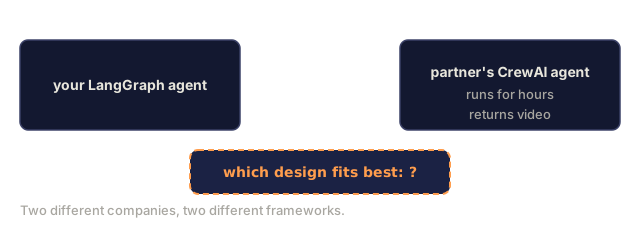
- Heterogeneous frameworks. LangGraph agent calls CrewAI agent calls custom Python agent. A2A normalizes.
- Typed artifacts. Video, structured JSON, and audio results are all first-class.
- Long-running tasks. Opaque lifecycle + polling makes hours-long tasks straightforward.
Where A2A struggles
- Latency-sensitive micro-calls. A2A's lifecycle is async. Sub-millisecond agent-to-agent does not fit; use direct RPC.
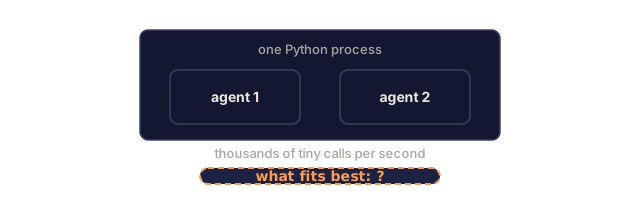
- Tight-coupled in-process agents. If both agents run in the same Python process, A2A's HTTP round-trip is overkill.
- Small teams. Spec overhead is real; internal-only agents may not need the formality.
A2A vs ACP, ANP, NLIP
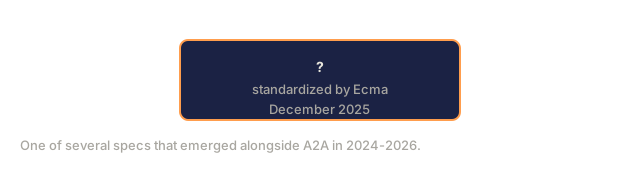
Several related specs emerged in 2024-2026:
- ACP (IBM/Linux Foundation): predecessor to A2A, narrower scope.
- ANP (Agent Network Protocol): peer-discovery-heavy, decentralized-first.
- NLIP (Ecma Natural Language Interaction Protocol, standardized December 2025): natural-language content type.
A2A is the most-adopted peer protocol as of April 2026. See arXiv:2505.02279 (Liu et al., "A Survey of Agent Interoperability Protocols") for the comparison.
Build It
code/main.py implements an A2A-minimal server and client using http.server and JSON. The server:
- exposes
/.well-known/agent.json, - accepts
POST /tasks, - manages task state,
- returns artifacts on
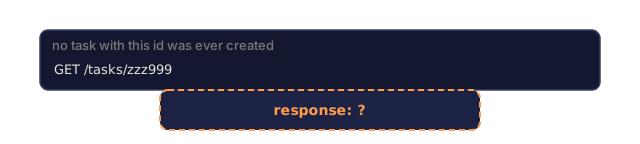
GET /tasks/{id}.
The client:
- fetches the Agent Card,
- submits a task,
- polls until completion,
- reads the artifact.
Run:
python3 code/main.py
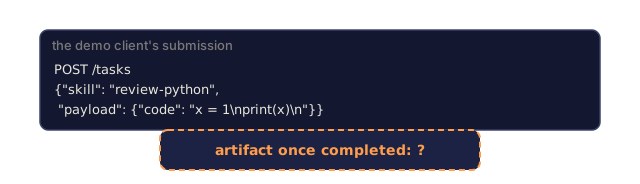
The script starts the server in a background thread, then runs the client against it. You see the complete flow: discovery, submit, poll, artifact.
Use It
outputs/skill-a2a-integrator.md designs an A2A integration: Agent Card contents, task schemas, auth choice, streaming vs polling.
Ship It
Checklist:
- Pin the spec version. A2A is still evolving; the Agent Card should declare the protocol version.
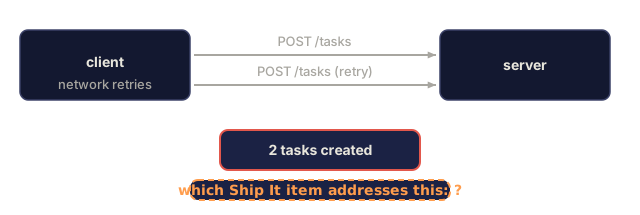
- Idempotent task creation. Duplicate submissions (network retries) should produce one task.
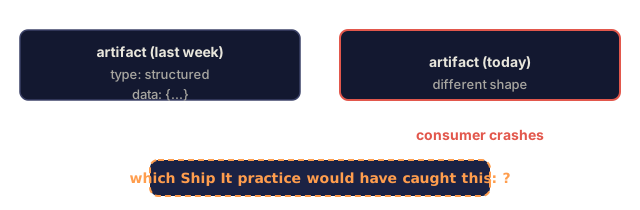
- Artifact schemas. Declare what shapes the agent returns; consumers should validate.
- Rate limits + auth. A2A is public-facing; apply standard web security.
- Dead-letter for failed tasks. Inspect patterns over time for recurring failure types.
I'd run main.py and read the trace before the Concept section. The server starts in a background thread and the client walks through three steps (discovery, submit, poll), then prints the artifact. It is plain http.server and JSON, so no SDK hides the wire format.
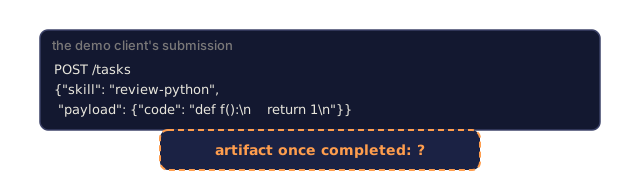
The part I'd read twice is TaskStore. POST /tasks returns 201 with a task_id and state submitted right away, and a worker thread moves the task to working, then completed or failed. That is the async lifecycle from the Concept section, and it is the reason the client has to poll. The review-python skill is two substring checks, so the issues it finds mean little. The shape is what matters: a typed structured artifact on success, a text artifact on failure.
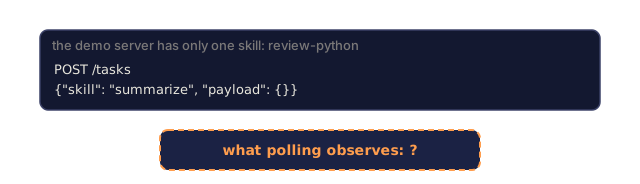
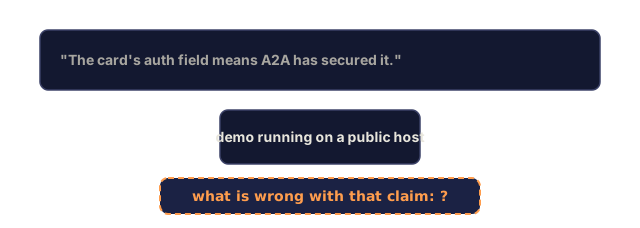
I'd also keep the demo in proportion. The card declares auth: none, so the auth patterns are described but never exercised. There is one skill, no canceled state, no streaming endpoint, and no handling of duplicate submissions. Exercises 3 and 4 and the Ship It checklist cover those gaps. The card does carry protocol_version: a2a-0.3, and pinning the version is the habit I'd copy first.
Exercises
- Run
code/main.py. Confirm the client discovers the server and receives the correct artifact. - Add a second skill to the server (e.g., "summarize"). Update the Agent Card. Write a client that picks the skill based on task type.
- Implement an SSE streaming endpoint:
/tasks/{id}/eventsthat emits state changes. What does the client need to do differently? - Read the A2A spec (https://a2a-protocol.org/latest/specification/). Identify three things the spec mandates that this demo does not implement.
- Compare A2A (Agent Card discovery) to MCP (server-side capability listing via
listTools). What is the tradeoff between self-describing agents and capability-probing?
Key Terms
| Term | What people say | What it actually means |
|---|---|---|
| A2A | "Agent-to-agent" | Peer protocol for agents to call other agents across systems. Google 2025. |
| Agent Card | "The agent's business card" | JSON at /.well-known/agent.json describing skills, endpoints, auth. |
| Task | "The unit of work" | Async stateful object with a lifecycle; artifacts produced on completion. |
| Artifact | "The result" | Typed output: text, structured JSON, image, video, audio. First-class media. |
| Opaque lifecycle | "How it's solved is the agent's business" | Client sees state transitions; server is free to choose framework/tools. |
| Discovery | "Finding the agent" | GET /.well-known/agent.json returns the card. |
| MCP vs A2A | "Tools vs peers" | MCP: vertical agent ↔ tool. A2A: horizontal agent ↔ agent. |
| ACP / ANP / NLIP | "Sibling protocols" | Adjacent specs; A2A is the most-adopted 2026. |
Further Reading
- A2A specification: the canonical spec
- Google Developers Blog: A2A announcement: April 2025 launch post
- A2A GitHub repo: reference implementations and SDKs
- Liu et al.: A Survey of Agent Interoperability Protocols: MCP, ACP, A2A, ANP comparison
Code
- main.py (python, 169 lines)