Caching, Rate Limiting & Cost Optimization
Most AI startups do not die from bad models. They die from bad unit economics. A single GPT-4o call costs fractions of a cent. Ten thousand users making ten calls per day costs $250 in input tokens alone, before you charge a single dollar. The companies that survive treat each API call as a financial transaction, not a function call.
Learning Objectives
- Implement semantic caching that serves repeated or similar queries from cache instead of making a new API call
- Calculate per-request costs across providers and implement token-aware rate limiting and budget alerts
- Build a cost optimization layer with prompt compression, model routing (expensive vs cheap), and response caching
- Design a tiered caching strategy using exact match, semantic similarity, and prefix caching for different query types
The Problem
You build a RAG chatbot. It works beautifully. Users love it.
Then the invoice arrives.
GPT-5 costs $5 per million input tokens and $15 per million output. Claude Opus 4.7 costs $15 input / $75 output. Gemini 3 Pro costs $1.25 input / $5 output. GPT-5-mini is $0.25/$2. Prices below are illustrative; check the provider's current pricing page.
Here is the math that kills startups, using GPT-4o pricing ($2.50 input, $10 output per million tokens):
- 10,000 daily active users
- 10 queries per user per day
- 1,000 input tokens per query (system prompt + context + user message)
- 500 output tokens per response
Daily input cost: 10,000 x 10 x 1,000 / 1,000,000 x $2.50 = $250/day Daily output cost: 10,000 x 10 x 500 / 1,000,000 x $10.00 = $500/day Monthly total: $22,500/month
That is just the LLM. Add embeddings, vector database hosting, infrastructure. You are looking at $30,000/month for a chatbot.
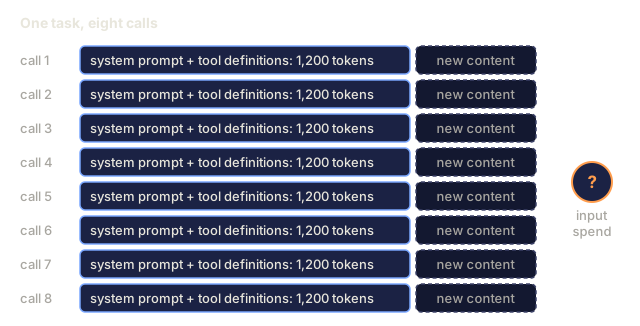
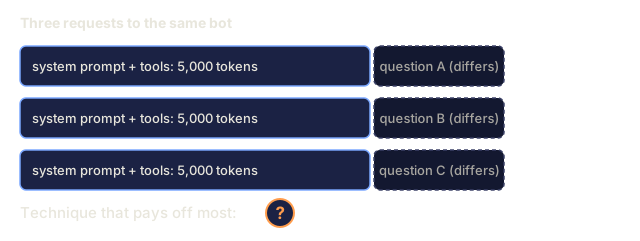
The brutal part: 40-60% of those queries are near-duplicates. Users ask the same questions in slightly different words. Your system prompt is identical across requests and gets billed on each one. Context documents retrieved by RAG repeat across users who ask about the same topic.
You are paying full price for redundant computation.
The Concept
The Cost Anatomy of an LLM Call
Every API call has five cost components.

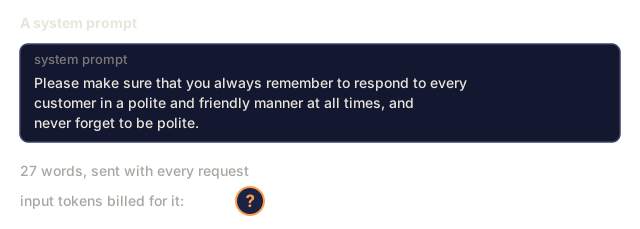
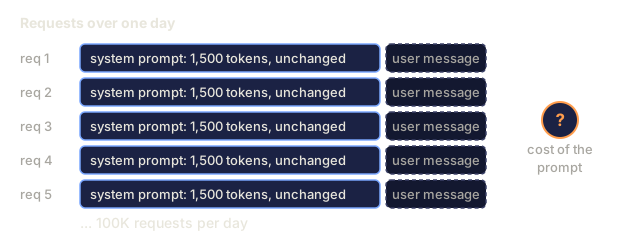
System prompts are the silent killer. A 1,500-token system prompt sent with every request costs $3,750 per million requests just for that prefix. At 100K requests per day, that is $375/day, or $11,250/month, for text that doesn't change.
Provider Caching: Built-in Discounts
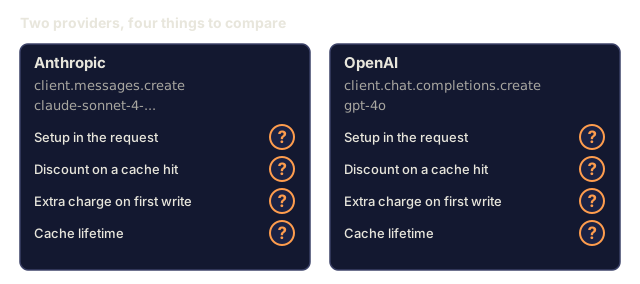
All three major providers offer provider-side prompt caching in 2026, but the mechanics differ. See Phase 11 · 15 for the deep dive.
| Provider | Mechanism | Discount | Minimum | Cache Duration |
|---|---|---|---|---|
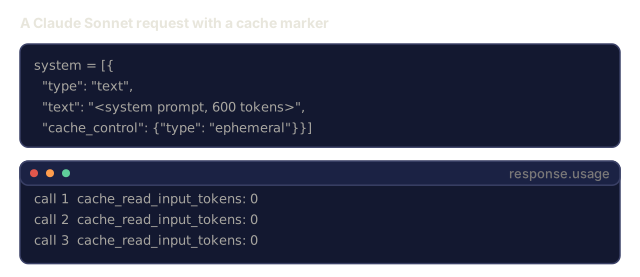
| Anthropic | Explicit cache_control markers | 90% on cache hits (pay 25% extra on write) | 1,024 tokens (Sonnet/Opus), 2,048 (Haiku) | 5 min default; 1h extended (2x write premium) |
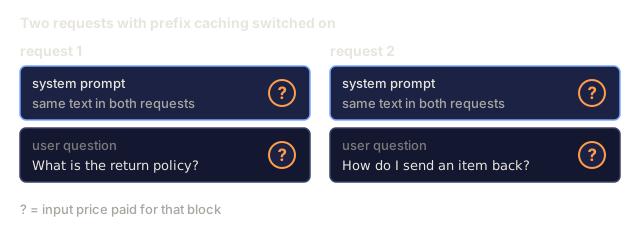
| OpenAI | Automatic prefix matching | 50% on cache hits | 1,024 tokens | Best-effort up to 1 hour |
| Google Gemini | Explicit CachedContent API | ~75% reduction (plus storage) | 4,096 (Flash) / 32,768 (Pro) | User-configurable TTL |
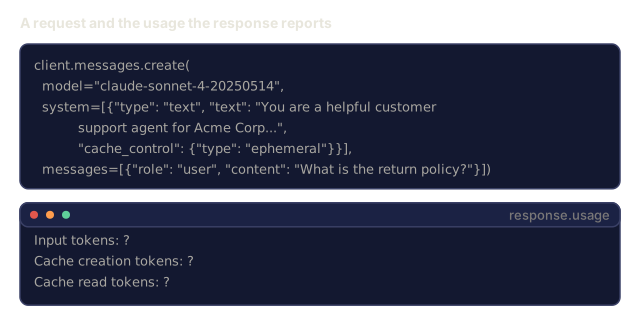
Anthropic's approach is explicit. You mark sections of your prompt with cache_control: {"type": "ephemeral"}. The first request pays a 25% write premium. Subsequent requests with the same prefix get a 90% discount. A 2,000-token system prompt that costs $0.005 normally costs $0.0005 on cache hits. Over 100K requests, that saves $450/day.
OpenAI's approach is automatic. Any prompt prefix that matches a previous request gets a 50% discount. No markers needed. The tradeoff: less discount, less control, but zero implementation effort.
Semantic Caching: Your Custom Layer
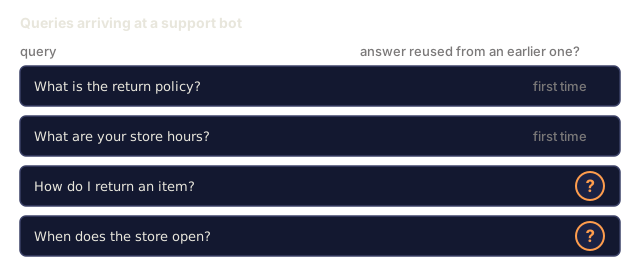
Provider caching only works for identical prefixes. Semantic caching handles the harder case: different queries with the same meaning.
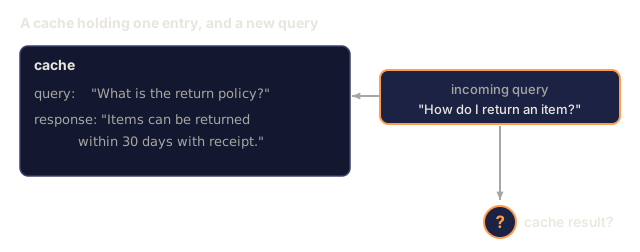
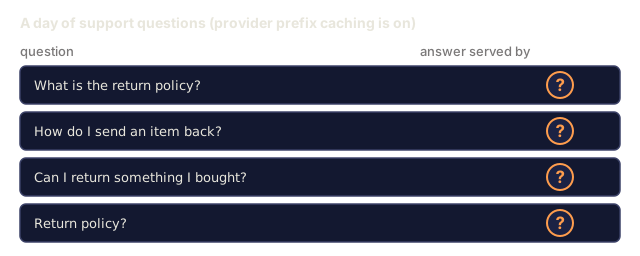
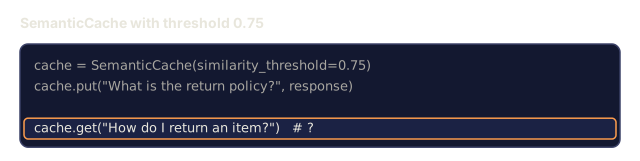
"What is the return policy?" and "How do I return an item?" are different strings but identical intent. A semantic cache embeds both queries, computes cosine similarity, and returns the cached response if similarity exceeds a threshold (typically 0.92-0.95).

The embedding costs are negligible. OpenAI's text-embedding-3-small costs $0.02 per million tokens. Checking the cache costs almost nothing compared to a full LLM call.
Exact Caching: Hash and Match
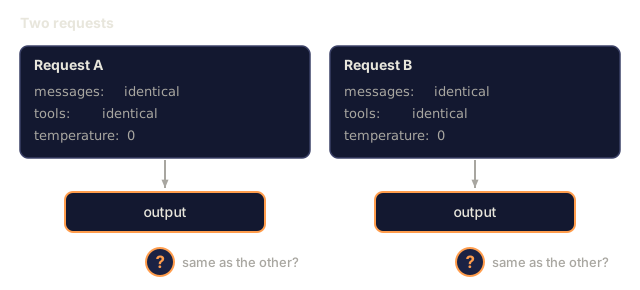
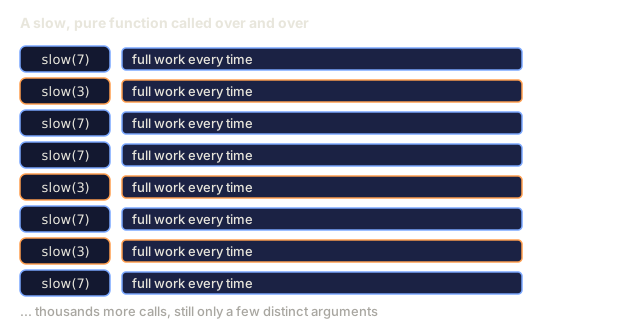
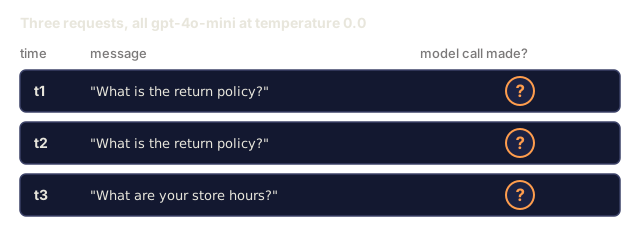
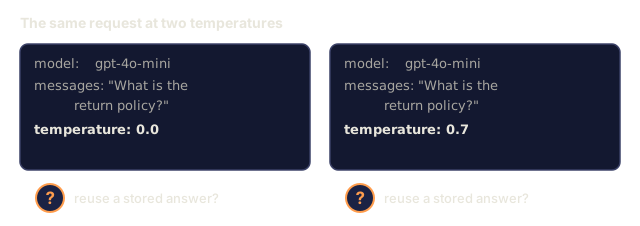
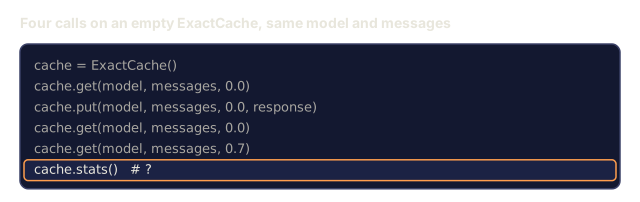
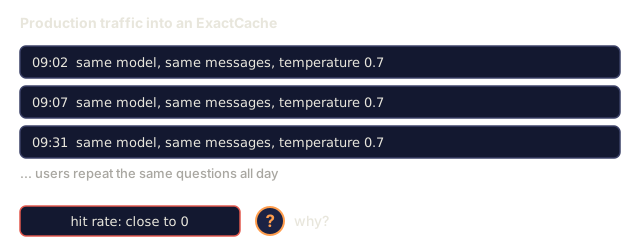
For deterministic calls (temperature=0, same model, same prompt), exact caching is simpler and faster. Hash the full prompt, check the cache, return if found.
This works well for:
- System prompt + fixed context + identical user queries
- Function calling with identical tool definitions
- Batch processing where the same document gets processed multiple times
Rate Limiting: Protecting Your Budget
Rate limiting protects your budget as much as it keeps usage fair.
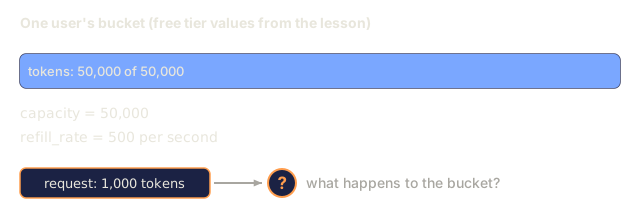
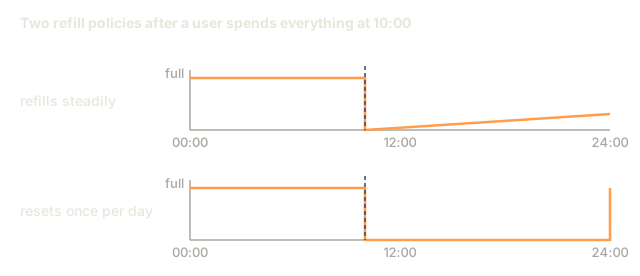
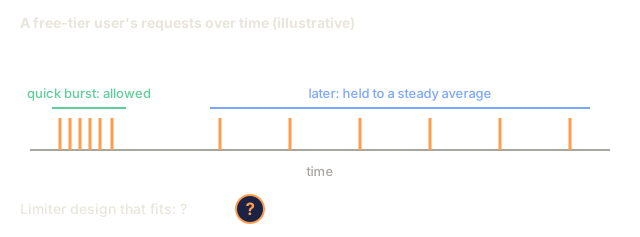
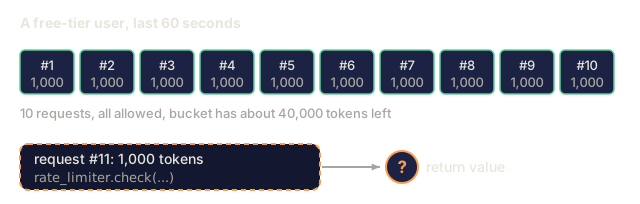
Token bucket algorithm: each user gets a bucket of N tokens that refills at rate R per second. A request consumes tokens from the bucket. If the bucket is empty, the request is rejected. This allows bursts (use the full bucket at once) while enforcing an average rate.
Per-user quotas: set daily/monthly token limits per user tier.
| Tier | Daily Token Limit | Max Requests/min | Model Access |
|---|---|---|---|
| Free | 50,000 | 10 | GPT-4o-mini only |
| Pro | 500,000 | 60 | GPT-4o, Claude Sonnet |
| Enterprise | 5,000,000 | 300 | All models |
Model Routing: Right Model for the Right Job
Not every query needs GPT-4o.
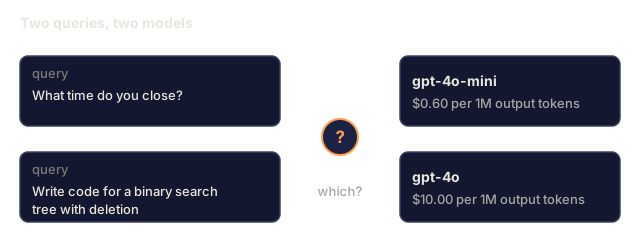
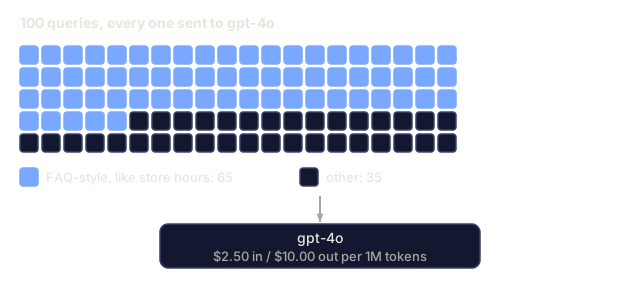
"What time does the store close?" does not require a $10/M-output model. GPT-4o-mini at $0.60/M output handles it fine. Claude Haiku at $1.25/M output handles it. A simple classifier routes cheap queries to cheap models and complex queries to expensive models.

A well-tuned router saves 40-70% on model costs alone.
Cost Tracking: Know Where the Money Goes
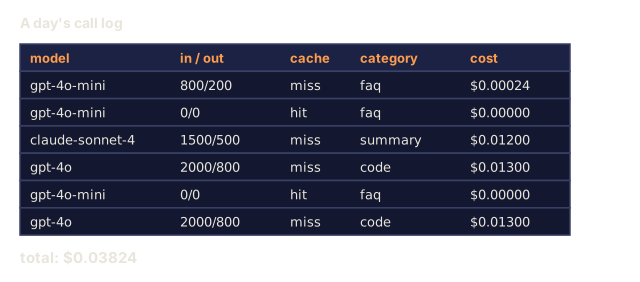
You cannot optimize what you do not measure. Log every API call with:
- Timestamp
- Model name
- Input tokens
- Output tokens
- Latency (ms)
- Computed cost ($)
- User ID
- Cache hit/miss
- Request category
This data reveals which features are expensive, which users are heavy consumers, and where caching has the most impact.
Batching: Bulk Discounts
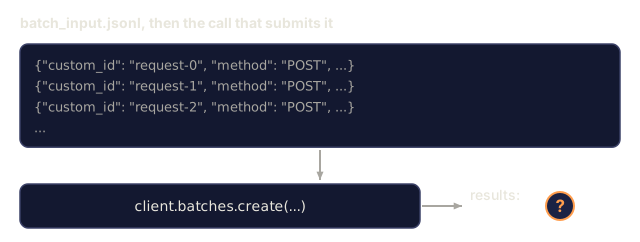
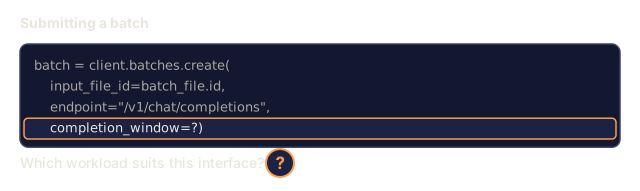
OpenAI's Batch API processes requests asynchronously at a 50% discount. You submit a batch of up to 50,000 requests, and results come back within 24 hours.
Use batching for:
- Nightly document processing
- Bulk classification
- Evaluation runs
- Data enrichment pipelines
Not for: real-time user-facing queries (latency matters).
Budget Alerts and Circuit Breakers
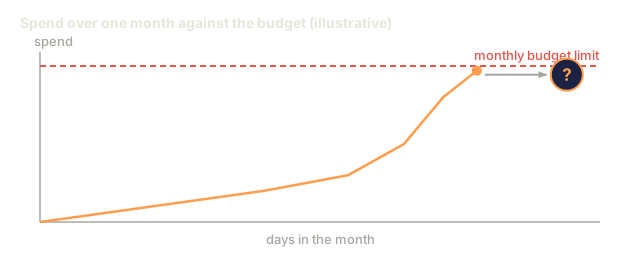
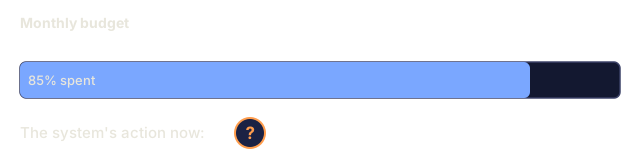
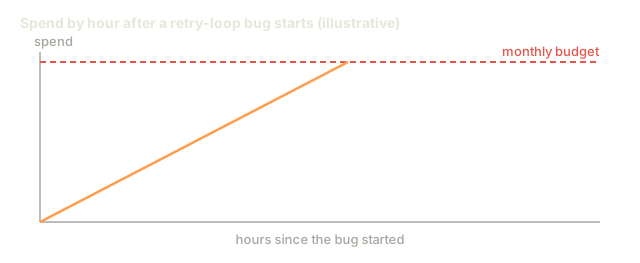
A circuit breaker stops spending when you hit a limit. Without one, a bug or abuse can burn through your monthly budget in hours.
Set three thresholds:
- Warning (70% of budget): send an alert
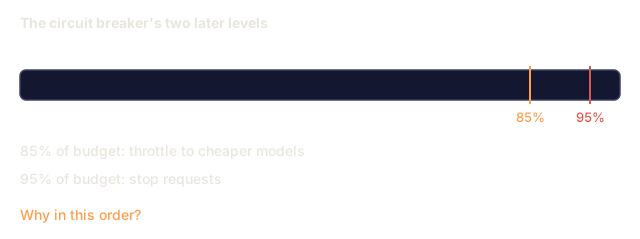
- Throttle (85% of budget): switch to cheaper models only
- Stop (95% of budget): reject new requests, return cached responses only
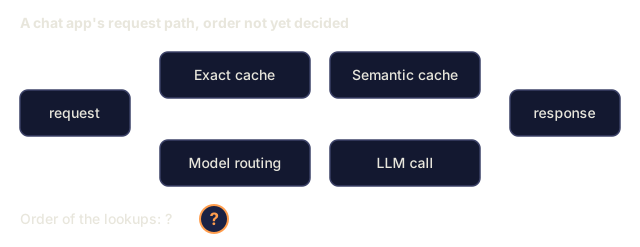
The Optimization Stack
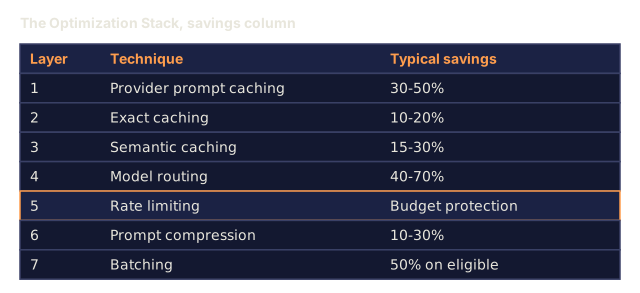
Apply these techniques in order. Each layer compounds on the previous ones.
| Layer | Technique | Typical Savings | Implementation Effort |
|---|---|---|---|
| 1 | Provider prompt caching | 30-50% | Low (add cache markers) |
| 2 | Exact caching | 10-20% | Low (hash + dict) |
| 3 | Semantic caching | 15-30% | Medium (embeddings + similarity) |
| 4 | Model routing | 40-70% | Medium (classifier) |
| 5 | Rate limiting | Budget protection | Low (token bucket) |
| 6 | Prompt compression | 10-30% | Medium (rewrite prompts) |
| 7 | Batching | 50% on eligible | Low (batch API) |
A RAG app applying layers 1-5 typically reduces costs from $22,500/month to $4,000-6,000/month. That is the difference between burning runway and building a business.
Real Savings: Before and After
Here is an example breakdown for a RAG chatbot serving 10,000 DAU.
| Metric | Before Optimization | After Optimization | Savings |
|---|---|---|---|
| Monthly LLM cost | $22,500 | $5,200 | 77% |
| Avg cost per query | $0.0075 | $0.0017 | 77% |
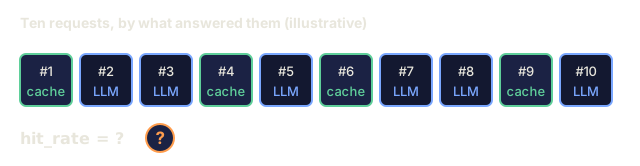
| Cache hit rate | 0% | 52% | -- |
| Queries routed to mini | 0% | 65% | -- |
| P95 latency | 2,800ms | 900ms (cache hits: 50ms) | 68% |
| Monthly embedding cost | $0 | $180 | (new cost) |
| Total monthly cost | $22,500 | $5,380 | 76% |
The embedding cost for semantic caching ($180/month) pays for itself within the first hour of cache hits.


Build It
Step 1: Cost Calculator
Build a token cost calculator that knows current pricing for major models.
import hashlib
import time
import json
import math
from dataclasses import dataclass, field


MODEL_PRICING = {
    "gpt-4o": {"input": 2.50, "output": 10.00, "cached_input": 1.25},
    "gpt-4o-mini": {"input": 0.15, "output": 0.60, "cached_input": 0.075},
    "gpt-4.1": {"input": 2.00, "output": 8.00, "cached_input": 0.50},
    "gpt-4.1-mini": {"input": 0.40, "output": 1.60, "cached_input": 0.10},
    "gpt-4.1-nano": {"input": 0.10, "output": 0.40, "cached_input": 0.025},
    "o3": {"input": 2.00, "output": 8.00, "cached_input": 0.50},
    "o3-mini": {"input": 1.10, "output": 4.40, "cached_input": 0.55},
    "o4-mini": {"input": 1.10, "output": 4.40, "cached_input": 0.275},
    "claude-opus-4": {"input": 15.00, "output": 75.00, "cached_input": 1.50},
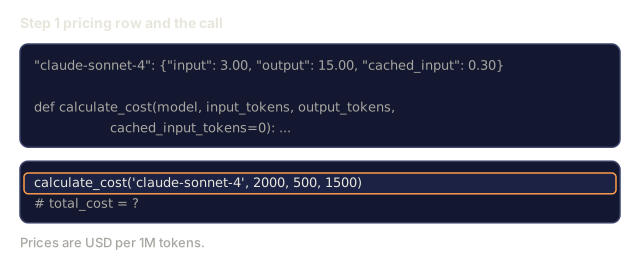
    "claude-sonnet-4": {"input": 3.00, "output": 15.00, "cached_input": 0.30},
    "claude-haiku-3.5": {"input": 0.80, "output": 4.00, "cached_input": 0.08},
    "gemini-2.5-pro": {"input": 1.25, "output": 10.00, "cached_input": 0.3125},
    "gemini-2.5-flash": {"input": 0.15, "output": 0.60, "cached_input": 0.0375},
}


def calculate_cost(model, input_tokens, output_tokens, cached_input_tokens=0):
    if model not in MODEL_PRICING:
        return {"error": f"Unknown model: {model}"}
    pricing = MODEL_PRICING[model]
    non_cached = input_tokens - cached_input_tokens
    input_cost = (non_cached / 1_000_000) * pricing["input"]
    cached_cost = (cached_input_tokens / 1_000_000) * pricing["cached_input"]
    output_cost = (output_tokens / 1_000_000) * pricing["output"]
    total = input_cost + cached_cost + output_cost
    return {
        "model": model,
        "input_tokens": input_tokens,
        "output_tokens": output_tokens,
        "cached_input_tokens": cached_input_tokens,
        "input_cost": round(input_cost, 6),
        "cached_input_cost": round(cached_cost, 6),
        "output_cost": round(output_cost, 6),
        "total_cost": round(total, 6),
    }
Step 2: Exact Cache
Hash the full prompt and return cached responses for identical requests.
class ExactCache:
    def __init__(self, max_size=1000, ttl_seconds=3600):
        self.cache = {}
        self.max_size = max_size
        self.ttl = ttl_seconds
        self.hits = 0
        self.misses = 0

    def _hash(self, model, messages, temperature):
        key_data = json.dumps({"model": model, "messages": messages, "temperature": temperature}, sort_keys=True)
        return hashlib.sha256(key_data.encode()).hexdigest()

    def get(self, model, messages, temperature=0.0):
        if temperature > 0:
            self.misses += 1
            return None
        key = self._hash(model, messages, temperature)
        if key in self.cache:
            entry = self.cache[key]
            if time.time() - entry["timestamp"] < self.ttl:
                self.hits += 1
                entry["access_count"] += 1
                return entry["response"]
            del self.cache[key]
        self.misses += 1
        return None

    def put(self, model, messages, temperature, response):
        if temperature > 0:
            return
        if len(self.cache) >= self.max_size:
            oldest_key = min(self.cache, key=lambda k: self.cache[k]["timestamp"])
            del self.cache[oldest_key]
        key = self._hash(model, messages, temperature)
        self.cache[key] = {
            "response": response,
            "timestamp": time.time(),
            "access_count": 1,
        }

    def stats(self):
        total = self.hits + self.misses
        return {
            "hits": self.hits,
            "misses": self.misses,
            "hit_rate": round(self.hits / total, 4) if total > 0 else 0,
            "cache_size": len(self.cache),
        }
Step 3: Semantic Cache
Embed queries and return cached responses when similarity exceeds a threshold.
def simple_embed(text):
    words = text.lower().split()
    vocab = {}
    for w in words:
        vocab[w] = vocab.get(w, 0) + 1
    norm = math.sqrt(sum(v * v for v in vocab.values()))
    if norm == 0:
        return {}
    return {k: v / norm for k, v in vocab.items()}


def cosine_similarity(a, b):
    if not a or not b:
        return 0.0
    all_keys = set(a) | set(b)
    dot = sum(a.get(k, 0) * b.get(k, 0) for k in all_keys)
    return dot


class SemanticCache:
    def __init__(self, similarity_threshold=0.85, max_size=500, ttl_seconds=3600):
        self.entries = []
        self.threshold = similarity_threshold
        self.max_size = max_size
        self.ttl = ttl_seconds
        self.hits = 0
        self.misses = 0

    def get(self, query):
        query_embedding = simple_embed(query)
        now = time.time()
        best_match = None
        best_sim = 0.0
        for entry in self.entries:
            if now - entry["timestamp"] > self.ttl:
                continue
            sim = cosine_similarity(query_embedding, entry["embedding"])
            if sim > best_sim:
                best_sim = sim
                best_match = entry
        if best_match and best_sim >= self.threshold:
            self.hits += 1
            best_match["access_count"] += 1
            return {"response": best_match["response"], "similarity": round(best_sim, 4), "original_query": best_match["query"]}
        self.misses += 1
        return None

    def put(self, query, response):
        if len(self.entries) >= self.max_size:
            self.entries.sort(key=lambda e: e["timestamp"])
            self.entries.pop(0)
        self.entries.append({
            "query": query,
            "embedding": simple_embed(query),
            "response": response,
            "timestamp": time.time(),
            "access_count": 1,
        })

    def stats(self):
        total = self.hits + self.misses
        return {
            "hits": self.hits,
            "misses": self.misses,
            "hit_rate": round(self.hits / total, 4) if total > 0 else 0,
            "cache_size": len(self.entries),
        }
Step 4: Rate Limiter
Token bucket rate limiter with per-user quotas.
class TokenBucketRateLimiter:
    def __init__(self):
        self.buckets = {}
        self.tiers = {
            "free": {"capacity": 50_000, "refill_rate": 500, "max_requests_per_min": 10},
            "pro": {"capacity": 500_000, "refill_rate": 5_000, "max_requests_per_min": 60},
            "enterprise": {"capacity": 5_000_000, "refill_rate": 50_000, "max_requests_per_min": 300},
        }

    def _get_bucket(self, user_id, tier="free"):
        if user_id not in self.buckets:
            tier_config = self.tiers.get(tier, self.tiers["free"])
            self.buckets[user_id] = {
                "tokens": tier_config["capacity"],
                "capacity": tier_config["capacity"],
                "refill_rate": tier_config["refill_rate"],
                "last_refill": time.time(),
                "request_timestamps": [],
                "max_rpm": tier_config["max_requests_per_min"],
                "tier": tier,
                "total_tokens_used": 0,
            }
        return self.buckets[user_id]

    def _refill(self, bucket):
        now = time.time()
        elapsed = now - bucket["last_refill"]
        refill = int(elapsed * bucket["refill_rate"])
        if refill > 0:
            bucket["tokens"] = min(bucket["capacity"], bucket["tokens"] + refill)
            bucket["last_refill"] = now

    def check(self, user_id, tokens_needed, tier="free"):
        bucket = self._get_bucket(user_id, tier)
        self._refill(bucket)
        now = time.time()
        bucket["request_timestamps"] = [t for t in bucket["request_timestamps"] if now - t < 60]
        if len(bucket["request_timestamps"]) >= bucket["max_rpm"]:
            return {"allowed": False, "reason": "rate_limit", "retry_after_seconds": 60 - (now - bucket["request_timestamps"][0])}
        if bucket["tokens"] < tokens_needed:
            deficit = tokens_needed - bucket["tokens"]
            wait = deficit / bucket["refill_rate"]
            return {"allowed": False, "reason": "token_limit", "tokens_available": bucket["tokens"], "retry_after_seconds": round(wait, 1)}
        return {"allowed": True, "tokens_available": bucket["tokens"]}

    def consume(self, user_id, tokens_used, tier="free"):
        bucket = self._get_bucket(user_id, tier)
        bucket["tokens"] -= tokens_used
        bucket["request_timestamps"].append(time.time())
        bucket["total_tokens_used"] += tokens_used

    def get_usage(self, user_id):
        if user_id not in self.buckets:
            return {"error": "User not found"}
        b = self.buckets[user_id]
        return {
            "user_id": user_id,
            "tier": b["tier"],
            "tokens_remaining": b["tokens"],
            "capacity": b["capacity"],
            "total_tokens_used": b["total_tokens_used"],
            "utilization": round(b["total_tokens_used"] / b["capacity"], 4) if b["capacity"] else 0,
        }
Step 5: Cost Tracker
Log every call and compute running totals.
class CostTracker:
    def __init__(self, monthly_budget=1000.0):
        self.logs = []
        self.monthly_budget = monthly_budget
        self.alerts = []

    def log_call(self, model, input_tokens, output_tokens, cached_input_tokens=0, latency_ms=0, user_id="anonymous", cache_status="miss"):
        cost = calculate_cost(model, input_tokens, output_tokens, cached_input_tokens)
        entry = {
            "timestamp": time.time(),
            "model": model,
            "input_tokens": input_tokens,
            "output_tokens": output_tokens,
            "cached_input_tokens": cached_input_tokens,
            "latency_ms": latency_ms,
            "cost": cost["total_cost"],
            "user_id": user_id,
            "cache_status": cache_status,
        }
        self.logs.append(entry)
        self._check_budget()
        return entry

    def _check_budget(self):
        total = self.total_cost()
        pct = total / self.monthly_budget if self.monthly_budget > 0 else 0
        if pct >= 0.95 and not any(a["level"] == "stop" for a in self.alerts):
            self.alerts.append({"level": "stop", "message": f"Budget 95% consumed: ${total:.2f}/${self.monthly_budget:.2f}", "timestamp": time.time()})
        elif pct >= 0.85 and not any(a["level"] == "throttle" for a in self.alerts):
            self.alerts.append({"level": "throttle", "message": f"Budget 85% consumed: ${total:.2f}/${self.monthly_budget:.2f}", "timestamp": time.time()})
        elif pct >= 0.70 and not any(a["level"] == "warning" for a in self.alerts):
            self.alerts.append({"level": "warning", "message": f"Budget 70% consumed: ${total:.2f}/${self.monthly_budget:.2f}", "timestamp": time.time()})

    def total_cost(self):
        return round(sum(e["cost"] for e in self.logs), 6)

    def cost_by_model(self):
        by_model = {}
        for e in self.logs:
            m = e["model"]
            if m not in by_model:
                by_model[m] = {"calls": 0, "cost": 0, "input_tokens": 0, "output_tokens": 0}
            by_model[m]["calls"] += 1
            by_model[m]["cost"] = round(by_model[m]["cost"] + e["cost"], 6)
            by_model[m]["input_tokens"] += e["input_tokens"]
            by_model[m]["output_tokens"] += e["output_tokens"]
        return by_model

    def cache_savings(self):
        cache_hits = [e for e in self.logs if e["cache_status"] == "hit"]
        if not cache_hits:
            return {"saved": 0, "cache_hits": 0}
        saved = 0
        for e in cache_hits:
            full_cost = calculate_cost(e["model"], e["input_tokens"], e["output_tokens"])
            saved += full_cost["total_cost"]
        return {"saved": round(saved, 4), "cache_hits": len(cache_hits)}

    def summary(self):
        if not self.logs:
            return {"total_calls": 0, "total_cost": 0}
        total_latency = sum(e["latency_ms"] for e in self.logs)
        cache_hits = sum(1 for e in self.logs if e["cache_status"] == "hit")
        return {
            "total_calls": len(self.logs),
            "total_cost": self.total_cost(),
            "avg_cost_per_call": round(self.total_cost() / len(self.logs), 6),
            "avg_latency_ms": round(total_latency / len(self.logs), 1),
            "cache_hit_rate": round(cache_hits / len(self.logs), 4),
            "cost_by_model": self.cost_by_model(),
            "cache_savings": self.cache_savings(),
            "budget_remaining": round(self.monthly_budget - self.total_cost(), 2),
            "budget_utilization": round(self.total_cost() / self.monthly_budget, 4) if self.monthly_budget > 0 else 0,
            "alerts": self.alerts,
        }
Step 6: Model Router
Route queries to the cheapest model that can handle them.
SIMPLE_KEYWORDS = ["what time", "hours", "address", "phone", "price", "return policy", "hello", "hi", "thanks", "yes", "no"]
COMPLEX_KEYWORDS = ["analyze", "compare", "explain why", "write code", "debug", "architect", "design", "trade-off", "evaluate"]


def classify_complexity(query):
    q = query.lower()
    if len(q.split()) <= 5 or any(kw in q for kw in SIMPLE_KEYWORDS):
        return "simple"
    if any(kw in q for kw in COMPLEX_KEYWORDS):
        return "complex"
    return "medium"


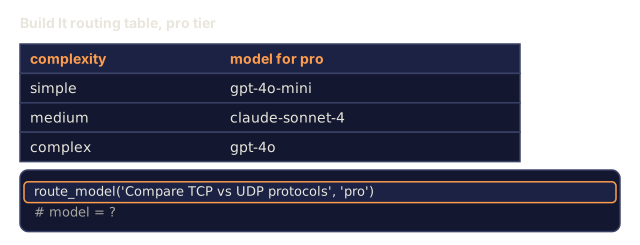
def route_model(query, tier="pro"):
    complexity = classify_complexity(query)
    routing_table = {
        "simple": {"free": "gpt-4.1-nano", "pro": "gpt-4o-mini", "enterprise": "gpt-4o-mini"},
        "medium": {"free": "gpt-4o-mini", "pro": "claude-sonnet-4", "enterprise": "claude-sonnet-4"},
        "complex": {"free": "gpt-4o-mini", "pro": "gpt-4o", "enterprise": "claude-opus-4"},
    }
    model = routing_table[complexity].get(tier, "gpt-4o-mini")
    return {"query": query, "complexity": complexity, "model": model, "tier": tier}
Step 7: Run the Demo
def simulate_llm_call(model, query):
    input_tokens = len(query.split()) * 4 + 500
    output_tokens = 150 + (len(query.split()) * 2)
    latency = 200 + (output_tokens * 2)
    return {
        "model": model,
        "response": f"[Simulated {model} response to: {query[:50]}...]",
        "input_tokens": input_tokens,
        "output_tokens": output_tokens,
        "latency_ms": latency,
    }


def run_demo():
    print("=" * 60)
    print("  Caching, Rate Limiting & Cost Optimization Demo")
    print("=" * 60)

    print("\n--- Model Pricing ---")
    for model, pricing in list(MODEL_PRICING.items())[:6]:
        cost_1k = calculate_cost(model, 1000, 500)
        print(f"  {model}: ${cost_1k['total_cost']:.6f} per 1K in + 500 out")

    print("\n--- Cost Comparison: 100K Requests ---")
    for model in ["gpt-4o", "gpt-4o-mini", "claude-sonnet-4", "claude-haiku-3.5"]:
        cost = calculate_cost(model, 1000 * 100_000, 500 * 100_000)
        print(f"  {model}: ${cost['total_cost']:.2f}")

    print("\n--- Anthropic Cache Savings ---")
    no_cache = calculate_cost("claude-sonnet-4", 2000, 500, 0)
    with_cache = calculate_cost("claude-sonnet-4", 2000, 500, 1500)
    saving = no_cache["total_cost"] - with_cache["total_cost"]
    print(f"  Without cache: ${no_cache['total_cost']:.6f}")
    print(f"  With 1500 cached tokens: ${with_cache['total_cost']:.6f}")
    print(f"  Savings per call: ${saving:.6f} ({saving/no_cache['total_cost']*100:.1f}%)")

    exact_cache = ExactCache(max_size=100, ttl_seconds=300)
    semantic_cache = SemanticCache(similarity_threshold=0.75, max_size=100)
    rate_limiter = TokenBucketRateLimiter()
    tracker = CostTracker(monthly_budget=100.0)

    print("\n--- Exact Cache ---")
    messages_1 = [{"role": "user", "content": "What is the return policy?"}]
    result = exact_cache.get("gpt-4o-mini", messages_1, 0.0)
    print(f"  First lookup: {'HIT' if result else 'MISS'}")
    exact_cache.put("gpt-4o-mini", messages_1, 0.0, "You can return items within 30 days.")
    result = exact_cache.get("gpt-4o-mini", messages_1, 0.0)
    print(f"  Second lookup: {'HIT' if result else 'MISS'} -> {result}")
    result = exact_cache.get("gpt-4o-mini", messages_1, 0.7)
    print(f"  With temp=0.7: {'HIT' if result else 'MISS (non-deterministic, skip cache)'}")
    print(f"  Stats: {exact_cache.stats()}")

    print("\n--- Semantic Cache ---")
    test_queries = [
        ("What is the return policy?", "Items can be returned within 30 days with receipt."),
        ("How do I return an item?", None),
        ("What are your store hours?", "We are open 9am-9pm Monday through Saturday."),
        ("When does the store open?", None),
        ("Tell me about quantum computing", "Quantum computers use qubits..."),
        ("Explain quantum mechanics", None),
    ]
    for query, response in test_queries:
        cached = semantic_cache.get(query)
        if cached:
            print(f"  '{query[:40]}' -> CACHE HIT (sim={cached['similarity']}, original='{cached['original_query'][:40]}')")
        elif response:
            semantic_cache.put(query, response)
            print(f"  '{query[:40]}' -> MISS (stored)")
        else:
            print(f"  '{query[:40]}' -> MISS (no match)")
    print(f"  Stats: {semantic_cache.stats()}")

    print("\n--- Rate Limiting ---")
    for i in range(12):
        check = rate_limiter.check("user_1", 1000, "free")
        if check["allowed"]:
            rate_limiter.consume("user_1", 1000, "free")
        status = "OK" if check["allowed"] else f"BLOCKED ({check['reason']})"
        if i < 5 or not check["allowed"]:
            print(f"  Request {i+1}: {status}")
    print(f"  Usage: {rate_limiter.get_usage('user_1')}")

    print("\n--- Model Routing ---")
    routing_queries = [
        "What time do you close?",
        "Summarize this quarterly earnings report",
        "Analyze the trade-offs between microservices and monoliths",
        "Hello",
        "Write code for a binary search tree with deletion",
    ]
    for q in routing_queries:
        route = route_model(q, "pro")
        print(f"  '{q[:50]}' -> {route['model']} ({route['complexity']})")

    print("\n--- Full Pipeline: Before vs After Optimization ---")
    queries = [
        "What is the return policy?",
        "How do I return something?",
        "What are your hours?",
        "When do you open?",
        "Explain the difference between TCP and UDP",
        "Compare TCP vs UDP protocols",
        "Hello",
        "What is your phone number?",
        "Write a Python function to sort a list",
        "Analyze the pros and cons of serverless architecture",
    ]

    print("\n  [Before: no caching, single model (gpt-4o)]")
    tracker_before = CostTracker(monthly_budget=1000.0)
    for q in queries:
        result = simulate_llm_call("gpt-4o", q)
        tracker_before.log_call("gpt-4o", result["input_tokens"], result["output_tokens"], latency_ms=result["latency_ms"], cache_status="miss")
    before = tracker_before.summary()
    print(f"  Total cost: ${before['total_cost']:.6f}")
    print(f"  Avg cost/call: ${before['avg_cost_per_call']:.6f}")
    print(f"  Avg latency: {before['avg_latency_ms']}ms")

    print("\n  [After: caching + routing + rate limiting]")
    exact_c = ExactCache()
    semantic_c = SemanticCache(similarity_threshold=0.75)
    tracker_after = CostTracker(monthly_budget=1000.0)

    for q in queries:
        messages = [{"role": "user", "content": q}]
        cached = exact_c.get("gpt-4o", messages, 0.0)
        if cached:
            tracker_after.log_call("gpt-4o-mini", 0, 0, latency_ms=5, cache_status="hit")
            continue
        sem_cached = semantic_c.get(q)
        if sem_cached:
            tracker_after.log_call("gpt-4o-mini", 0, 0, latency_ms=15, cache_status="hit")
            continue
        route = route_model(q)
        result = simulate_llm_call(route["model"], q)
        tracker_after.log_call(route["model"], result["input_tokens"], result["output_tokens"], latency_ms=result["latency_ms"], cache_status="miss")
        exact_c.put(route["model"], messages, 0.0, result["response"])
        semantic_c.put(q, result["response"])

    after = tracker_after.summary()
    print(f"  Total cost: ${after['total_cost']:.6f}")
    print(f"  Avg cost/call: ${after['avg_cost_per_call']:.6f}")
    print(f"  Avg latency: {after['avg_latency_ms']}ms")
    print(f"  Cache hit rate: {after['cache_hit_rate']:.0%}")

    if before["total_cost"] > 0:
        savings_pct = (1 - after["total_cost"] / before["total_cost"]) * 100
        print(f"\n  SAVINGS: {savings_pct:.1f}% cost reduction")
        print(f"  Latency improvement: {(1 - after['avg_latency_ms'] / before['avg_latency_ms']) * 100:.1f}% faster")

    print("\n--- Budget Alerts Demo ---")
    alert_tracker = CostTracker(monthly_budget=0.01)
    for i in range(5):
        alert_tracker.log_call("gpt-4o", 5000, 2000, latency_ms=500)
    print(f"  Total spent: ${alert_tracker.total_cost():.6f} / ${alert_tracker.monthly_budget}")
    for alert in alert_tracker.alerts:
        print(f"  ALERT [{alert['level'].upper()}]: {alert['message']}")

    print("\n--- Cost Breakdown by Model ---")
    multi_tracker = CostTracker(monthly_budget=500.0)
    for _ in range(50):
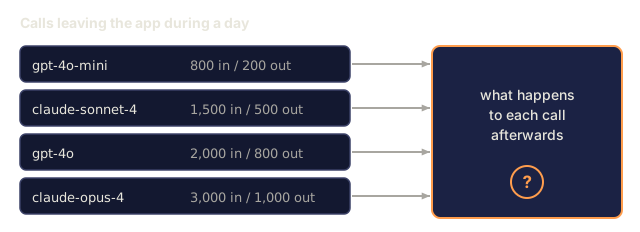
        multi_tracker.log_call("gpt-4o-mini", 800, 200, latency_ms=150)
    for _ in range(30):
        multi_tracker.log_call("claude-sonnet-4", 1500, 500, latency_ms=400)
    for _ in range(10):
        multi_tracker.log_call("gpt-4o", 2000, 800, latency_ms=600)
    for _ in range(10):
        multi_tracker.log_call("claude-opus-4", 3000, 1000, latency_ms=1200)
    breakdown = multi_tracker.cost_by_model()
    for model, data in sorted(breakdown.items(), key=lambda x: x[1]["cost"], reverse=True):
        print(f"  {model}: {data['calls']} calls, ${data['cost']:.6f}, {data['input_tokens']:,} in / {data['output_tokens']:,} out")
    print(f"  Total: ${multi_tracker.total_cost():.6f}")

    print("\n" + "=" * 60)
    print("  Demo complete.")
    print("=" * 60)


if __name__ == "__main__":
    run_demo()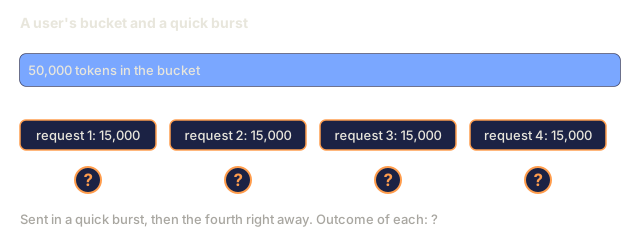
Use It
Anthropic Prompt Caching
# import anthropic
#
# client = anthropic.Anthropic()
#
# response = client.messages.create(
#     model="claude-sonnet-4-20250514",
#     max_tokens=1024,
#     system=[
#         {
#             "type": "text",
#             "text": "You are a helpful customer support agent for Acme Corp...",
#             "cache_control": {"type": "ephemeral"},
#         }
#     ],
#     messages=[{"role": "user", "content": "What is the return policy?"}],
# )
#
# print(f"Input tokens: {response.usage.input_tokens}")
# print(f"Cache creation tokens: {response.usage.cache_creation_input_tokens}")
# print(f"Cache read tokens: {response.usage.cache_read_input_tokens}")
The first call writes to the cache (25% premium). Later calls with the same system prompt prefix read from the cache (90% discount). The cache lasts 5 minutes and resets the timer on every hit.
OpenAI Automatic Caching
# from openai import OpenAI
#
# client = OpenAI()
#
# response = client.chat.completions.create(
#     model="gpt-4o",
#     messages=[
#         {"role": "system", "content": "You are a helpful customer support agent..."},
#         {"role": "user", "content": "What is the return policy?"},
#     ],
# )
#
# print(f"Prompt tokens: {response.usage.prompt_tokens}")
# print(f"Cached tokens: {response.usage.prompt_tokens_details.cached_tokens}")
# print(f"Completion tokens: {response.usage.completion_tokens}")
OpenAI caches automatically. Any prompt prefix of 1,024+ tokens that matches a recent request gets a 50% discount. No code changes are needed. Check prompt_tokens_details.cached_tokens in the response to confirm it is working.
OpenAI Batch API
# import json
# from openai import OpenAI
#
# client = OpenAI()
#
# requests = []
# for i, query in enumerate(queries):
#     requests.append({
#         "custom_id": f"request-{i}",
#         "method": "POST",
#         "url": "/v1/chat/completions",
#         "body": {
#             "model": "gpt-4o-mini",
#             "messages": [{"role": "user", "content": query}],
#         },
#     })
#
# with open("batch_input.jsonl", "w") as f:
#     for r in requests:
#         f.write(json.dumps(r) + "\n")
#
# batch_file = client.files.create(file=open("batch_input.jsonl", "rb"), purpose="batch")
# batch = client.batches.create(input_file_id=batch_file.id, endpoint="/v1/chat/completions", completion_window="24h")
# print(f"Batch ID: {batch.id}, Status: {batch.status}")
Batch API gives a flat 50% discount on all tokens. Results arrive within 24 hours. A good fit for non-real-time workloads: evaluations, data labeling, bulk summarization.
Production Semantic Cache with Redis
# import redis
# import numpy as np
# from openai import OpenAI
#
# r = redis.Redis()
# client = OpenAI()
#
# def get_embedding(text):
#     response = client.embeddings.create(model="text-embedding-3-small", input=text)
#     return response.data[0].embedding
#
# def semantic_cache_lookup(query, threshold=0.95):
#     query_emb = np.array(get_embedding(query))
#     keys = r.keys("cache:emb:*")
#     best_sim, best_key = 0, None
#     for key in keys:
#         stored_emb = np.frombuffer(r.get(key), dtype=np.float32)
#         sim = np.dot(query_emb, stored_emb) / (np.linalg.norm(query_emb) * np.linalg.norm(stored_emb))
#         if sim > best_sim:
#             best_sim, best_key = sim, key
#     if best_sim >= threshold and best_key:
#         response_key = best_key.decode().replace("cache:emb:", "cache:resp:")
#         return r.get(response_key).decode()
#     return None
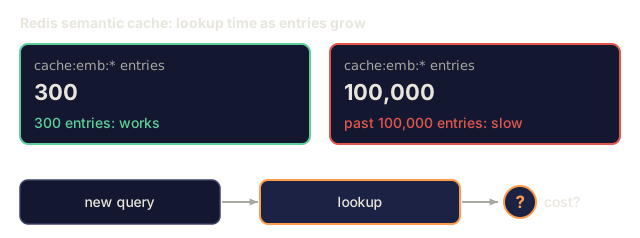
In production, replace the linear scan with a vector index (Redis Vector Search, Pinecone, or pgvector). Linear scan works for <1,000 entries. Beyond that, use ANN (approximate nearest neighbor) for O(log n) lookup.
Ship It
This lesson produces outputs/prompt-cost-optimizer.md, a reusable prompt that analyzes your LLM application and recommends specific cost optimizations with projected savings.
It also produces outputs/skill-cost-patterns.md, a decision framework for choosing the right caching strategy, rate limiting configuration, and model routing rules for your use case.
I'd run caching_cost.py before changing anything. It simulates the LLM calls, so it needs no API key, and it prints each layer's behavior in turn.
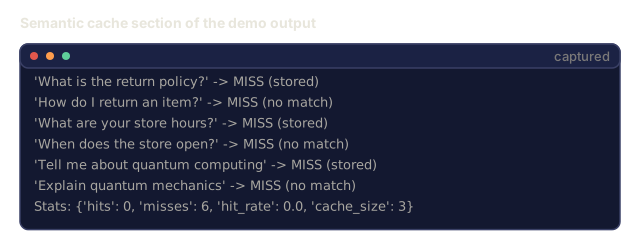
Then read the output with some suspicion, because the toy is rougher than the prose around it. The semantic cache uses word-count vectors instead of learned embeddings, so none of the paraphrase pairs hit at the 0.75 threshold. "How do I return an item?" shares only the word "return" with "What is the return policy?". The pipeline comparison prints a 0% cache hit rate, which means its cost drop comes from routing alone. A real embedding model is what lets that layer earn its place.
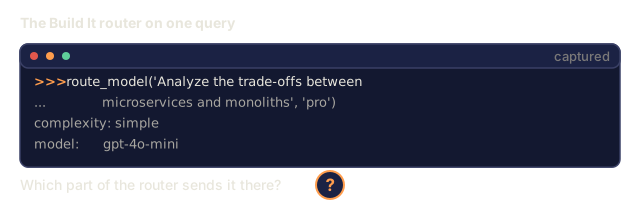
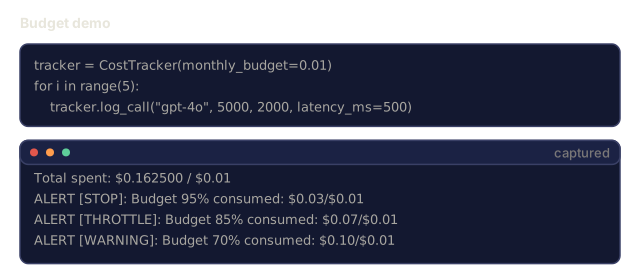
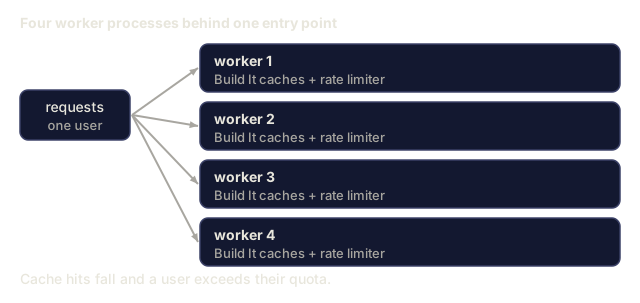
The router is the first thing I'd fix. Keywords match as substrings, so "hi" fires inside "this" and "no" fires inside "monoliths", and "Analyze the trade-offs between microservices and monoliths" lands in the simple tier. Matching whole words would send it down the complex path. The budget demo has a smaller quirk: with a $0.01 budget the first call crosses all three thresholds, but the elif chain records one level per call, so the alerts print as stop, throttle, warning. In a real breaker I'd act on the highest level crossed right away and not wait for later calls to record the lower ones. Everything also lives in process memory with no locking, so running several workers means moving the caches and buckets into something shared like Redis.
Exercises
-
Implement LRU eviction for the semantic cache. Replace the oldest-first eviction with least-recently-used. Track the last access time for each entry and evict the entry with the oldest access time when the cache is full. Compare hit rates between the two strategies over 100 queries.
-
Build a cost projection tool. Given a log of API calls (the CostTracker logs), project the monthly cost based on the trailing 7-day average. Account for weekday/weekend patterns. Trigger an alert if the projected monthly cost exceeds the budget by more than 20%.
-
Implement tiered semantic caching. Use two similarity thresholds: 0.98 for high-confidence hits (return immediately) and 0.90 for medium-confidence hits (return with a disclaimer: "Based on a similar previous question..."). Track which tier each hit came from and measure user satisfaction differences.
-
Build a model routing classifier. Replace the keyword-based classifier with an embedding-based one. Embed 50 labeled queries (simple/medium/complex), then classify new queries by finding the nearest labeled example. Measure classification accuracy against a test set of 20 queries.
-
Implement a circuit breaker with degradation levels. At 70% budget, log a warning. At 85%, automatically switch all routing to the cheapest model (gpt-4o-mini). At 95%, serve only cached responses and reject new queries. Test by simulating 1,000 requests against a $1.00 budget and verify each threshold triggers correctly.
Key Terms
| Term | What people say | What it actually means |
|---|---|---|
| Prompt caching | "Cache the system prompt" | Provider-level caching where repeated prompt prefixes get a discount (90% Anthropic, 50% OpenAI) -- no code changes for OpenAI, explicit markers for Anthropic |
| Semantic caching | "Smart caching" | Embedding the query, computing similarity to past queries, and returning the cached response if similarity exceeds a threshold -- catches paraphrases that exact matching misses |
| Exact caching | "Hash caching" | Hashing the full prompt (model + messages + temperature) and returning the cached response for identical inputs -- only works for temperature=0 deterministic calls |
| Token bucket | "Rate limiter" | An algorithm where each user has a bucket of N tokens that refills at rate R per second -- allows bursts up to N while enforcing an average rate of R |
| Model routing | "Cheapskate routing" | Using a classifier to send simple queries to cheap models (GPT-4o-mini, Haiku) and complex queries to expensive models (GPT-4o, Opus) -- saves 40-70% on model costs |
| Cost tracking | "Metering" | Logging every API call with model, tokens, latency, cost, and user ID so you know exactly where money goes and which features are expensive |
| Circuit breaker | "Kill switch" | Automatically degrading service (cheaper models, cached-only) or stopping requests entirely when spending approaches the budget limit |
| Batch API | "Bulk discount" | OpenAI's asynchronous processing at 50% discount -- submit up to 50,000 requests, get results within 24 hours |
| Prompt compression | "Token diet" | Rewriting system prompts and context to use fewer tokens while preserving meaning -- shorter prompts cost less and often perform better |
| Cache hit rate | "Cache efficiency" | The percentage of requests served from cache instead of calling the LLM -- 40-60% is typical for production chatbots, saves proportionally on cost |
Further Reading
- Anthropic Prompt Caching Guide: the official docs for Anthropic's explicit cache_control markers, pricing, and cache lifetime behavior
- OpenAI Prompt Caching: OpenAI's automatic caching, how to verify cache hits via usage fields, and minimum prefix lengths
- OpenAI Batch API: 50% discount for asynchronous processing, JSONL format, 24-hour completion window, and 50K request limits
- GPTCache: open-source semantic caching library supporting multiple embedding backends, vector stores, and eviction policies
- Martian Model Router: production model routing that automatically selects the cheapest model capable of handling each query
- Not Diamond: ML-based model router that learns from your traffic patterns to optimize cost/quality tradeoffs across providers
- Helicone: LLM observability platform with cost tracking, caching, rate limiting, and budget alerts as a proxy layer
- Dean & Barroso, "The Tail at Scale" (CACM 2013): latency, throughput, TTFT/TPOT percentiles, and hedged requests; the cost model behind "pick the cheapest model that still meets P95."
- Kwon et al., "Efficient Memory Management for Large Language Model Serving with PagedAttention" (SOSP 2023): the vLLM paper; why paged KV-cache + continuous batching beat naive servers 24× on throughput, the infra layer under "caching and cost."
- Dao et al., "FlashAttention-2: Faster Attention with Better Parallelism and Work Partitioning" (ICLR 2024): kernel-level cost reduction orthogonal to prompt caching; read alongside speculative decoding and GQA for the full cost-curve picture.
Code
- caching_cost.py (python, 511 lines)