Parallel Tool Calls and Streaming with Tools
Three independent weather lookups run one after another cost three round trips. Run them in parallel and the total time collapses to the slowest single call. The major providers now emit multiple tool calls in a single turn, and the payoff is real, but the plumbing is subtle. This lesson covers both halves: the parallel fan-out and the reassembly of streamed arguments, with the id-correlation trap front and center.
Learning Objectives
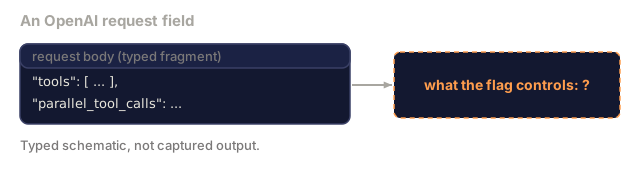
- Explain why `parallel_tool_calls: true` exists and when to disable it.
- Correlate streamed argument chunks to the right tool-call id during parallel fan-out.
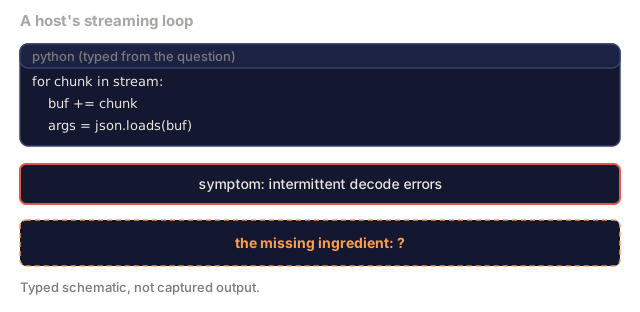
- Reassemble partial `arguments` strings into complete JSON without parsing early.
- Run a three-city weather benchmark that demonstrates sequential vs parallel latency.
The Problem
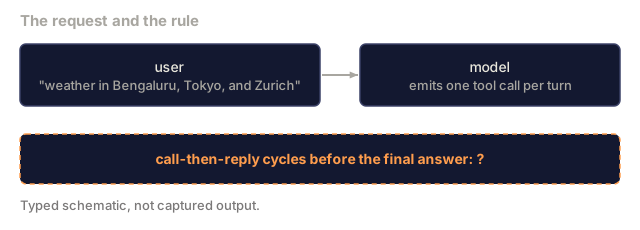
Without parallel calls, an agent answering "what is the weather in Bengaluru, Tokyo, and Zurich" does this:
user -> LLM
LLM -> call get_weather(Bengaluru)
host -> run executor, reply with result
LLM -> call get_weather(Tokyo)
host -> run executor, reply with result
LLM -> call get_weather(Zurich)
host -> run executor, reply with result
LLM -> final text answer
Three LLM round trips, each of which also pays the executor latency. That is far from the ideal wall-clock time, because each round trip pays model latency on top of the executor's.
With parallel calls:
user -> LLM
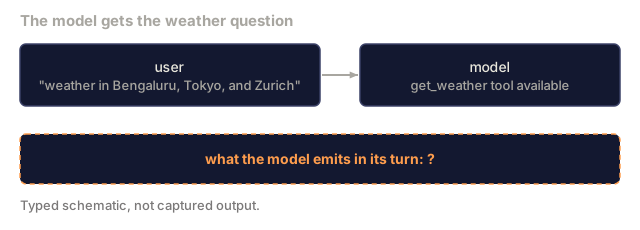
LLM -> call get_weather(Bengaluru); call get_weather(Tokyo); call get_weather(Zurich)
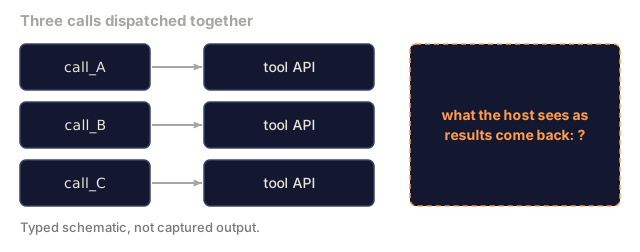
host -> run all three executors concurrently, reply with three results
LLM -> final text answer
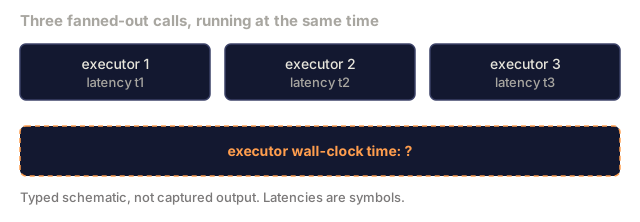
One LLM round trip. Executor time is the maximum of the three, not the sum. Production benchmarks on OpenAI, Anthropic, and Gemini show 60 to 70 percent wall-clock reduction on fan-out workloads.
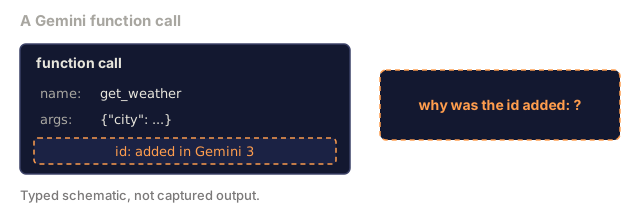
The price is correlation. When the three calls complete out of order, your results must carry the matching tool_call_id so the model can line them up. When results stream, you must assemble partial argument fragments into complete JSON before executing. Gemini 3 added unique ids in part to solve a real-world issue where two parallel calls to the same tool were indistinguishable.
The Concept
Enabling parallel
- OpenAI.
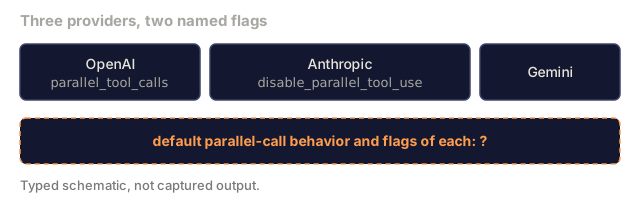
parallel_tool_calls: trueon by default. Setfalseto force serial. - Anthropic. Parallel via
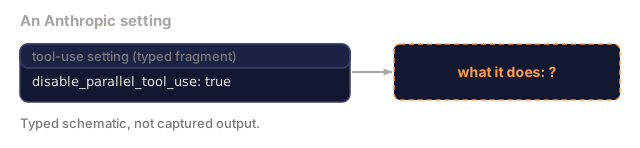
disable_parallel_tool_use: false(default on Claude 3.5 and up). Settruefor serial. - Gemini. Parallel-capable;
tool_config.function_calling_config.mode = "AUTO"lets the model decide.
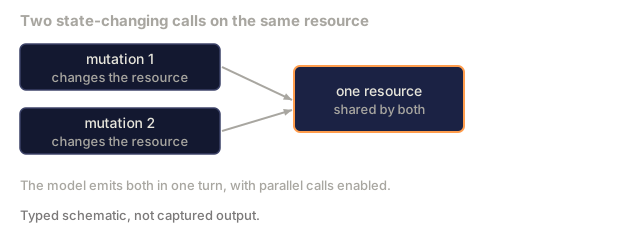
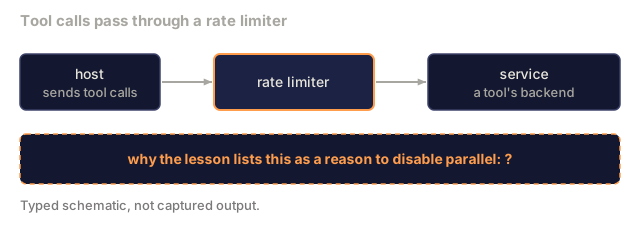
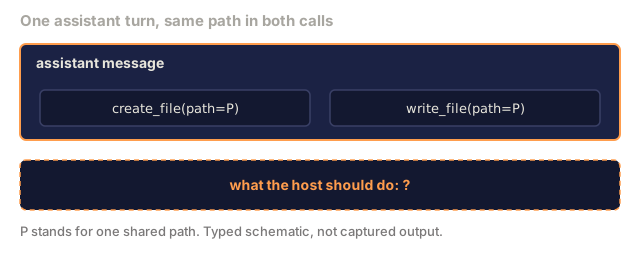
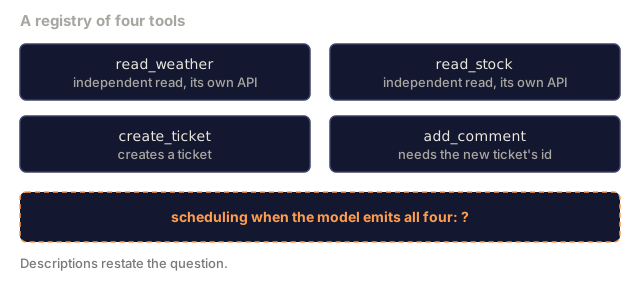
Disable parallel when tools have ordering dependencies (create_file then write_file), when one call's output informs another's input, or when the rate limiter cannot handle fan-out.
Id correlation
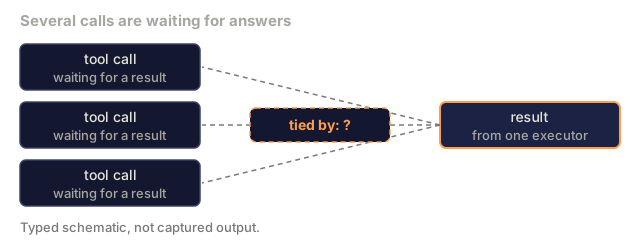
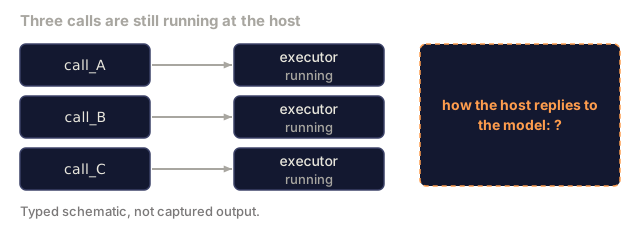
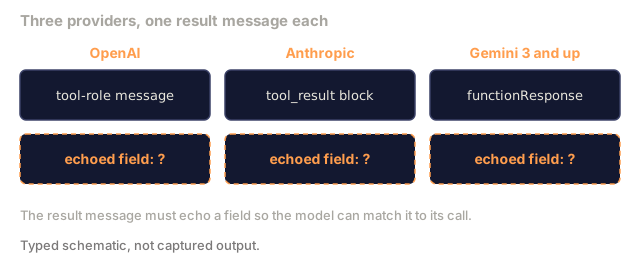
Each call the model emits has an id, and each result the host returns must include the same id. Without it, results are ambiguous.
- OpenAI.
tool_call_idon each tool-role message. - Anthropic.
tool_use_idon eachtool_resultblock. - Gemini.
idon eachfunctionResponse(Gemini 3 and up; Gemini 2 matched by name which broke for same-name parallel calls).
Running calls concurrently
The host runs each call's executor on its own thread, coroutine, or remote worker. The simplest harness uses a thread pool; production uses asyncio with asyncio.gather or structured concurrency. Order of completion is unpredictable, so the id is the identifier.
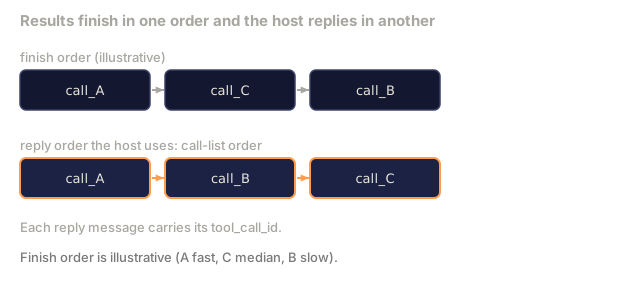
One common bug: reply with results in call-list order instead of completion order. This usually works because the model only cares about tool_call_id, but if a result is dropped or duplicated, out-of-order submission makes debugging harder. Prefer to reply in completion order with explicit ids.
Streaming tool calls
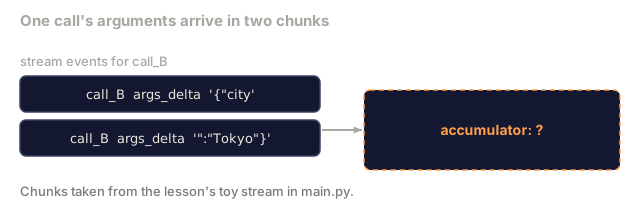
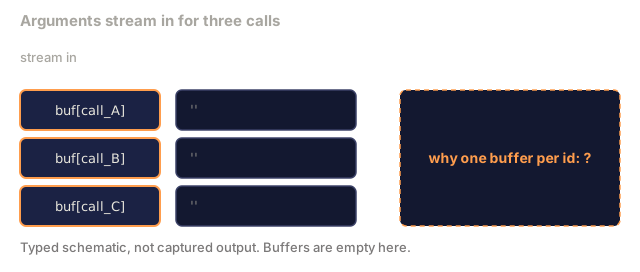
When the model streams, arguments arrive in pieces. Three separate streams of chunks for three parallel calls interleave on the wire. You need one accumulator per id.
Shape by provider:
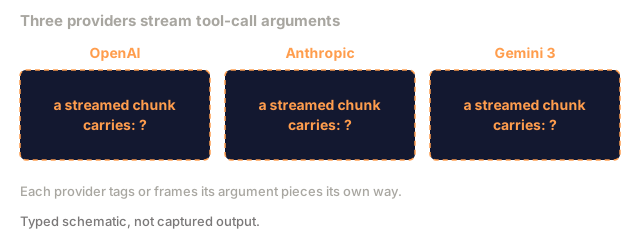
- OpenAI. Each chunk is
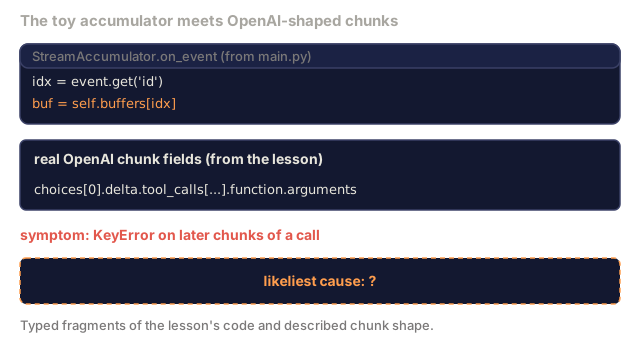
choices[0].delta.tool_calls[i].function.arguments(partial string). The chunk carriesindex(position in the call list). You accumulate per-index, readidwhen it first appears, and parse JSON whenfinish_reason = "tool_calls". - Anthropic. Stream events are
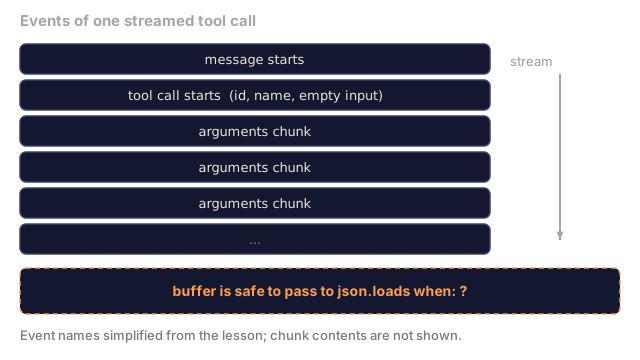
message_start, then onecontent_block_startper block with typetool_use(containing id, name, empty input).content_block_deltaevents carryinput_json_deltachunks.content_block_stopcloses each block. - Gemini.
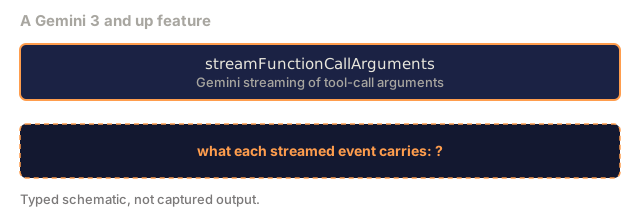
streamFunctionCallArguments(Gemini 3 and up) emits chunks with afunctionCallIdso calls interleave cleanly. Before Gemini 3, streaming returned one complete call at a time.
Partial JSON and the parse-early trap
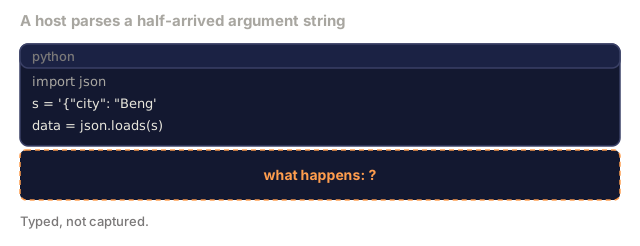
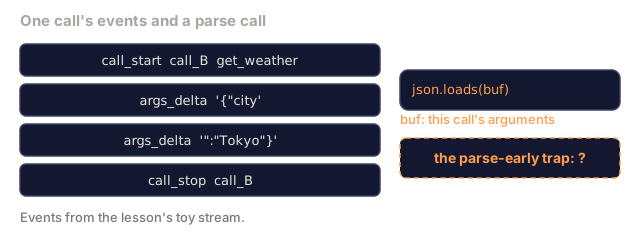
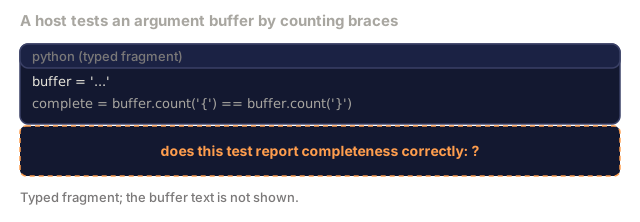
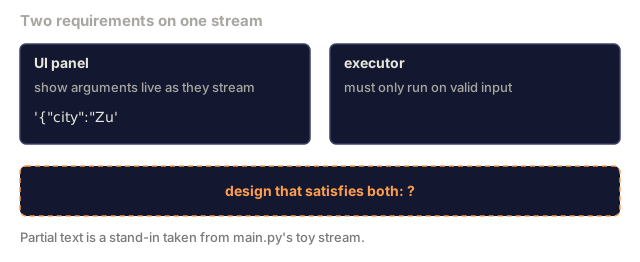
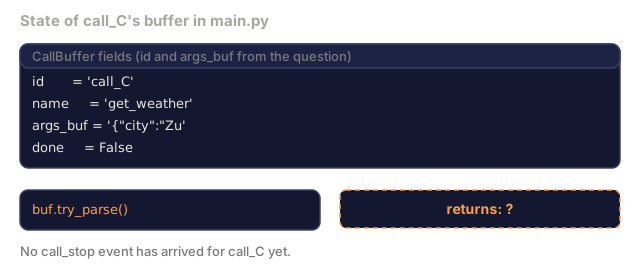
You cannot parse arguments until it is complete. Partial JSON such as {"city": "Beng is not valid and will raise. The correct gate is the provider's end-of-call signal: OpenAI's finish_reason = "tool_calls", Anthropic's content_block_stop, or Gemini's stream-end event. Only then attempt json.loads. A more robust approach uses an incremental JSON parser that yields events as structure completes; OpenAI's streaming guide recommends this for UX that shows a live "thinking" indicator. Brace-counting is unreliable as a completeness test (braces inside quoted strings or escaped content cause false positives) and should only be used as an informal debug heuristic.
Out-of-order completion
call_A: fast API, returns first
call_B: slow API, returns second
call_C: median API, returns third
The host reply must still cite the ids:
[{role: "tool", tool_call_id: "call_A", content: ...},
 {role: "tool", tool_call_id: "call_B", content: ...},
 {role: "tool", tool_call_id: "call_C", content: ...}]
Order in the reply does not matter for correctness on OpenAI or Anthropic. Gemini accepts any order so long as ids match.
Benchmark: sequential vs parallel
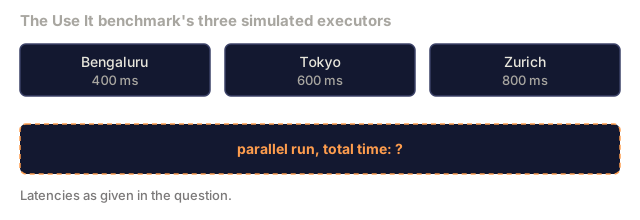
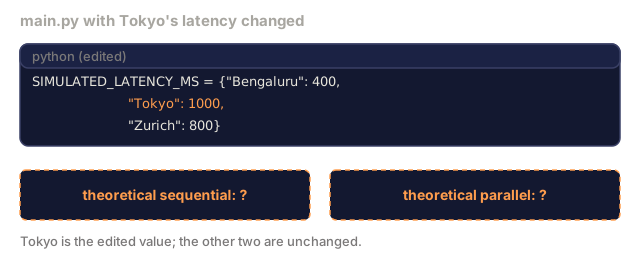
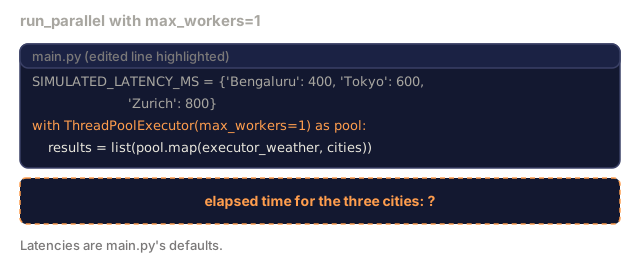
The harness in code/main.py simulates three executors with 400, 600, and 800 ms latency. Sequential runs it in 1800 ms total. Parallel runs it in max(400, 600, 800) = 800 ms. The gap is the sum minus the max, so it widens as you add tools.
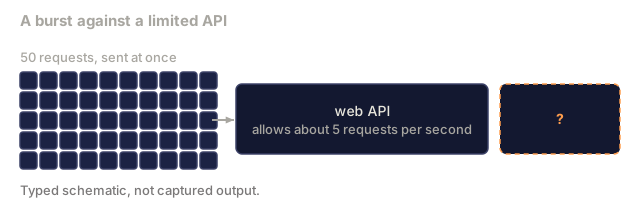
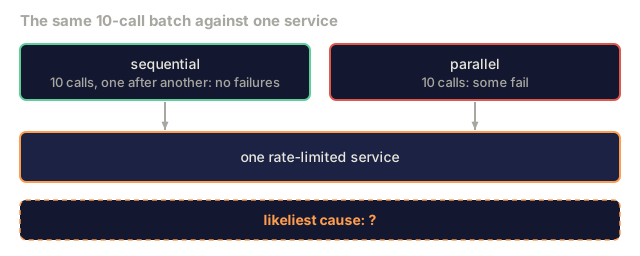
Real-world caveat: parallel calls stress downstream APIs. A 10-way fan-out to a rate-limited service will fail. Phase 13 · 17 covers gateway-level backpressure; retry semantics are planned for a future phase.
Streaming fan-out wall-clock
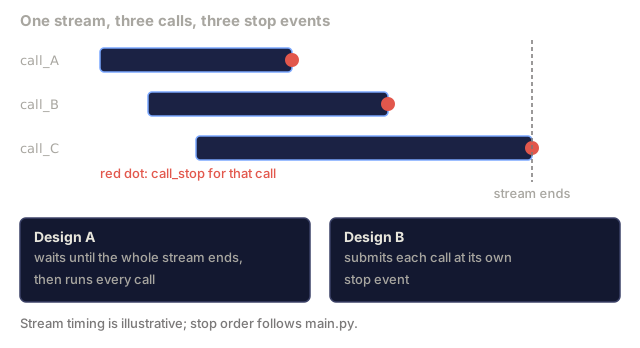
If the model itself streams, you can start executing as soon as one call's arguments are complete, rather than waiting for all calls to finalize. This is an optimization OpenAI documents but not all SDKs expose. The harness here does it: as soon as the simulated stream yields a complete argument object, the host kicks off that call.
Use It
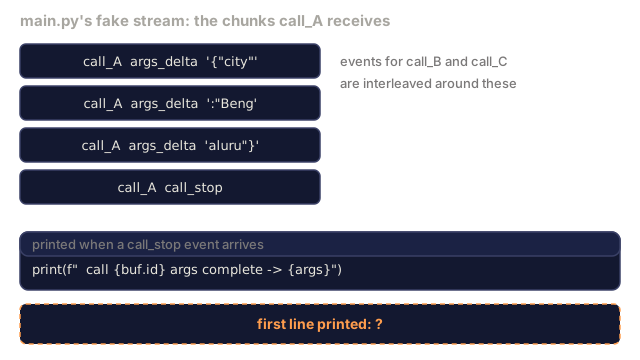
code/main.py has two halves. The first runs three simulated weather calls sequentially and in parallel using concurrent.futures.ThreadPoolExecutor and prints wall-clock time. The second half replays a fake streaming response, with chunks of arguments for three parallel calls interleaved on one stream, and reassembles them per-id with StreamAccumulator. No LLM, no network, just the reassembly logic.
What to look at:
- The sequential timer hits 1.8 seconds. The parallel timer hits 0.8 seconds on the same fake latencies.
- Chunks from different calls interleave on the stream. The accumulator buffers them per id and parses a call's JSON only after that call's stop event.
- The executor kicks off as soon as an id's arguments finalize, not after all streams end.
Ship It
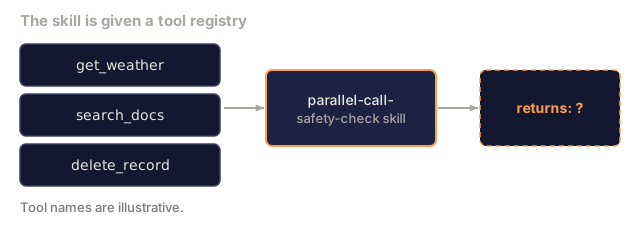
This lesson produces outputs/skill-parallel-call-safety-check.md. Given a tool registry, the skill audits which tools are safe to parallelize, which have ordering dependencies, and which would overwhelm downstream rate limits, and returns a revised registry with per-tool parallel_safe flags.
I'd run main.py and read the second demo's output before the first one's. The args complete lines print in the order the stop events arrive, and that is the moment each call is submitted to the pool, so you can see execution start before the stream has finished. The thread pool timing in demo 1 is the easy part. The accumulator is where the real work is.
My bet is that the id is the whole trick. StreamAccumulator keeps one CallBuffer per id and only parses after call_stop sets done. Nothing else in it is clever. Interleaving stops being a problem once every chunk says which call it belongs to.
I'd also keep the toy in proportion. The fake stream tags events with an id, while the OpenAI shape described above tags chunks with an index, so a real OpenAI accumulator keys on position and reads the id when it first appears. The temperatures in the results come from hash(city), which changes between runs, so only the timings and the id-to-result mapping mean anything. And the results dict is filled in submission order, not completion order, which is fine here because each result stays attached to its id.
Exercises
-
Run
code/main.pyand vary the simulated latencies. Confirm that the parallel-to-sequential ratio is approximatelymax/sum(real runs deviate slightly from the ideal because of thread scheduling, serialization, and harness overhead). At what latency distribution does parallel stop mattering? -
Extend the accumulator to handle a "call was cancelled mid-stream" case by dropping its buffer and emitting a
cancelledevent. What provider documents this case explicitly? Check Anthropic'scontent_block_stopsemantics and OpenAI'sfinish_reason: "length"behavior. -
Replace the thread pool with
asyncio.gather. Benchmark both. You should see small wins on async because of lower context-switch cost, but only if executors do real I/O. -
Pick two tools that should NOT parallelize (e.g.
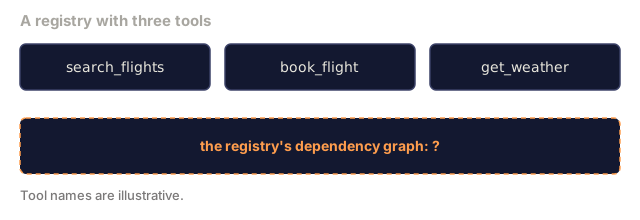
create_filethenwrite_file). Add anordering_dependencygraph to the registry and gate the parallel fan-out on that graph. This is the minimum machinery for dependency-aware scheduling, which a future agent-engineering phase formalizes. -
Read OpenAI's parallel-function-calling section and Anthropic's
disable_parallel_tool_usedocs. Identify the one real-world tool type where Anthropic recommends disabling parallelism. (Hint: consequential mutations on the same resource.)
Key Terms
| Term | What people say | What it actually means |
|---|---|---|
| Parallel tool calls | "Fan-out in one turn" | Model emits multiple tool calls in a single assistant message |
parallel_tool_calls | "OpenAI's flag" | Enable or disable multi-call emission |
disable_parallel_tool_use | "Anthropic's inverse" | Opt-out flag; default is parallel enabled |
| Tool call id | "Correlation handle" | Per-call identifier the result message must echo |
| Accumulator | "Stream buffer" | Per-id string buffer for partial arguments chunks |
| Out-of-order completion | "Fastest first" | Parallel calls finish in unpredictable order; ids are the glue |
| Dependency graph | "Ordering constraints" | Tools whose outputs feed into inputs of other tools; cannot parallelize |
| Parse-early trap | "JSON.parse exploded" | Attempting to parse an incomplete arguments string |
streamFunctionCallArguments | "Gemini 3 feature" | Streamed argument chunks with unique id per call |
| Completion-order reply | "Don't wait for all" | Reply with results as they arrive, keyed by id |
Further Reading
- OpenAI: Parallel function calling: default behavior and the opt-out flag
- Anthropic: Tool use: implementing tool use:
disable_parallel_tool_useand result batching - Google: Gemini function calling parallel section: id-correlated parallel calls from Gemini 3
- OpenAI: Streaming responses with tools: chunked argument reassembly for OpenAI streams
- Anthropic: Streaming messages:
content_block_deltawithinput_json_delta
Code
- main.py (python, 154 lines)