AI Scientist v2 — Workshop-Level Autonomous Research
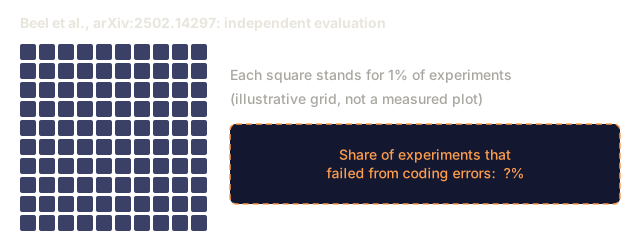
Sakana's AI Scientist v2 (Yamada et al., arXiv:2504.08066) runs the full research loop: hypothesis, code, experiments, figures, writeup, submission. It is the first system to have a generated paper pass peer review at an ICLR 2025 workshop. An independent evaluation (Beel et al.) found 42% of experiments failed from coding errors, and the literature review frequently labeled established concepts as novel. Sakana's own docs warn that the codebase executes LLM-written code and recommend Docker isolation. Both halves of that picture matter.
Learning Objectives
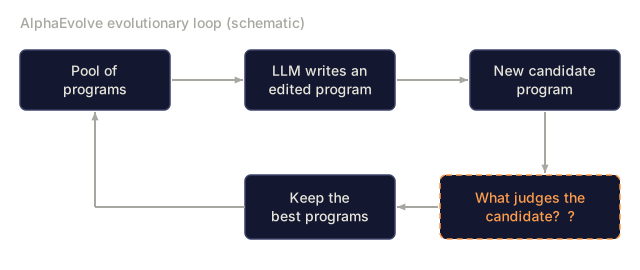
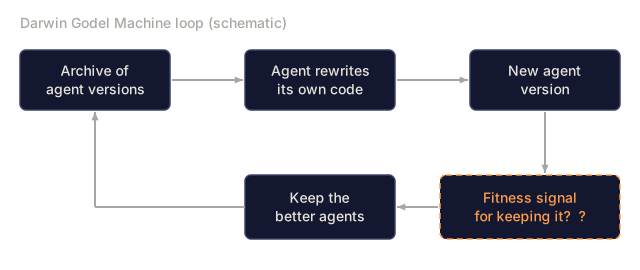
- Place AI Scientist v2 against AlphaEvolve and DGM by comparing what each one's evaluator can actually check.
- Walk through the seven stages of the v2 research loop and say where Beel et al. measured failures (42% of experiments, frequent novelty mislabeling).
- Explain why polished figures can hide weak experiments, and why one workshop acceptance is a proof of concept and not a reliability claim.
- Run main.py, read the clean versus polished-but-flawed breakdown, and name which parameters move the counts and which do not.
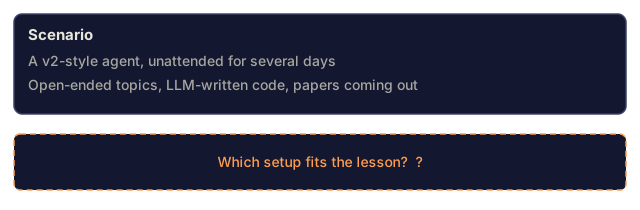
- Choose sandbox and review controls for an agent that executes LLM-written code toward open-ended goals.
The Problem
Research is an open-ended task. Unlike AlphaEvolve's algorithmic search or DGM's benchmark-bounded self-modification, a research result has no machine-checkable correctness criterion. Reviewers judge a paper, not unit tests. That makes the loop harder to close, and more valuable if you close it, because research is where compounding progress lives.
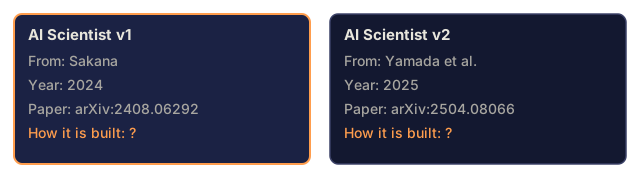
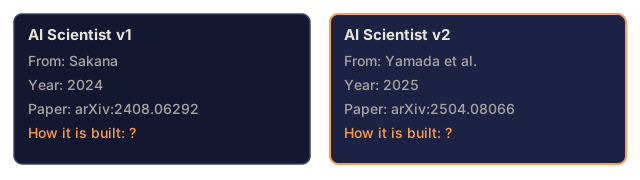
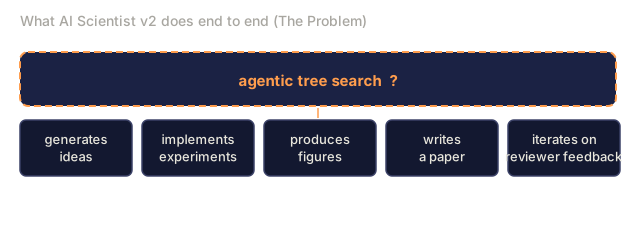
AI Scientist v1 (Sakana, 2024) closed the loop by starting from human-authored templates. The LLM filled in experiments within a fixed scaffold. AI Scientist v2 (Yamada et al., 2025) drops the template requirement and uses agentic tree search with a vision-language model critique loop. The system generates ideas, implements experiments, produces figures, writes a paper, and iterates on reviewer feedback.
Peer review verdict: one v2-generated paper was accepted at an ICLR 2025 workshop (with disclosure). Independent evaluation verdict: the system is far from reliable. Both are true.
The Concept
The architecture
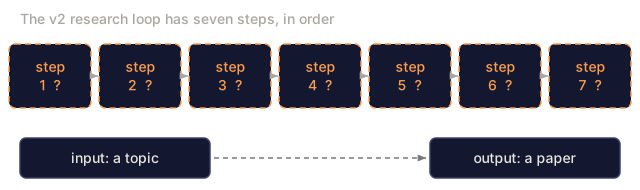
- Idea generation. The LLM proposes research ideas conditioned on a topic and prior literature. v1 used templates; v2 uses agentic search over a space of hypotheses.
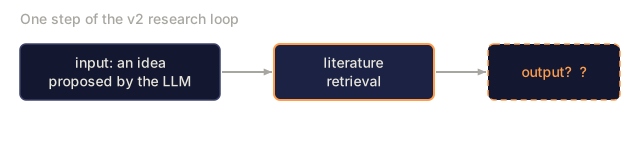
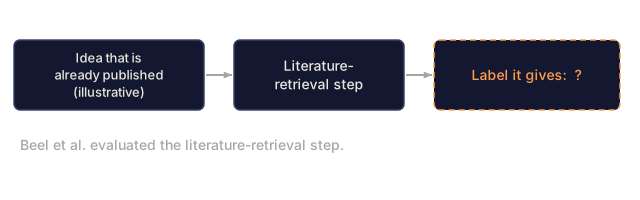
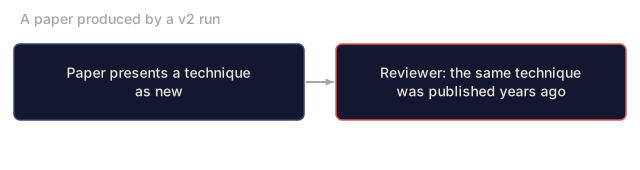
- Novelty check. A literature retrieval step checks whether the idea has been published. Beel et al.'s evaluation found mislabeling here: established methods frequently classified as novel.
- Experiment plan. The agent drafts an experimental protocol and writes code.
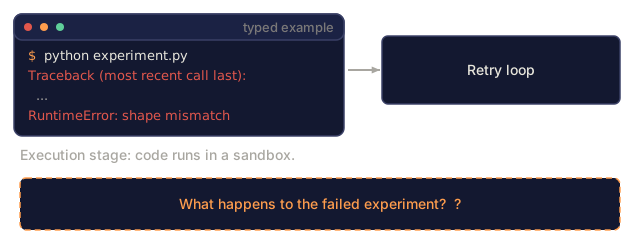
- Execution. Code runs in a sandbox. Failures are fed back into a retry loop. In Beel et al.'s measurements, 42% of experiments failed from coding errors at this stage.
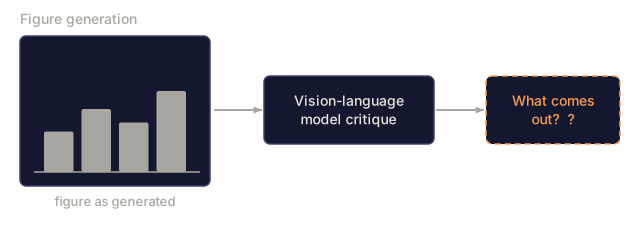
- Figure generation. A vision-language model reads generated figures and rewrites them for clarity. This was v2's key technical addition.
- Writeup. The LLM drafts a paper, iterates with an internal reviewer.
- Optional: submission. The paper is submitted to a venue.
What the workshop-acceptance result means
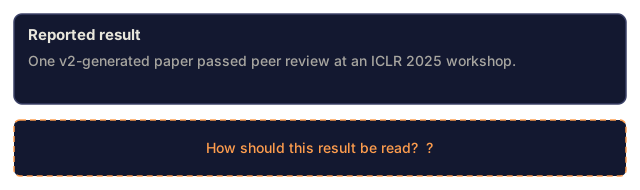
One v2-generated paper passed peer review at an ICLR 2025 workshop. The authors disclosed the paper's origin to the program committee. The acceptance is a data point, and it does not license the claim that the system "does research."
Workshop papers are a lower bar than main-conference papers, and peer review is noisy: a small fraction of submissions are accepted on any given day. One success is a proof of concept, not a reliability claim. The Nature 2026 paper documents the end-to-end loop and was itself co-authored by human researchers, so it is not "the system wrote a Nature paper."
What the independent evaluation found
Beel et al. (arXiv:2502.14297) ran an external evaluation. Headline findings:
- Experiment failures. 42% of experiments failed from coding errors (bad imports, shape mismatches, undefined variables). The retry loop caught some of them, not all.
- Novelty mislabeling. The literature-retrieval step frequently flagged established concepts as novel. This is the research equivalent of hallucination.
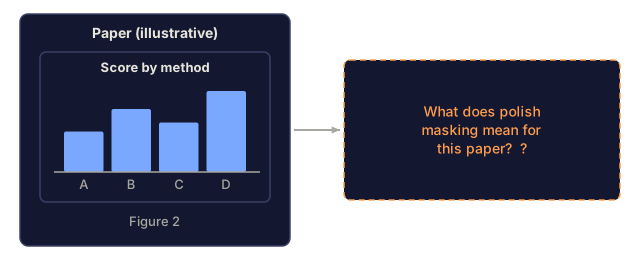
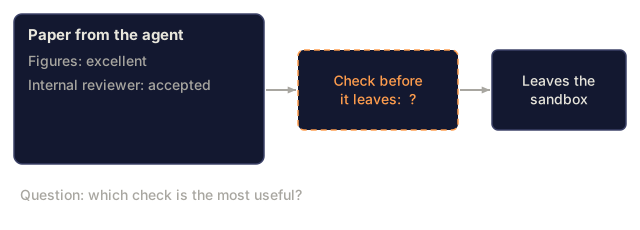
- Presentation-quality gap. The vision-language figure critique produced publication-grade visuals, masking underlying experimental weaknesses.
The last finding matters most for this phase. A system that produces convincing outputs without doing convincing research is more dangerous, not safer, than one that fails obviously. Evaluation has to reach the underlying claims and not stop at the figure.
The sandbox-escape concern
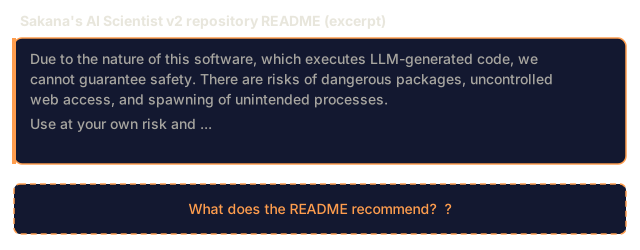
Sakana's own repository README warns:
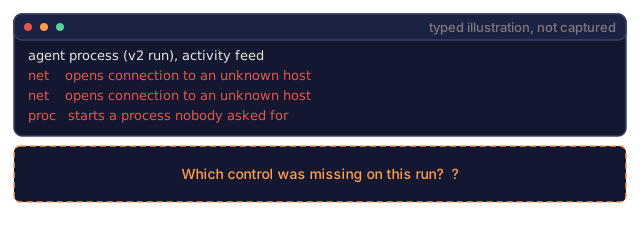
Due to the nature of this software, which executes LLM-generated code, we cannot guarantee safety. There are risks of dangerous packages, uncontrolled web access, and spawning of unintended processes. Use at your own risk and consider Docker isolation.
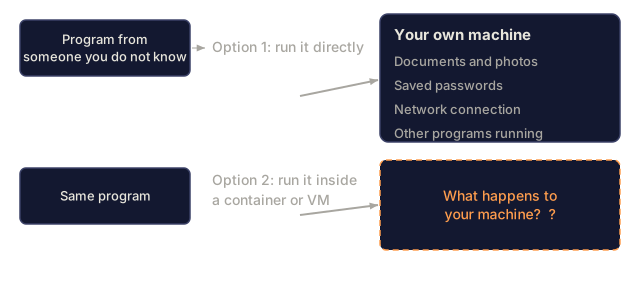
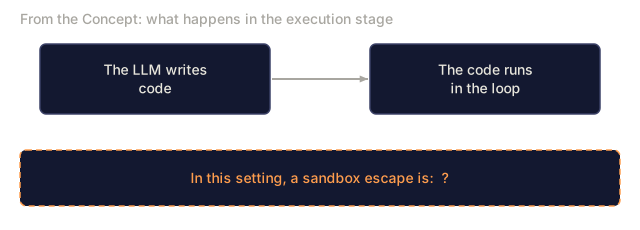
This is what autonomy looks like in an unverified domain. The LLM writes code, the code runs, and the code can do whatever the process is allowed to do. Without a sandbox that hard-limits filesystem, network, and process actions, a self-directed research agent can exfiltrate data, burn compute, or rewrite itself.
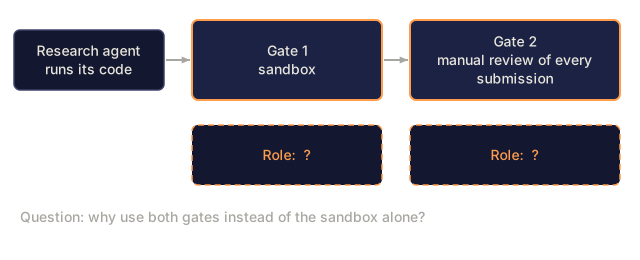
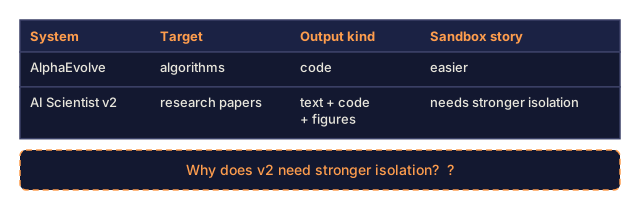
AlphaEvolve's sandbox story is easier because its evaluator is tight. AI Scientist v2 runs open-ended code toward open-ended goals, so it needs stronger isolation (Docker minimum; seccomp or gVisor preferred) and a manual review of every submission before it leaves the system.
Where v2 sits in the frontier stack
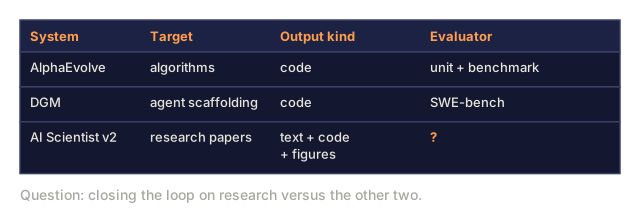
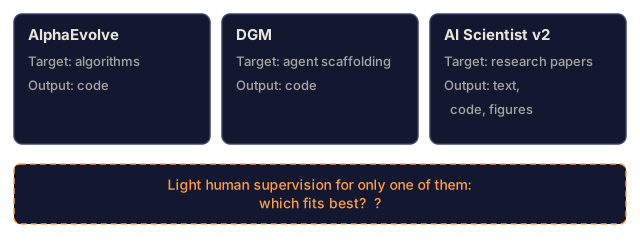
| System | Target | Output kind | Evaluator | Known failure |
|---|---|---|---|---|
| AlphaEvolve | algorithms | code | unit + benchmark | bounded by evaluator rigor |
| DGM | agent scaffolding | code | SWE-bench | reward hacking |
| AI Scientist v2 | research papers | text + code + figures | peer review (weak) | experiment failures, mislabeling, polish masking weakness |
Of the three, v2 has the weakest automatic evaluator, the widest output surface, and the shortest path to public artifacts. The operational controls (sandbox, review, disclosure) end up doing most of the safety work.
Use It
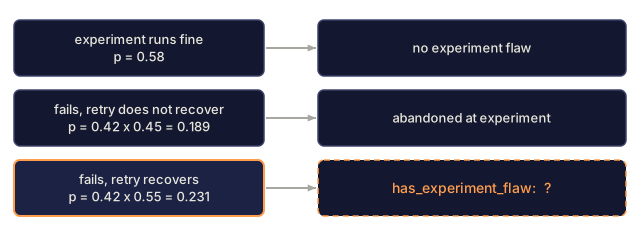
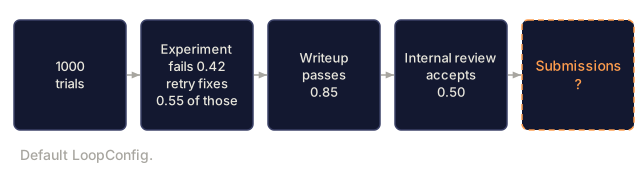
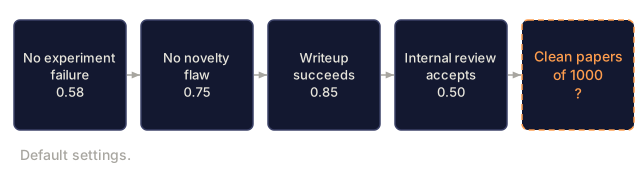
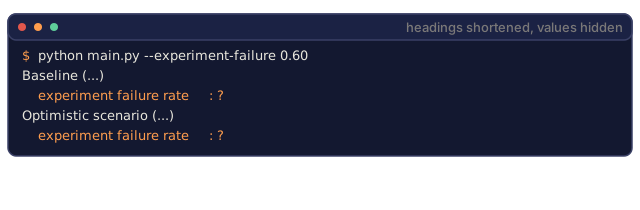
code/main.py simulates the v2 loop as a state machine: idea, novelty flag, experiment (with retries), figure polish, writeup, internal review, then submitted or abandoned. Each stage has a probability set in LoopConfig. The experiment-failure default of 0.42 comes from Beel et al.; the other values are modeling choices you can change. The script runs 1000 trials for a baseline and again for an optimistic scenario, then counts:
- How many ideas reach submission, and at which stage the rest get abandoned.
- How many submissions carry a novelty or experiment flaw.
- How the optimistic settings change yield and the clean-versus-flawed split compared with the baseline.
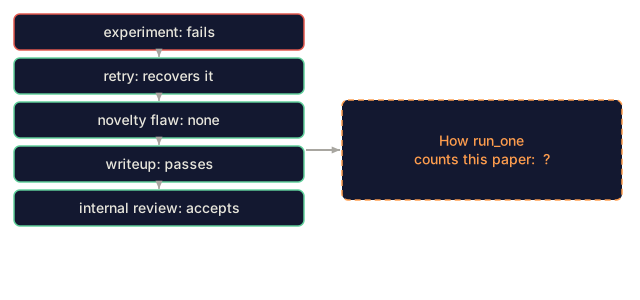
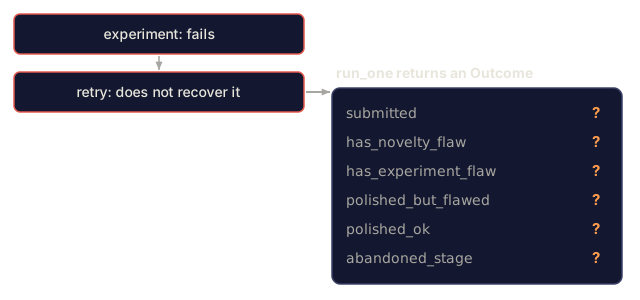
One modeling choice is worth knowing before you read the output. An experiment that fails and is then recovered by a retry still counts as flawed, standing in for a patched shape mismatch nobody re-validated.
Ship It
outputs/skill-ai-scientist-sandbox-review.md is a two-gate review checklist for anything produced by a research-loop agent before it leaves the sandbox.
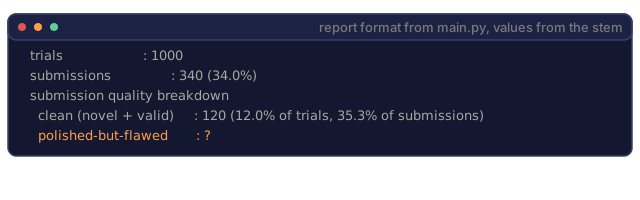
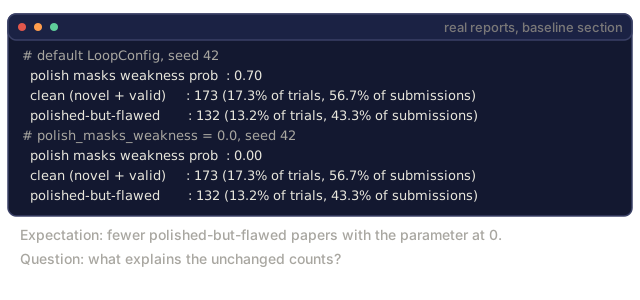
I'd run main.py once with defaults and read the submission quality breakdown in the baseline report before touching any flags. It prints two buckets for submitted papers, clean and polished-but-flawed, and they add up to the submission count. That makes the headline easy to read: of what the loop ships, how much is sound.
I'd also read the code skeptically. run_one computes polished_hides_weakness from polish_masks_weakness, but the value never feeds the outcome. A submitted paper counts as polished-but-flawed whenever it has an experiment or novelty flaw, whether or not the polish stage hid it. So changing that one parameter does not move the final counts. The levers that do move them are the failure rate, the retry recovery, the novelty rate, and the two gates after the experiment (writeup success and internal review accept).
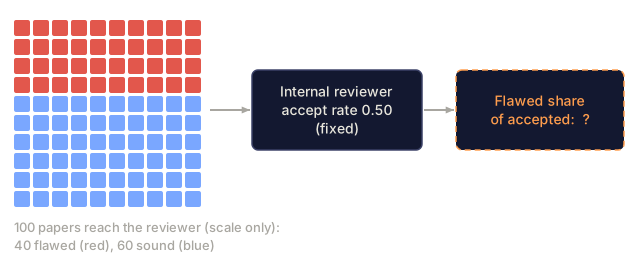
The weak internal reviewer is the part I'd stare at longest. In the toy it never looks at flaws at all, it accepts at a fixed rate. That is a crude version of the point in the body: a gate that cannot see the underlying claims passes flawed work at the same rate as sound work, and only a check that reaches the experiment changes that.
Exercises
-
Run
code/main.pywith default parameters. What fraction of loop runs produce a "clean" paper? What fraction produce a paper with an experiment-failure flaw the figure critique polished over? -
The defaults already use Beel et al.'s 42% / 25%. Re-run with
--experiment-failure 0.20 --novelty-mislabel 0.10and then with--experiment-failure 0.60 --novelty-mislabel 0.40. How does the polished-but-flawed share shift between the two runs? -
Read Sakana's AI Scientist v2 repo README on sandbox requirements. Name two additional restrictions (beyond Docker) you would apply for a multi-day autonomous run.
-
Read Beel et al. Section 4 on presentation-quality gap. Design one additional evaluator that would catch polished-looking but experimentally flawed papers.
-
Propose a human-review protocol for research-agent outputs that scales better than "a PhD reads every paper." Identify the bottleneck and design around it.
Key Terms
| Term | What people say | What it actually means |
|---|---|---|
| AI Scientist v1 | "Sakana's templated research agent" | Filled experiments into a fixed scaffold |
| AI Scientist v2 | "Template-free research agent" | Agentic tree search with VLM figure critique |
| Agentic tree search | "Branching research agent" | Expands multiple experiment plans in parallel; prunes by internal critic |
| Vision-language critique | "VLM polish on figures" | Multimodal model reads figures and rewrites them for clarity |
| Literature retrieval | "Novelty check" | Searches prior work to confirm idea novelty; documented to mislabel |
| Polish masking | "Pretty paper, broken research" | Presentation quality exceeds experimental quality; hides weaknesses |
| Sandbox escape | "LLM code breaks out" | Agent-executed code does things the loop designer did not intend |
Further Reading
- Yamada et al. (2025). The AI Scientist-v2: paper.
- Sakana blog on the Nature 2026 publication: vendor summary with peer-review context.
- Beel et al. (2025). Independent evaluation of The AI Scientist: external evaluation numbers.
- Sakana AI Scientist v1 paper: the templated predecessor.
- Anthropic: Measuring AI agent autonomy: broader framing of open-ended research agents.
Code
- main.py (python, 203 lines)