Inference Platform Economics — Fireworks, Together, Baseten, Modal, Replicate, Anyscale
The 2026 inference market is no longer GPU time rental. It has split into custom silicon (Groq, Cerebras, SambaNova), GPU platforms (Baseten, Together, Fireworks, Modal), and API-first marketplaces (Replicate, DeepInfra). Fireworks raised GPU rental by $1/hr on May 1, 2026, and a $4B valuation on 10T+ tokens/day says the volume-driven model works. Baseten closed a $300M Series E at $5B in January 2026. The positioning is easy to remember: Fireworks optimizes latency, Together catalog breadth, Baseten enterprise polish, Modal Python-native DX, Replicate multimodal reach, Anyscale distributed Python. By the end you will have a matrix you can hand a founder.
Learning Objectives
- Name the three market segments (custom silicon, GPU platforms, API-first) and map each vendor to a segment.
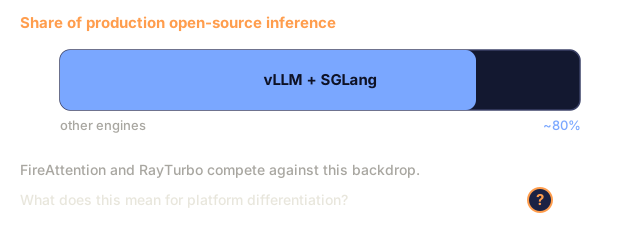
- Explain why custom-engine claims matter less at the platform layer than DX, attribution, and SLAs, given that vLLM and SGLang cover about 80% of production open-source inference.
- Compute effective cost per request across at least three vendors and explain when per-minute (Baseten, Modal) beats per-token.
- Identify which platform is the right default for a given workload (serverless bursty, steady high-throughput, fine-tuned variants, multimodal).
The Problem
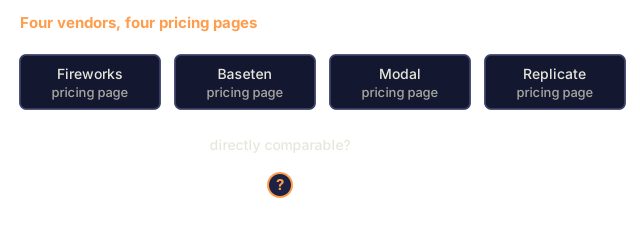
You evaluated the managed hyperscaler platforms and decided you need a narrower, faster provider: Fireworks for latency, Together for breadth, Baseten for a fine-tuned custom model. Now you have six real choices and the pricing pages don't line up. Fireworks shows $/M tokens, Baseten shows $/minute, Modal shows $/second, Replicate shows $/prediction. You can't compare them head-to-head without modeling the workload.
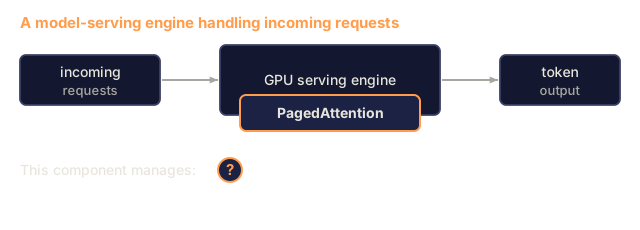
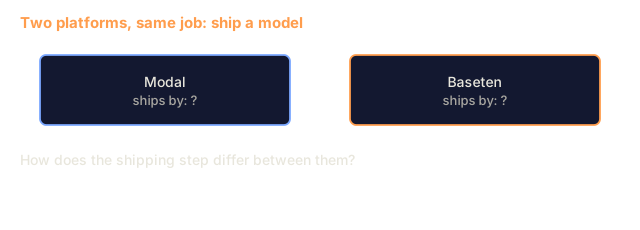
The business model behind each page differs too. Fireworks runs its own engine (FireAttention) on shared GPUs, so the per-token rate reflects their utilization curve. Baseten gives you Truss plus dedicated GPUs, and the per-minute rate reflects that exclusivity. Modal is Python serverless with per-second billing and sub-second cold starts for small models. The output is the same (an LLM response) but the cost function is different for each.
This lesson models all six and tells you when each one wins.
The Concept
The three segments
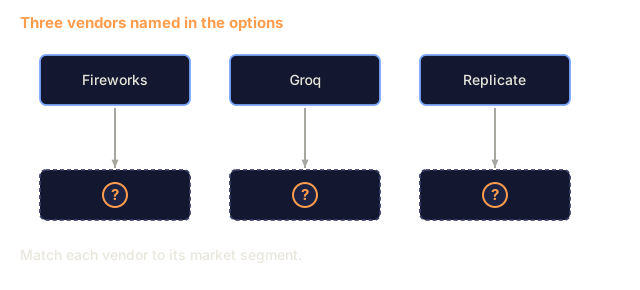
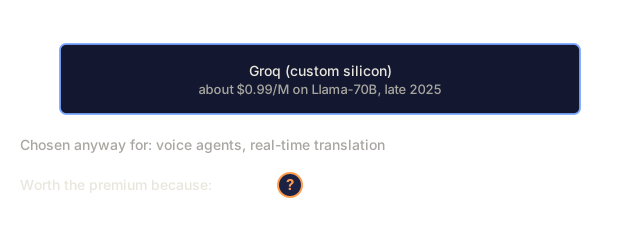
Custom silicon. Groq (LPU), Cerebras (WSE), SambaNova (RDU). Typically 5-10x faster decode than a GPU-based cluster on the same model. The per-token price is higher (Groq was ~$0.99/M on Llama-70B in late 2025), but it is unbeatable for latency-sensitive use cases. Groq is the production pick for voice agents and real-time translation.
GPU platforms. Baseten, Together, Fireworks, Modal, Anyscale. They run on NVIDIA (H100, H200, B200 in 2026) or sometimes AMD, and sit between raw GPU rental (RunPod, Lambda) and a hyperscaler managed service (Bedrock).
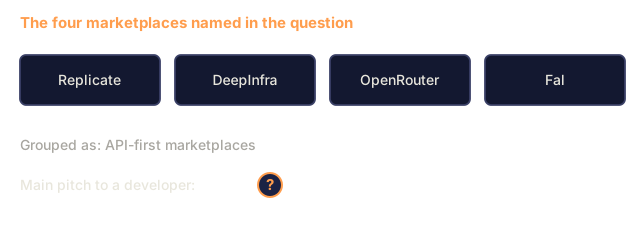
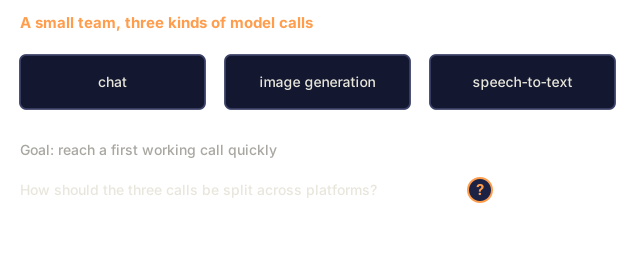
API-first marketplaces. Replicate, DeepInfra, OpenRouter, Fal. Broad catalog, pay-per-prediction or pay-per-second, and the pitch is time-to-first-call.
Fireworks: latency-optimized GPU platform
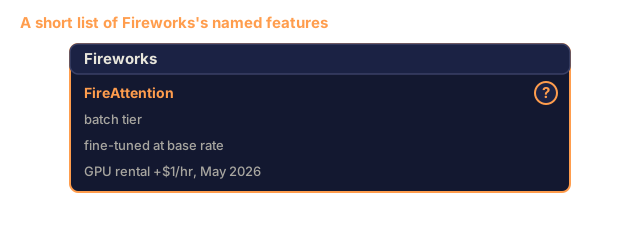
- FireAttention engine (custom); marketed as 4x lower latency than vLLM on equivalent configs.
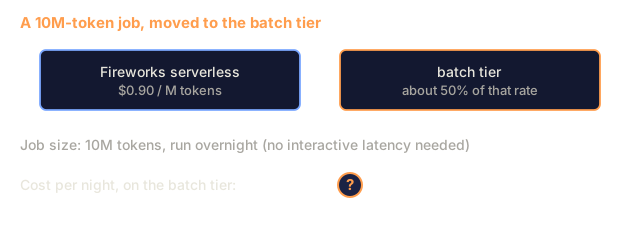
- Batch tier at ~50% of serverless rate for non-interactive workloads.
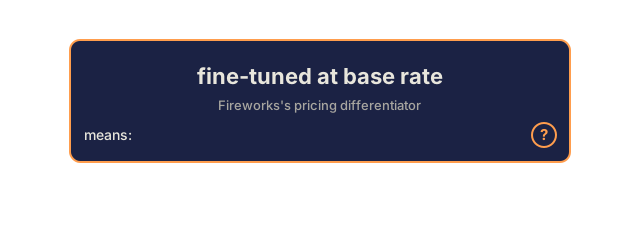
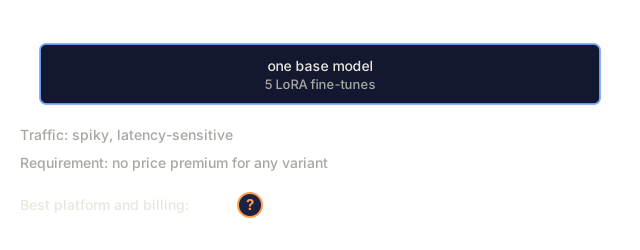
- Fine-tuned models are served at the same rate as the base model, which separates Fireworks from providers that charge a premium for your LoRA.
- On-demand GPU rental went up $1/hour effective May 1, 2026. Volume pricing is negotiable at scale.
- Financial signal: $4B valuation, 10T+ tokens/day handled.
Together: breadth-optimized
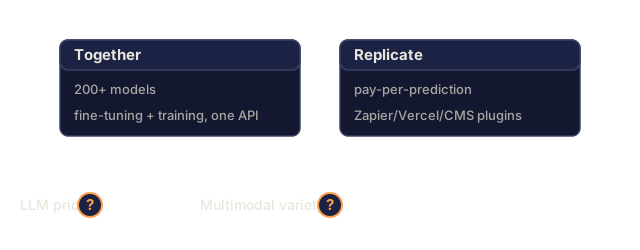
- 200+ models including open-source releases within days of upstream publication.
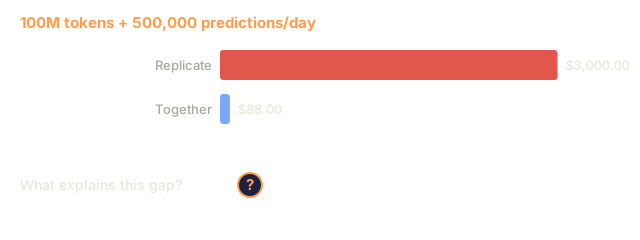
- 50-70% cheaper than Replicate on equivalent LLM models. The "AI Native Cloud" positioning is volume and catalog.
- Inference + fine-tuning + training in one API.
Baseten: enterprise-polish-optimized
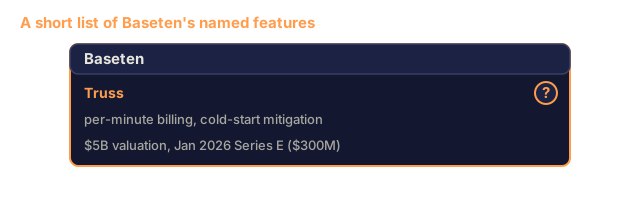
- Truss framework: model packaging with dependencies, secrets, and serving config in one manifest.
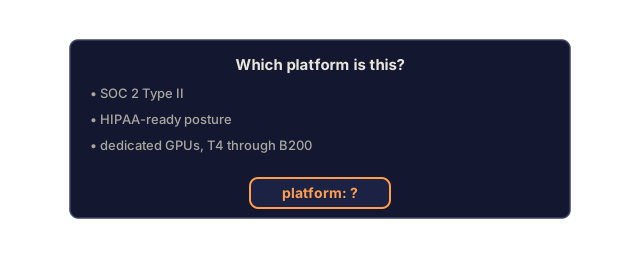
- GPUs from T4 through B200. Per-minute billing with reasonable cold-start mitigation.
- SOC 2 Type II and HIPAA-ready, which makes it a common fintech and healthcare pick.
- $5B valuation, January 2026 Series E ($300M from CapitalG, IVP, NVIDIA).
Modal: Python-native-optimized
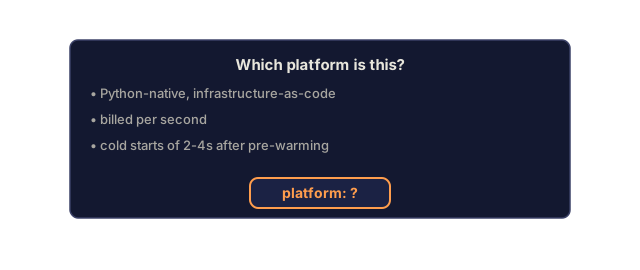
- Infrastructure-as-code in pure Python. Decorate a function with
@modal.function(gpu="A100")and deploy with one command. - Per-second billing. Cold starts run 2-4s with pre-warming and under 1s for small models.
- $87M Series B at a $1.1B valuation (2025). Strongest developer experience score in independent surveys.
Replicate: multimodal breadth
- Pay-per-prediction. The default platform for image, video, and audio models.
- Integration ecosystem (Zapier, Vercel, CMS plugins).
- Less competitive on LLM per-token rates, but it wins on multimodal variety.
Anyscale: Ray-native
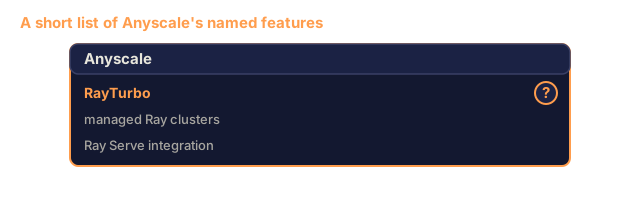
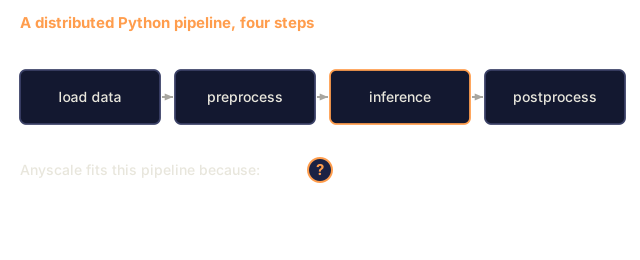
- Built on Ray; RayTurbo is Anyscale's proprietary inference engine (competes with vLLM).
- Best for distributed Python workloads where the inference step is one node in a larger graph.
- Managed Ray clusters; tight integration with Ray AIR and Ray Serve.
Per-token versus per-minute: when each wins
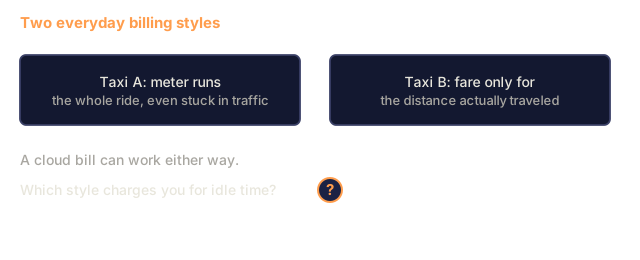
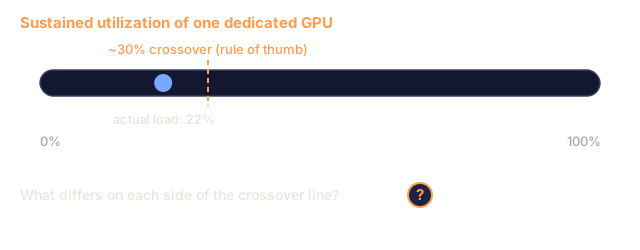
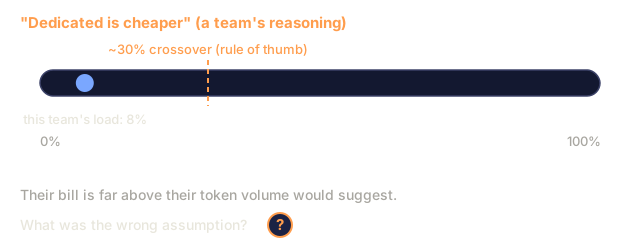
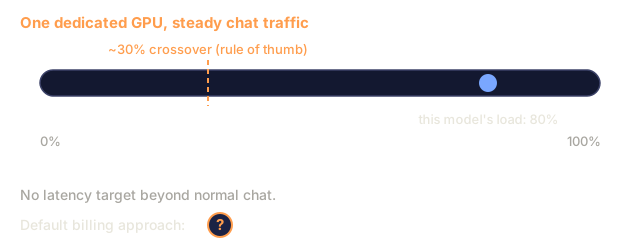
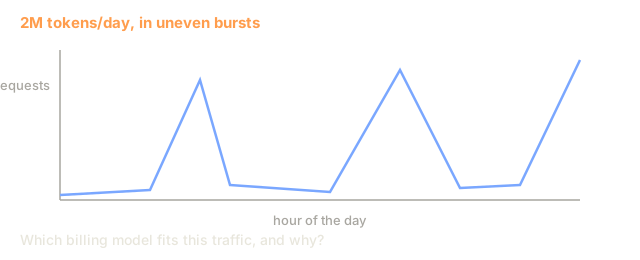
Per-token fits a latency-insensitive, bursty workload because you only pay for what you use. Per-minute fits high, predictable utilization, since you beat per-token once you saturate the GPU.
Rough rule: above ~30% sustained utilization of a dedicated GPU, per-minute (Baseten, Modal) starts to beat per-token (Fireworks, Together). Below that, per-token wins because you avoid paying for idle. The toy comparator in Use It adds a reserved-minute floor to the per-minute vendors, so its crossover lands higher than this rule.
Custom engine is the real moat
Every platform above vLLM and SGLang claims a custom engine: FireAttention, RayTurbo, Baseten's inference stack. Custom-engine claims are mostly marketing. vLLM and SGLang together represent about 80% of production open-source inference, so the differentiators at the platform layer are DX, attribution, and SLAs.
Numbers you should remember
- Fireworks GPU rental: $1/hr raise effective May 1, 2026.
- Fireworks claim: 4x lower latency than vLLM on equivalent configs.
- Together: 50-70% cheaper than Replicate on LLMs.
- Baseten valuation: $5B (Series E, Jan 2026, $300M round).
- Modal valuation: $1.1B (Series B, 2025).
- Per-minute beats per-token above ~30% sustained utilization.
Use It
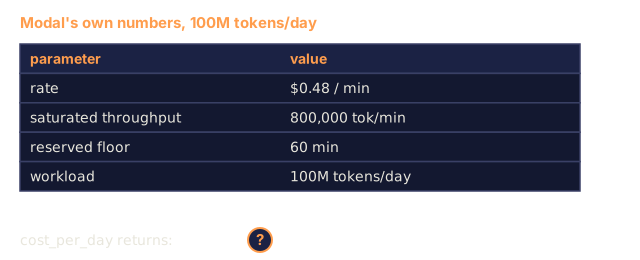
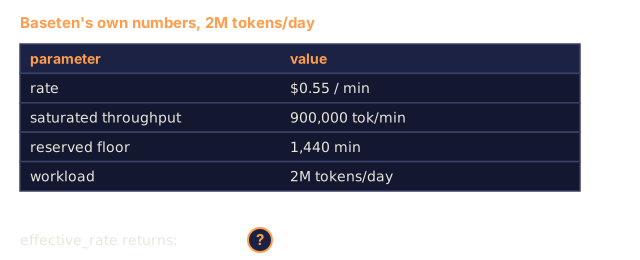
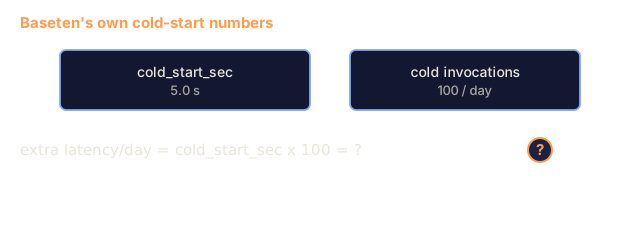
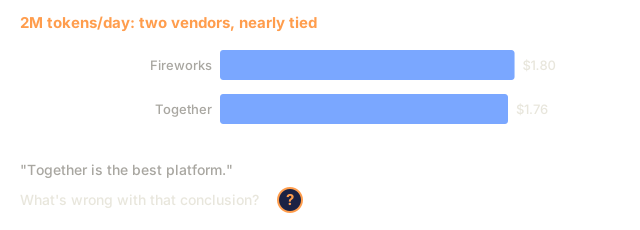
code/main.py compares the six vendors on a synthetic workload across pricing models and reports $/day and effective $/M tokens. It runs two scenarios (2M and 100M output tokens/day), a per-token vs per-minute sweep from 5% to 100% utilization, and a cold-start table.
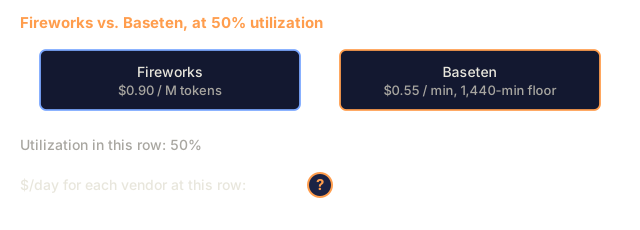
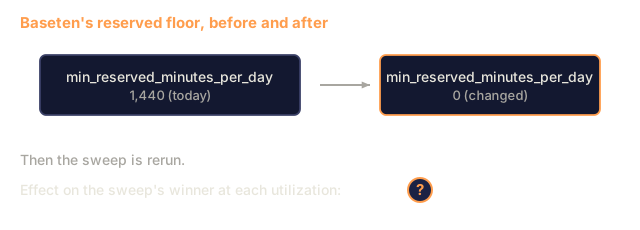
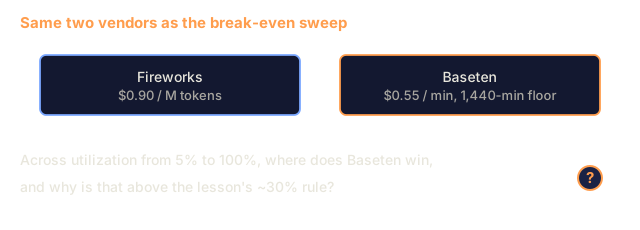
Run it and read the sweep. Fireworks at $0.90/M against Baseten at $0.55/min, with Baseten's 1,440-minute reserved floor, flips to Baseten between 50% and 75% utilization, at about 68% ($792 against $1,166.40 a day at full load). That is well above the ~30% rule of thumb, because the toy bills Baseten for a full day regardless of load. The vendor numbers are rough approximations, so change them to match your own quotes.
Ship It
This lesson produces outputs/skill-inference-platform-picker.md. Given a workload profile, SLA, and budget, it picks the primary inference platform and names the runner-up.
I'd run main.py first and look at Scenario A before anything else. At 2M tokens/day the per-minute vendors with a reserved floor (Baseten, Anyscale) land at hundreds of dollars a day against under $2 on per-token, which makes the idle penalty obvious in one table.
The part I'd poke at is the reserved-minute floor on the Vendor dataclass. It is why the break-even sweep flips to Baseten between 50% and 75% utilization instead of near the ~30% rule above. Set min_reserved_minutes_per_day to 0 for Baseten, rerun, and the crossover disappears: Baseten wins at every utilization in the sweep. Whether a real contract has that floor depends on the vendor, so use it as a knob and check the quote.
I'd also keep the toy in proportion. Prices, tokens-per-minute, and cold-start times are hand-picked approximations, and the script has no latency model, so it can't tell you what Fireworks's speed is worth. Put your own numbers in VENDORS before trusting any row.
Exercises
- Run
code/main.py. At what sustained utilization does Baseten (per-minute) beat Fireworks (per-token) for a 70B model on one H100? Derive the crossover yourself and compare to the rule of thumb. - Your product serves image generation plus chat plus speech-to-text. Pick platforms for each modality and name the gateway pattern that unifies them.
- Fireworks raises prices by $1/hr on your primary model. Model the blended cost impact if 40% of your traffic moves to batch tier (50% off).
- A regulated customer requires SOC 2 Type II + HIPAA + dedicated GPUs. Which three platforms are viable and which one wins on FinOps?
- Compare cost per 1,000 predictions for Llama 3.1 70B on Fireworks serverless, Together on-demand, Baseten dedicated, and Replicate API. Which is cheapest at 10 predictions/day? At 10,000?
Key Terms
| Term | What people say | What it actually means |
|---|---|---|
| Custom silicon | "non-GPU chips" | Groq LPU, Cerebras WSE, SambaNova RDU, optimized for decode |
| FireAttention | "Fireworks engine" | Custom attention kernel; marketed at 4x lower latency than vLLM |
| Truss | "Baseten's format" | Model packaging manifest; dependencies + secrets + serving config |
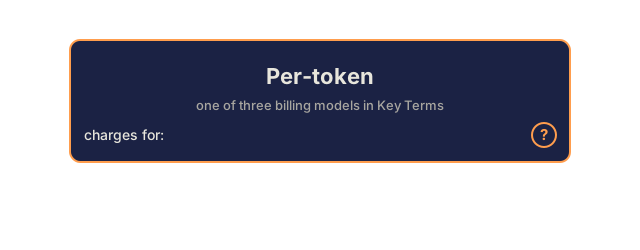
| Per-token | "API pricing" | Charge by tokens consumed; pay for no idle |
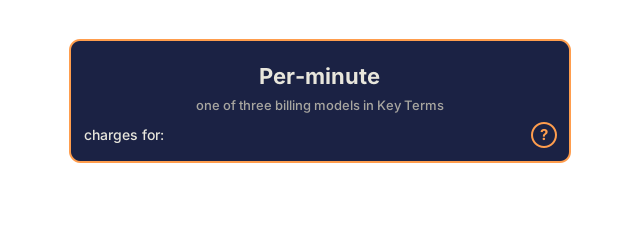
| Per-minute | "dedicated pricing" | Charge by wall-clock GPU time; wins at high utilization |
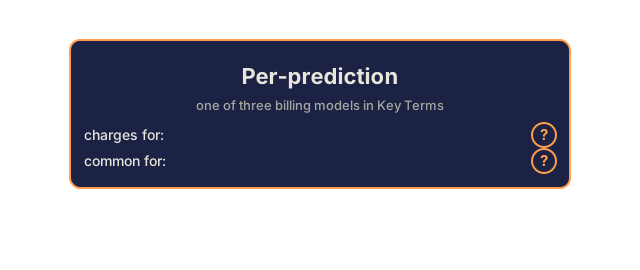
| Per-prediction | "Replicate pricing" | Charge per model invocation; common for image/video |
| RayTurbo | "Anyscale engine" | Proprietary inference on Ray; competes with vLLM on Ray clusters |
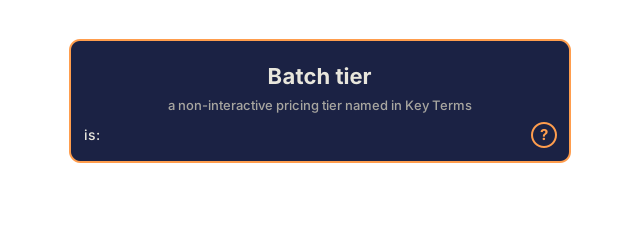
| Batch tier | "50% off" | Non-interactive queue at reduced rate; common on Fireworks, OpenAI |
| Fine-tuned at base rate | "Fireworks LoRA" | Charge LoRA-served requests at base model's rate (differentiator) |
Further Reading
- Fireworks Pricing: per-token rates, batch tier, GPU rental.
- Baseten Pricing: per-minute rates, committed capacity, enterprise tiers.
- Modal Pricing: per-second GPU rates and free tier.
- Together AI Pricing: model catalog and per-token rates.
- Anyscale Pricing: RayTurbo and managed Ray pricing.
- Northflank: Fireworks AI Alternatives: comparative assessment.
- Infrabase: AI Inference API Providers 2026: vendor landscape.
Code
- main.py (python, 119 lines)