Model, System, and Dataset Cards
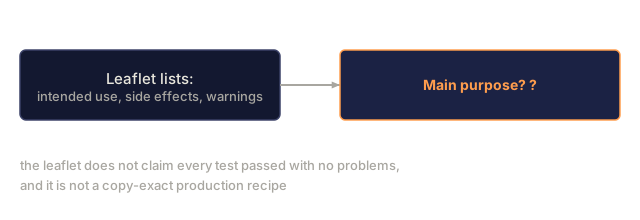
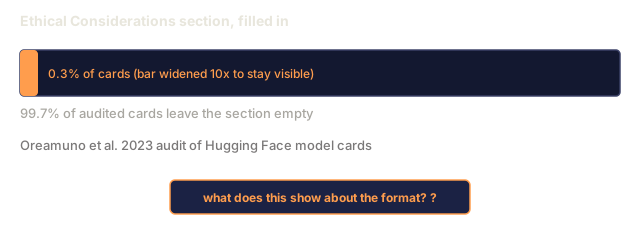
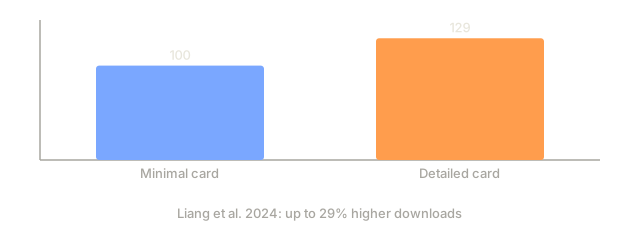
Three documentation formats structure AI transparency. Model Cards (Mitchell et al. 2019) work like nutrition labels for models: training data, disaggregated quantitative analyses, ethical considerations, caveats. Only 0.3% of Hugging Face model cards document ethical considerations (Oreamuno et al. 2023). Datasheets for Datasets (Gebru et al. 2018, CACM) borrow from electronics datasheets and cover motivation, composition, collection process, labeling, distribution, and maintenance. Data Cards (Pushkarna et al., Google 2022) layer detail at telescopic, periscopic, and microscopic zoom so diverse readers can use one document as a boundary object. 2024-2025 brought automated generation via LLMs (CardGen, Liu et al. 2024), a correlation between model-card detail and up to 29% more downloads on HF (Liang et al. 2024), verifiable attestations (Laminator, Duddu et al. 2024), sustainability reporting for carbon and water (Jouneaux et al. July 2025), and emerging EU/ISO regulatory cards. System Cards (Sidhpurwala 2024; Meta system-level transparency; "Blueprints of Trust" arXiv:2509.20394) document the whole AI system: security capabilities, prompt-injection protection, data-exfiltration detection, and alignment with human values.
Learning Objectives
- Describe the original Mitchell et al. 2019 model card and the Gebru et al. 2018 datasheet.
- Describe Data Cards' telescopic/periscopic/microscopic layering.
- Describe System Cards and their end-to-end coverage.
- State three 2024-2025 developments (automated generation, verifiable attestations, sustainability reporting).
The Problem
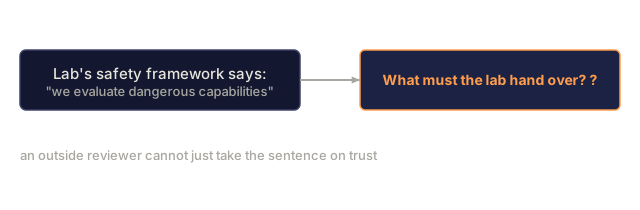
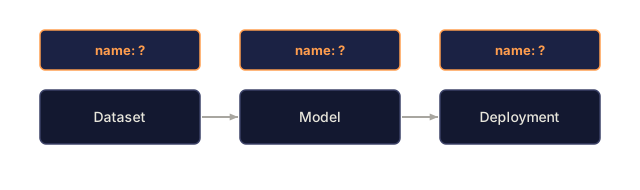
Regulatory frameworks (Lesson 24) and lab safety policies (Lesson 18) both demand documentation, and the formats grew to match. Model cards came first and describe a model. Datasheets moved upstream to the dataset. System cards moved outward to the whole deployment. Each one covers a different scope of transparency.
Adoption is the part that kept failing: only 0.3% of Hugging Face model cards document ethical considerations. The 2024-2025 work on automated generation and verifiable attestations goes straight at that problem.
The Concept
Model Cards (Mitchell et al. 2019)
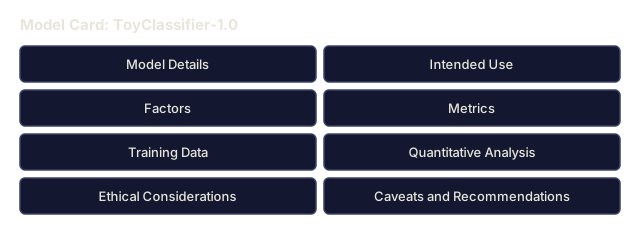
Nine sections:
- Model details.
- Intended use.
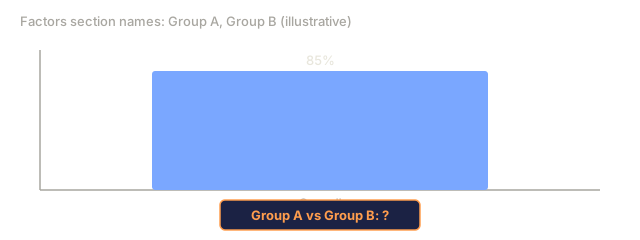
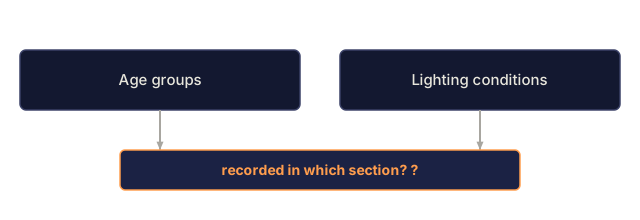
- Factors (relevant demographic or environmental factors for evaluation).
- Metrics.
- Evaluation data.
- Training data.
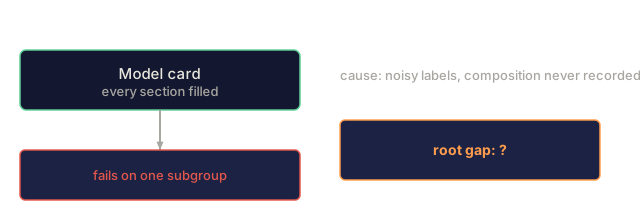
- Quantitative analyses (disaggregated by factors).
- Ethical considerations.
- Caveats and recommendations.
The adoption problem is visible in the numbers. Oreamuno et al. 2023 audit of Hugging Face model cards found only 0.3% document ethical considerations.
Datasheets for Datasets (Gebru et al. 2018)
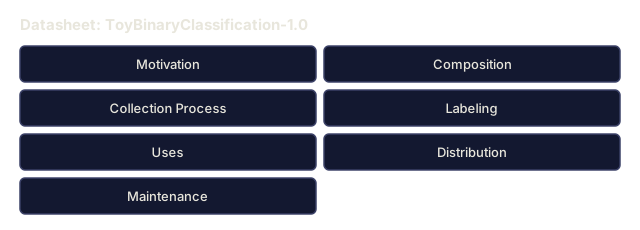
The analogy is the datasheet that ships with an electronic component. Sections:
- Motivation (why was the dataset created).
- Composition (what is in it).
- Collection process (how was it assembled).
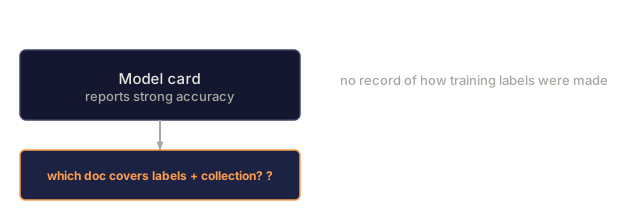
- Labeling (if applicable).
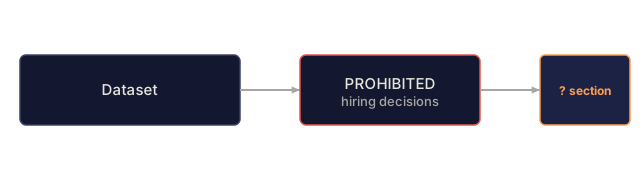
- Uses (intended, prohibited, risks).
- Distribution.
- Maintenance.
The paper appeared in CACM in 2021. The datasheet is upstream of the model card, so a model card is only as accurate as the datasheet behind it.
Data Cards (Pushkarna et al., Google 2022)
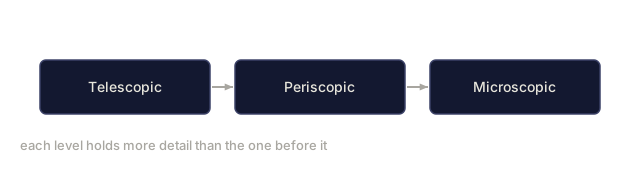
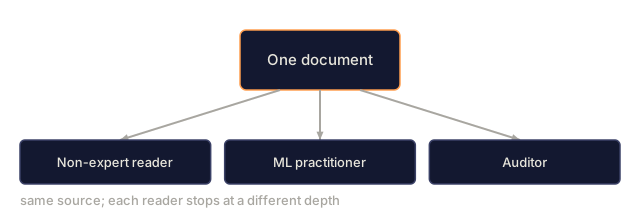
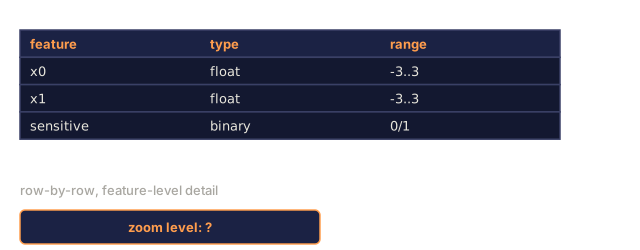
Modular layered detail. Three zoom levels:
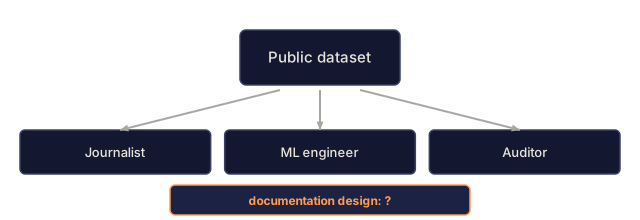
- Telescopic. High-level summary for non-experts.
- Periscopic. Middle-level overview for ML practitioners.
- Microscopic. Detailed feature-level documentation for auditors.
The boundary-object framing means different readers pull different information out of the same document.
System Cards
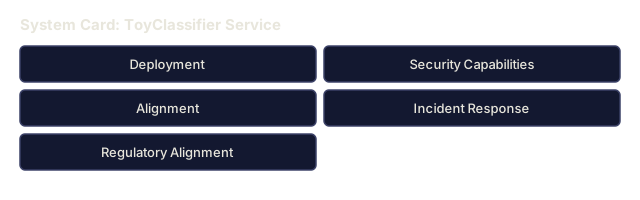
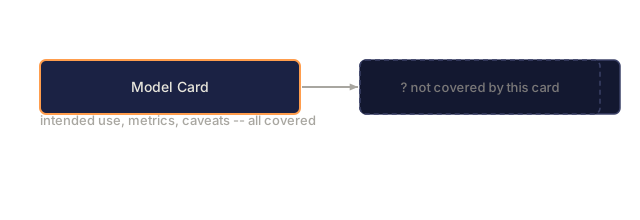
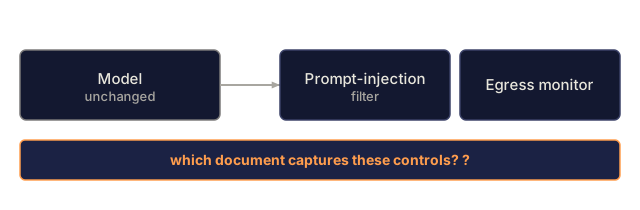
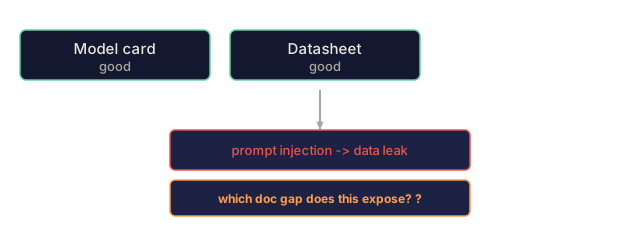
A system card covers the end-to-end AI system: the model, the safety stack, and the deployment context. Typical sections:
- Security capabilities.
- Prompt-injection protection.
- Data-exfiltration detection.
- Alignment with stated human values.
- Incident response.
Sidhpurwala 2024 and Meta system-level transparency work. "Blueprints of Trust" (arXiv:2509.20394) formalizes the System Card as the deployment-layer complement to Model Cards.
2024-2025 developments
- CardGen (Liu et al. 2024). Automated model-card generation via LLMs; reports higher objectivity than many human-authored cards on the standardized Mitchell 2019 fields.
- Download correlation (Liang et al. 2024). Detailed model cards correlate with up to 29% higher download rates on HF. Adoption pressure is now market-driven, not only compliance-driven.
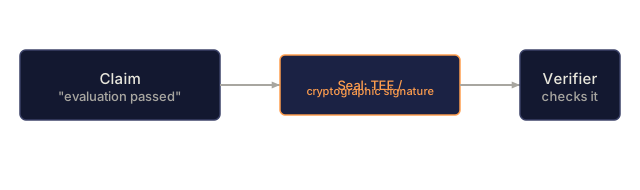
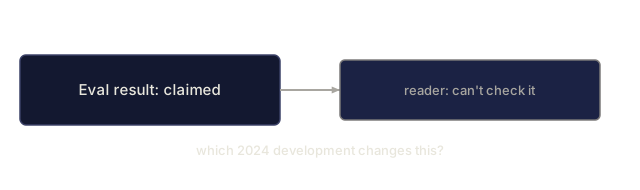
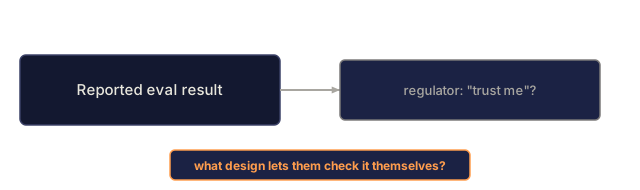
- Laminator (Duddu et al. 2024). Verifiable attestations via hardware TEE / cryptographic signatures. This lets the model card carry a proof-of-claim, not just a claim.
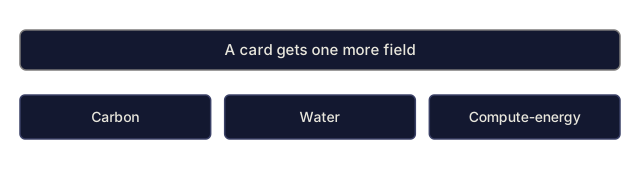
- Sustainability (Jouneaux et al. July 2025). Additions for carbon, water, and compute-energy footprint; emerging ISO standards.
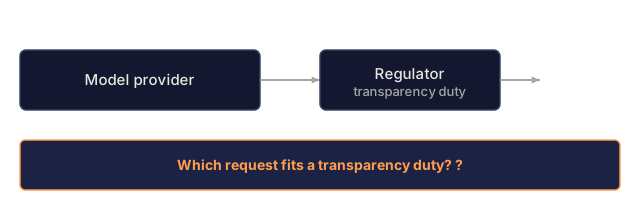
- Regulatory cards. EU AI Act (Lesson 24) GPAI Code of Practice Transparency chapter requires model cards as a compliance artifact.
Where this fits in Phase 18
Lessons 24-25 cover the regulatory and CVE layers, and this lesson is the documentation layer. Lesson 27 is training-data governance, which sits upstream of the datasheet. Lesson 28 covers the research ecosystem that produces the evaluations cards cite.

Use It
code/main.py prints a minimal model card, datasheet, and system card for a toy deployment, each following the canonical section structure. Read the three side by side to see how the scope changes from model to data to deployment.
Ship It
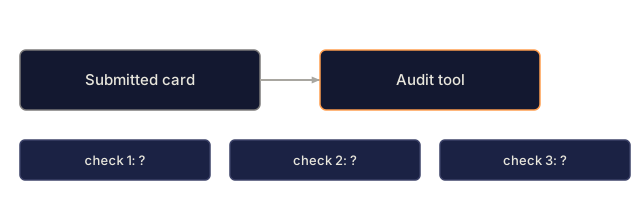
This lesson produces outputs/skill-card-audit.md. Hand it a model card, datasheet, or system card and it audits section coverage, numerical disaggregation, and whether verifiable attestations are present.
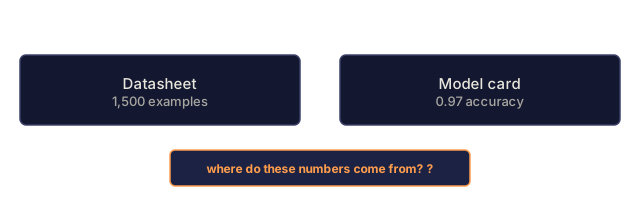
I'd run main.py first and read it as three templates rather than three analyses. Each of model_card(), datasheet(), and system_card() returns a fixed Markdown string, and main() just prints them. Nothing is trained or generated. The 1,500 examples in the datasheet, the 0.97 accuracy, and the demographic parity gap are text I typed in, not output from a run.
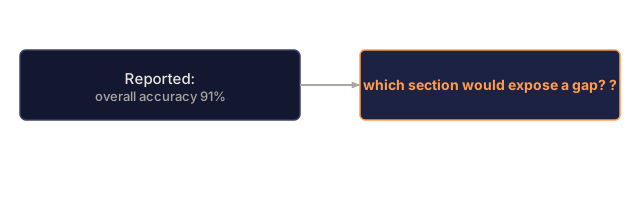
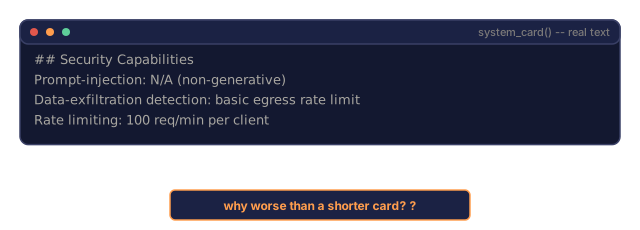
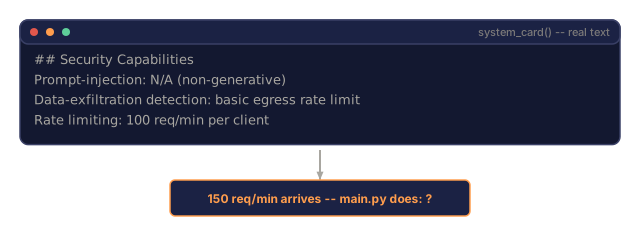
That is the first thing I'd poke at. The model card's own Ethical Considerations section says its bias metrics are placeholders, which is the kind of weak section Exercise 1 asks you to find. The system card has the same issue: it lists an egress rate limit and 100 requests per minute, but the file contains no server and nothing enforces either one. A card that describes a control the system doesn't have is worse than a short card, and it's easy to write by accident.
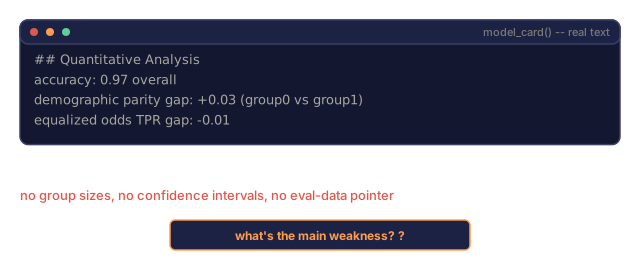
My bet is that the Quantitative Analysis section is where you learn the most. It holds three numbers and no group sizes, no confidence intervals, and no evaluation data pointer. When you extend it for Exercise 2, start by deciding what a reader would need to check those numbers, then write the fields.
Exercises
-
Run
code/main.py. Inspect the generated cards. Identify sections that are weak (placeholder-only) and specify what evidence would strengthen them. -
Extend the model card with a quantitative disaggregated analysis across two demographic groups (Lesson 20).
-
Read Oreamuno et al. 2023 on the 0.3% adoption rate. Propose one structural change to the model card specification that would increase ethical-considerations adoption.
-
Laminator (Duddu et al. 2024) uses TEEs for verifiable attestations. Design a model-card field that carries a cryptographic attestation of an evaluation result and describe the verifier's role.
-
Write a System Card (System Card, not Model Card) for one of your past projects or a hypothetical deployment. Identify the highest-value section for third-party auditors.
Key Terms
| Term | What people say | What it actually means |
|---|---|---|
| Model Card | "the Mitchell card" | Mitchell et al. 2019 standard documentation for ML models |
| Datasheet | "the Gebru datasheet" | Gebru et al. 2018 standard documentation for datasets |
| Data Card | "the Pushkarna card" | Google 2022 modular layered data documentation |
| System Card | "the deployment card" | End-to-end AI system documentation including safety stack |
| Boundary object | "different readers, one doc" | Data Cards framing: same document serves diverse audiences |
| Verifiable attestation | "the Laminator attestation" | Cryptographic or TEE proof attached to a documentation claim |
| Sustainability field | "carbon / water footprint" | Emerging 2025 addition for environmental accounting |
Further Reading
- Mitchell et al.: Model Cards for Model Reporting (arXiv:1810.03993, FAT* 2019): the canonical model card
- Gebru et al.: Datasheets for Datasets (CACM 2021, arXiv:1803.09010): datasheet paper
- Pushkarna et al.: Data Cards (Google 2022): layered data documentation
- Sidhpurwala et al.: Blueprints of Trust (arXiv:2509.20394): System Card formalization
Code
- main.py (python, 135 lines)