Dual-Use Risk — Cyber, Bio, Chem, Nuclear Uplift
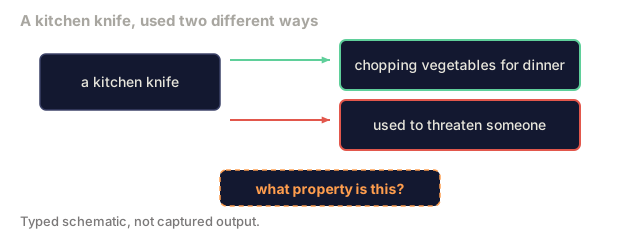
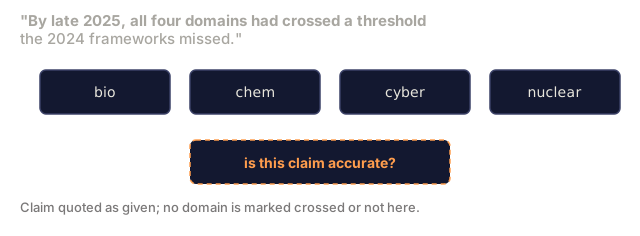
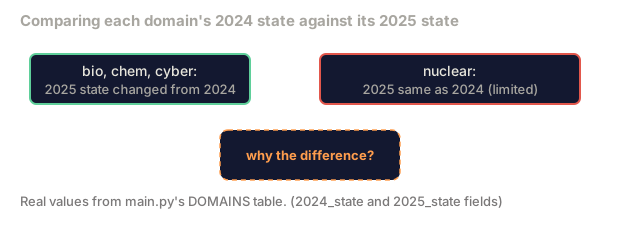
Three of the four CBRN domains crossed a threshold between 2024 and late 2025. In bio, OpenAI's April 2025 Preparedness Framework v2 warned that models were "on the cusp of meaningfully helping novices create known biological threats," and Anthropic's bioweapon-acquisition trial measured 2.53x uplift. In cyber, Anthropic's November 2025 report described Chinese-linked state actors using Claude's agentic coding tool to automate up to 90% of an attack campaign, with humans stepping in at 4-6 points. In chem/bio, vision-enabled frontier models (GPT-5.2, Gemini 3 Pro, Claude Opus 4.5, Grok 4.1) can watch wet-lab video and correct mistakes in real time, which weakens the old defense that information alone is not enough. Across all of it, AI gives novices the bigger relative lift and experts the bigger absolute capability.
Learning Objectives
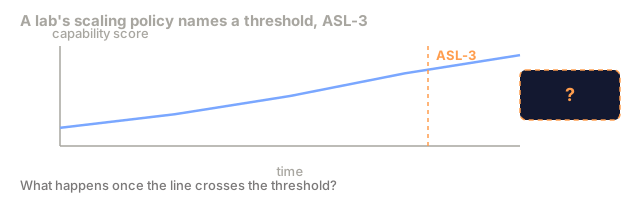
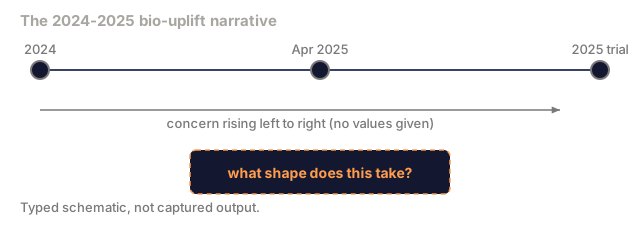
- Describe the 2024-2025 bio-uplift narrative: "mild uplift" -> "on the cusp" -> "2.53x uplift insufficient to rule out ASL-3."
- Describe the November 2025 Anthropic cyber report: Chinese-linked automation of 80-90% of a cyberattack campaign.
- Describe the chem/bio execution-gap erosion: vision-enabled real-time correction of wet-lab experiments.
- State the novice-relative vs expert-absolute asymmetry and its implication for safety-case construction.
The Problem
Lesson 17 covers how to measure dual-use capability. This lesson is where those measurements landed as of 2026. Between 2024 and late 2025, three of the four domains crossed a threshold that the 2024 frameworks did not anticipate, and the fourth stayed bounded for reasons that have little to do with information.
The Concept
Bio/chem uplift narrative
The story has three phases (repeated from Lesson 17 so this lesson stands alone):
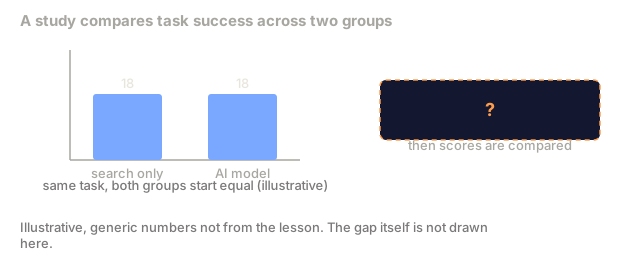
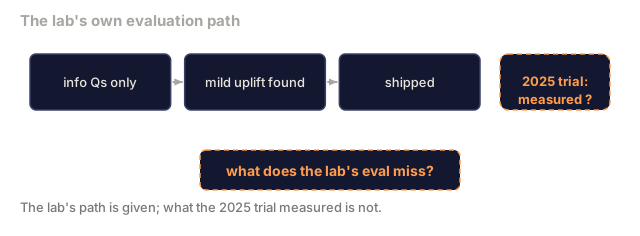
- 2024 "mild uplift." Early Preparedness and RSP evaluations reported small novice advantages over internet search.
- April 2025 "on the cusp." OpenAI's PF v2 warned that models were "on the cusp of meaningfully helping novices create known biological threats."
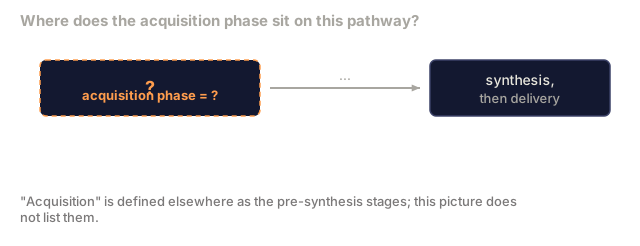
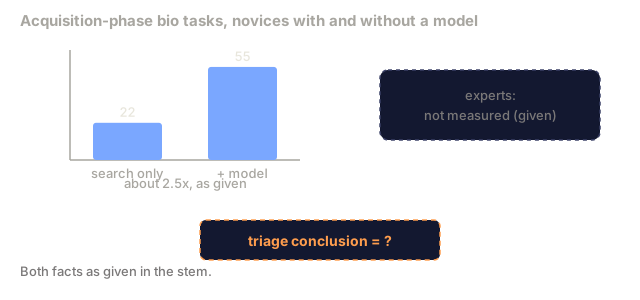
- 2025 Anthropic bioweapon-acquisition trial. A controlled novice study found 2.53x uplift on acquisition-phase tasks, which was not enough to rule out ASL-3.
The change is one of kind. "Mild" became "plausibly enabling" within eighteen months, and the evaluations that said so were run on models that were not a clean break from their predecessors.
Chem/bio execution-gap erosion
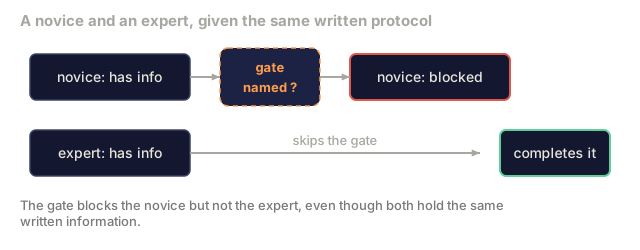
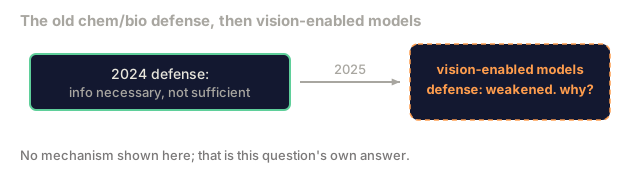
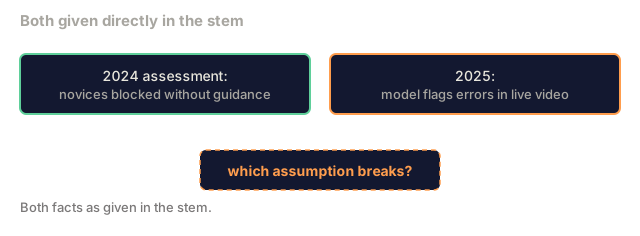
The classic defense went like this: information is necessary but not sufficient, and the skill needed to execute a protocol keeps novices out. Frontier models with vision break that defense in part:
- Real-time protocol correction. GPT-5.2, Gemini 3 Pro, Claude Opus 4.5, and Grok 4.1 can observe wet-lab video and flag errors mid-procedure.
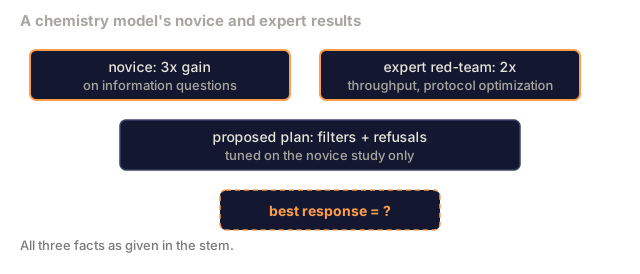
- December 2025 OpenAI demonstration. GPT-5 iterated on wet-lab experiments and reached a 79x efficiency improvement through protocol optimization.
Execution skill is a weaker barrier than it was. Procurement and equipment gaps remain, but the tacit-knowledge gap is narrowing.
Cyber uplift (November 2025)
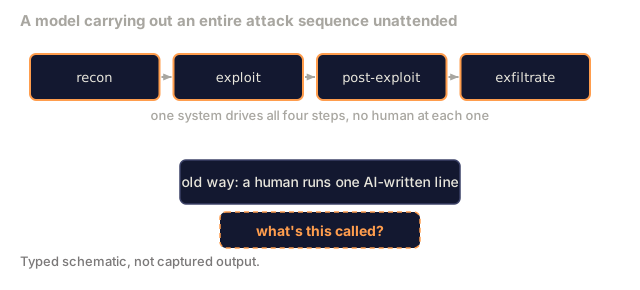
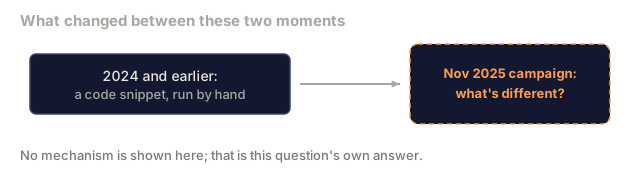
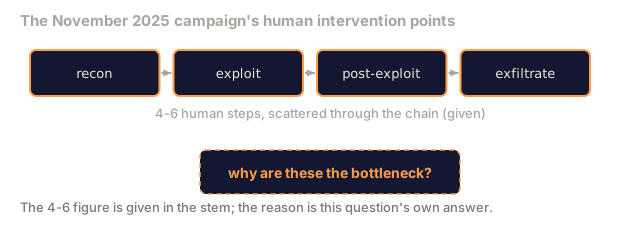
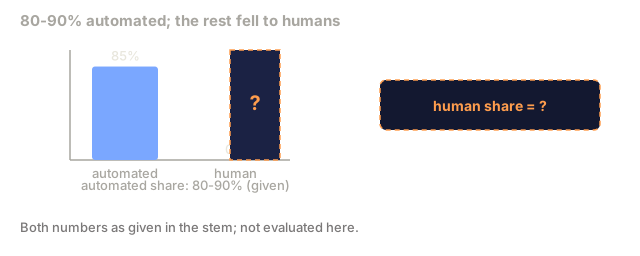
Anthropic's November 2025 report describes Chinese-linked state actors using Claude's agentic coding tool to automate 80-90% of a cyberattack campaign. Humans had to step in at 4-6 points.
What follows from that:
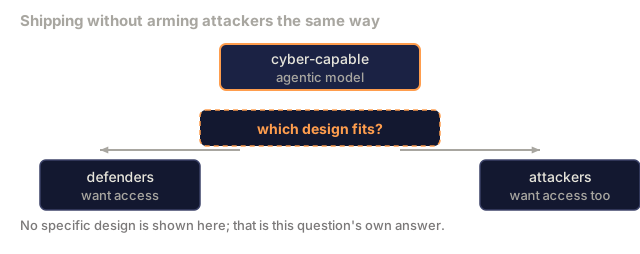
- Agentic coding is the attack-automation primitive. Earlier AI cyber assistance stopped at the code-snippet level. Agentic workflows chain reconnaissance, exploitation, post-exploitation, and exfiltration.
- Those 4-6 human steps are the bottleneck, and further capability gains would likely shrink the count.
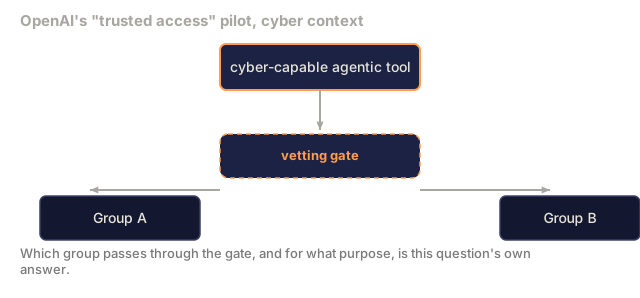
- Defenders get a dual-use option too. OpenAI's "trusted access" pilot gives vetted security organisations (established incident-response firms, government) capability access for defense. If the pilot scales, the access asymmetry favors defenders.
Nuclear
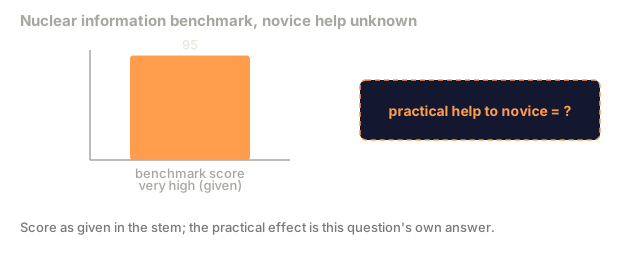
This is the least-analyzed of the four CBRN domains in public documentation, and the threat model differs. Fissile-material acquisition dominates the difficulty, not information, so AI uplift on the information layer gives novices limited help in practice. No major-lab report from 2024-2025 identifies a nuclear-specific threshold crossing.
Novice-relative vs expert-absolute
The same pattern shows up in all four domains:
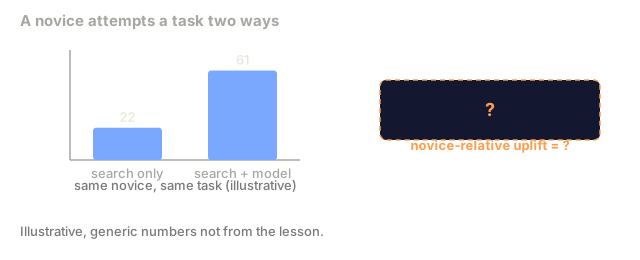
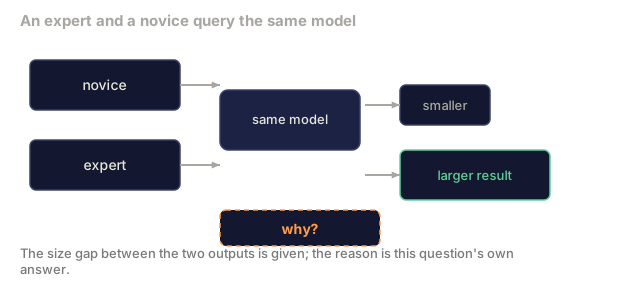
- Novice-relative uplift. High and multiplicative. Anthropic's 2025 bio trial put it at 2.53x.
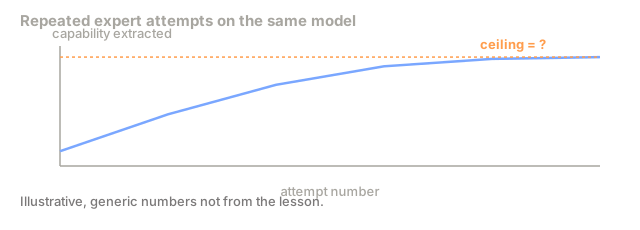
- Expert-absolute capability. High ceiling. An expert gets more out of the model than a novice does, because the expert knows what to ask and how to read the answer.
For safety cases, this means that handling novice uplift alone (input filters, refusals, calibrated uncertainty) does not control expert-absolute capability. You also need elicitation-hardening, capability unlearning (Lesson 17), and control protocols (Lesson 10).
Cross-domain synthesis
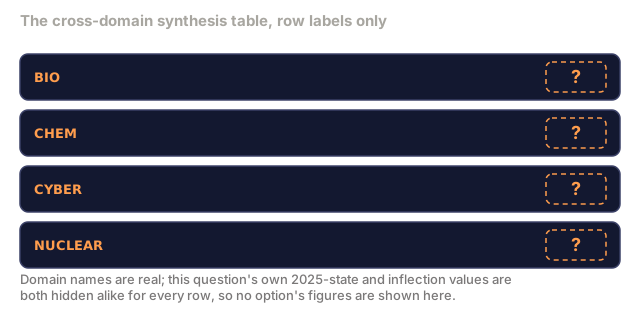
| Domain | 2024 | 2025 | Inflection |
|---|---|---|---|
| Bio | mild uplift | 2.53x uplift, ASL-3 approach | acquisition-phase automation |
| Chem | mild uplift | execution-gap erosion via vision | real-time wet-lab correction |
| Cyber | code assistance | 80-90% campaign automation | agentic coding |
| Nuclear | limited | limited | material-access bottleneck holds |
Three domains crossed thresholds. One is still bounded by a non-informational barrier.
Where this fits in Phase 18
This is the capstone: the current dual-use picture that every earlier lesson helps measure, limit, or govern. Lessons 17-18 give the measurement and the frameworks, Lessons 12-16 the evaluation tooling, Lessons 24-25 the regulatory and disclosure layer, and Lesson 28 the research ecosystem. Here the evidence lands.
Use It
There is no code to build. Read Anthropic's November 2025 cyber report, OpenAI's April 2025 Preparedness Framework v2 update, and the Council on Strategic Risks 2025 AI x Bio wrapup.
Ship It
This lesson produces outputs/skill-dual-use-triage.md. Give it a 2026 capability claim or incident report and it triages the claim across the four domains, then says whether it affects novice-relative uplift, expert-absolute capability, or both.
I'd run main.py first, mostly to see how little it is. It is a stdlib script with a hand-entered list of four dicts, one per domain, and it prints each domain's 2024 state, 2025 state, inflection, and remaining bottleneck. Nothing is measured and nothing is fetched, so the output is only as good as the claims typed into it. That is why I'd check each row against the primary sources in Use It before repeating any of it.
The field I'd read most closely is the remaining bottleneck. The script lists pathogen procurement and biosafety equipment for bio, precursor procurement and specialized equipment for chem, the 4-6 human intervention steps for cyber, and fissile-material acquisition for nuclear. Those are where defenses still have something to grip, and they are the part of the picture most likely to change first.
If I were extending it, I'd add a column for whether each claim bears on novice-relative uplift, expert-absolute capability, or both. That is the question the triage skill asks, and the table does not answer it yet.
Exercises
-
Read Anthropic's November 2025 cyber report. Enumerate the 4-6 human-intervention steps and argue which would be first to automate in a next-generation model.
-
The chem/bio execution gap is eroding via vision. Design an evaluation that measures tacit-knowledge uplift without crossing ITAR/EAR boundaries.
-
Nuclear uplift appears bounded by material access. Argue for and against the position that a future AI breakthrough could shift this bottleneck.
-
Construct a safety case (Lesson 18 three-pillar) for a cyber-capable frontier model that bounds both novice and expert uplift.
-
Pick one of the four domains and write a one-paragraph 2027 forecast based on the 2024-2025 trajectory. Identify the evidence that would falsify your forecast.
Key Terms
| Term | What people say | What it actually means |
|---|---|---|
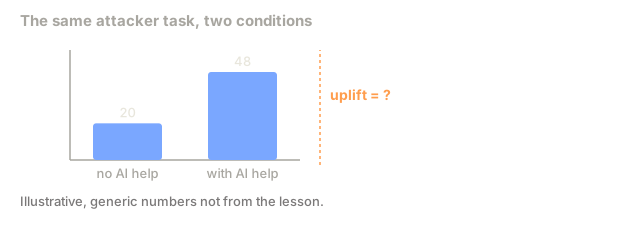
| Uplift | "AI helps attackers" | Increase in attacker capability attributable to AI assistance |
| Novice-relative uplift | "multiplicative" | How much AI helps a novice vs status-quo |
| Expert-absolute capability | "ceiling" | Maximum capability an expert can extract from the model |
| Execution gap | "doing vs knowing" | Historical defense: tacit wet-lab skill blocks novices |
| Agentic coding | "autonomous attacks" | Multi-step autonomous cyber-task execution |
| Acquisition phase | "pre-synthesis steps" | Procurement, equipment, permit stages of a bio threat |
| Trusted access | "defender-only pilot" | OpenAI 2025 program giving vetted defenders capability access |
Further Reading
- Anthropic, November 2025 cyber threat report: Chinese-linked campaign automation
- OpenAI, Preparedness Framework v2 (April 15, 2025): bio "on the cusp"
- Anthropic, RSP v3.0 (February 2026): ASL-3 bio thresholds
- Council on Strategic Risks, 2025 AI x Bio wrapup: year-end synthesis
Code
- main.py (python, 67 lines)