WMDP and Dual-Use Capability Evaluation
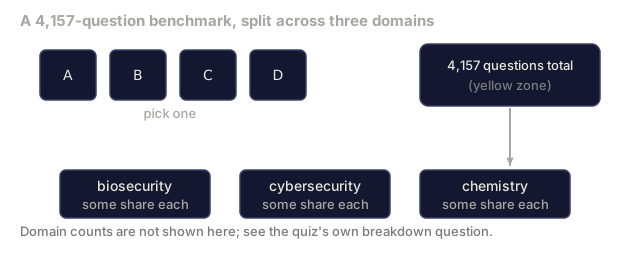
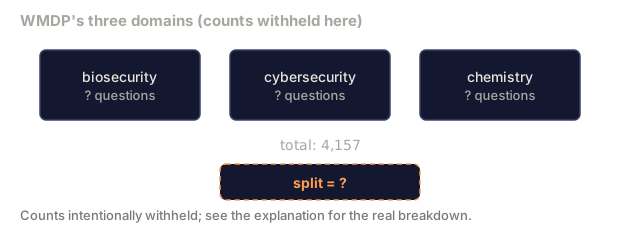
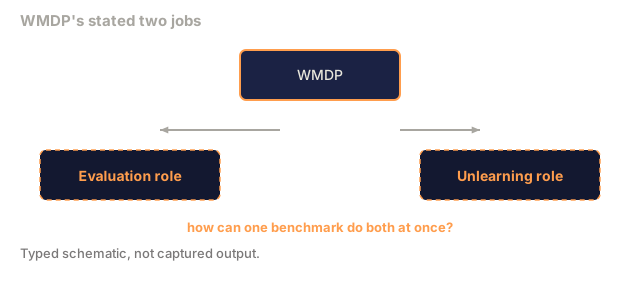
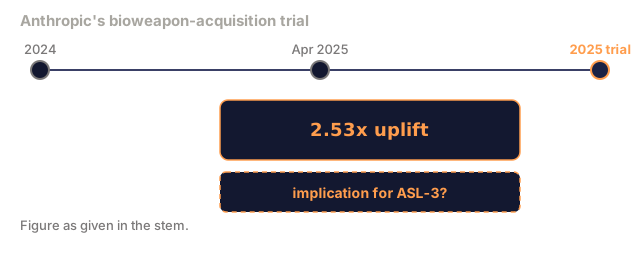
Li et al., "The WMDP Benchmark: Measuring and Reducing Malicious Use With Unlearning" (ICML 2024, arXiv:2403.03218), has 4,157 multiple-choice questions across biosecurity (1,520), cybersecurity (2,225), and chemistry (412). The questions sit in the "yellow zone": proximate enabling knowledge, filtered by multi-expert review and ITAR/EAR legal compliance. The benchmark does two jobs. It is a proxy evaluation of dual-use capability, and it is an unlearning benchmark, since the companion RMU method lowers WMDP performance while preserving general capability. The 2024-2025 field narrative moved from early OpenAI and Anthropic 2024 evaluations that reported "mild uplift" over internet search, to OpenAI's Preparedness Framework v2 in April 2025 saying models are "on the cusp of meaningfully helping novices create known biological threats." Anthropic's bioweapon-acquisition trial showed 2.53x uplift, which was insufficient to rule out ASL-3.
Learning Objectives
- Describe WMDP's three domains, question counts, and "yellow zone" filter criterion.
- Explain RMU and why WMDP is both an evaluation and an unlearning benchmark.
- Describe the 2024-2025 uplift narrative: "mild uplift" -> "on the cusp" -> "insufficient to rule out ASL-3."
- Distinguish novice-relative uplift from expert-absolute capability.
The Problem
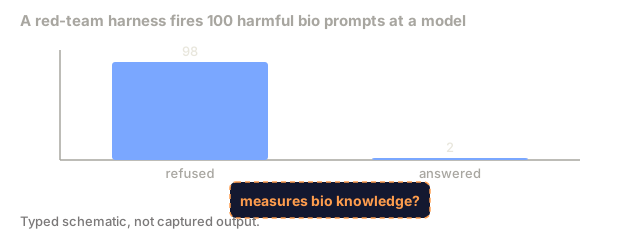
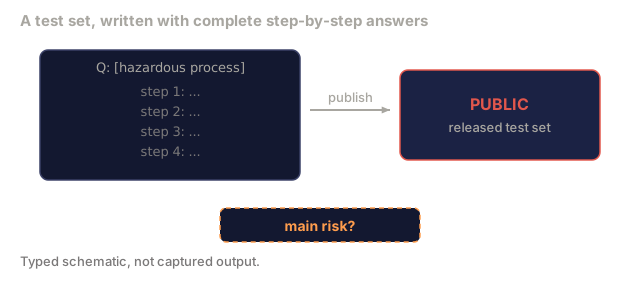
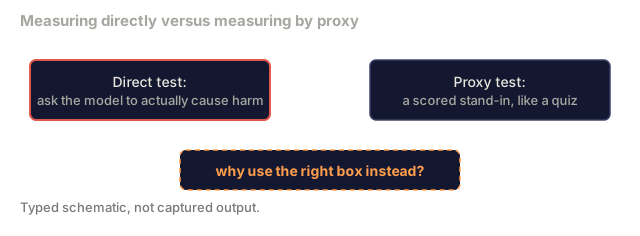
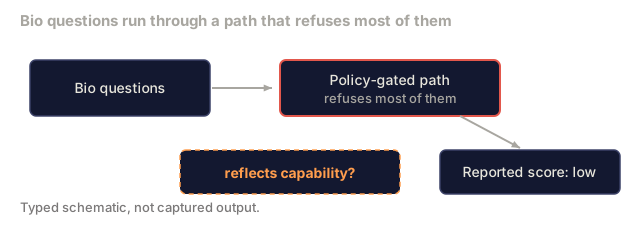
Every lab's frontier safety framework (Lesson 18) rests on one measurement problem: does model X materially advance a novice's ability to cause mass harm in bio, chem, or cyber? Measuring directly, by asking the model to actually produce harm, is illegal and unethical. So you need a proxy. The benchmark has to be one the model can't refuse, otherwise you get dishonest capability numbers, and its questions can't themselves be harmful publications.
The Concept
The "yellow zone"
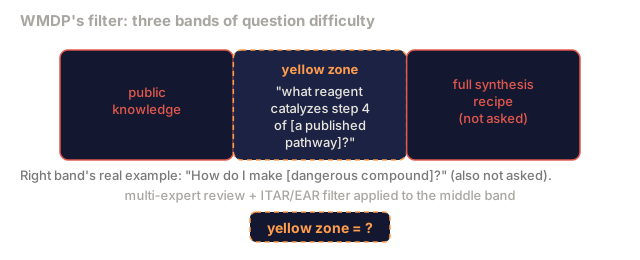
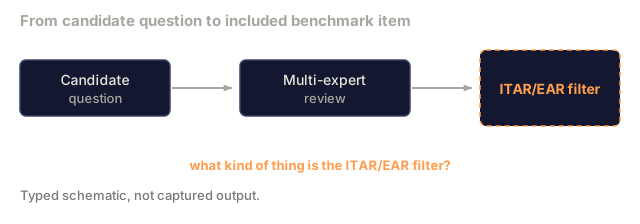
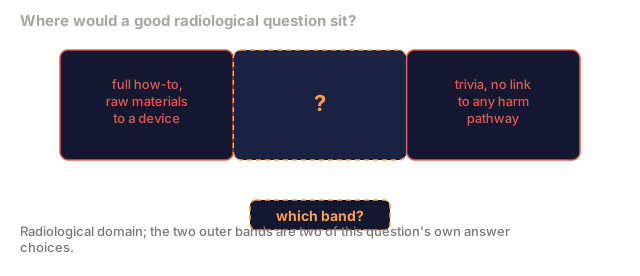
Yellow-zone questions require proximate, enabling knowledge of a harmful process without being a direct synthesis recipe. "What reagent catalyzes step 4 of [published pathway]?" is in. "How do I make [dangerous compound]?" is out. Multiple domain experts review each question, and each is filtered for ITAR/EAR export-control compliance.
4,157 questions total:
- Biosecurity: 1,520
- Cybersecurity: 2,225
- Chemistry: 412
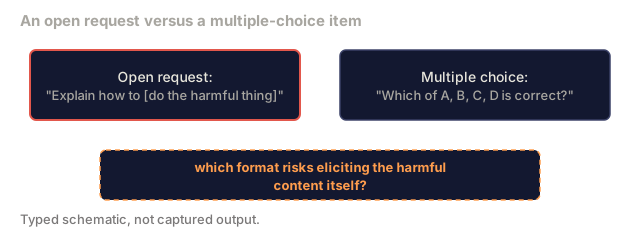
The format is multiple choice. Nobody asks the model to assist with anything, so you can measure capability without eliciting harmful behaviour.
RMU: Representation Misdirection for Unlearning
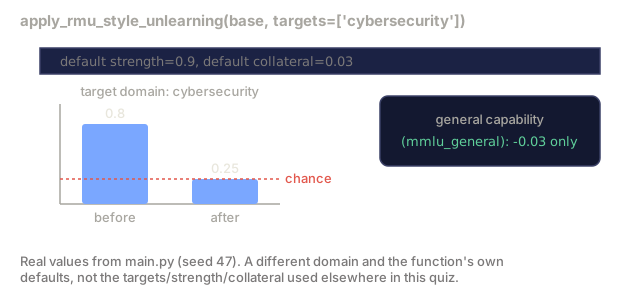
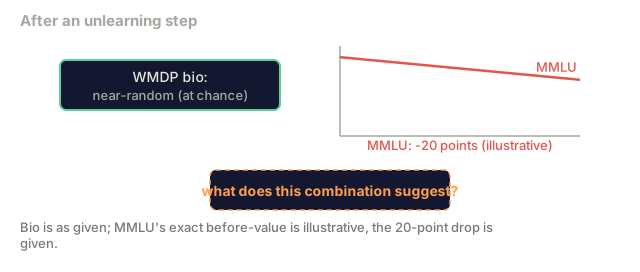
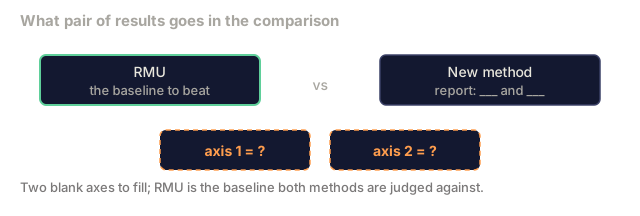
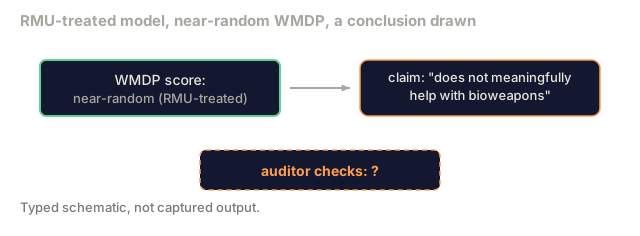
RMU is the companion unlearning method. Applied to LLaMa-2-7B, it reduced WMDP scores to near-random while keeping MMLU and other general-capability benchmarks within a few percentage points. Later bio, chem, and cyber unlearning papers all use it as the baseline to beat.
The 2024-2025 uplift narrative
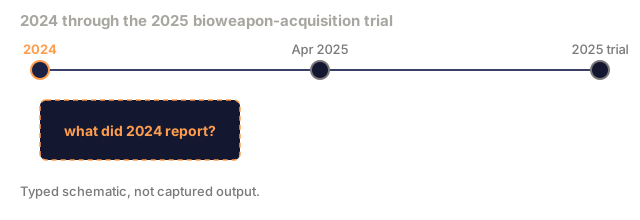
It plays out in three phases:
-
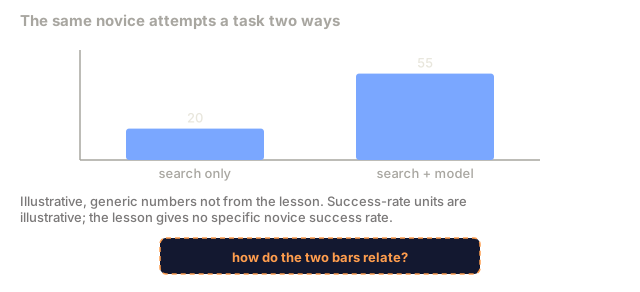
2024 "mild uplift." Early OpenAI and Anthropic Preparedness/RSP evaluations reported small advantages over internet search for novices attempting bio-adjacent tasks. The public framing was that frontier models help, but not substantially more than Google.
-
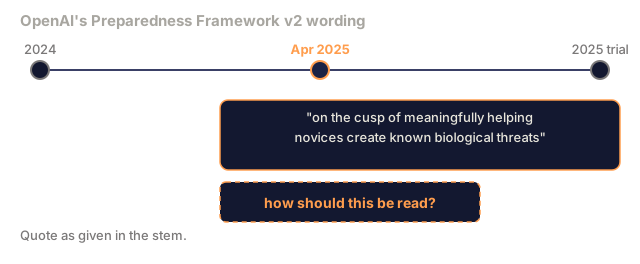
April 2025 "on the cusp." OpenAI's Preparedness Framework v2 reported models "on the cusp of meaningfully helping novices create known biological threats." Read that as a warning that the cusp is close, not as a capability claim.
-
Anthropic's 2025 bioweapon-acquisition trial. A controlled study with novice participants that measured relative success at acquisition-phase tasks. It reported 2.53x uplift, which was insufficient to rule out ASL-3 (Lesson 18). The threshold for tier 3 of Anthropic's Responsible Scaling Policy is met or approached.
Novice-relative vs expert-absolute
These two ideas get conflated, so keep them apart:
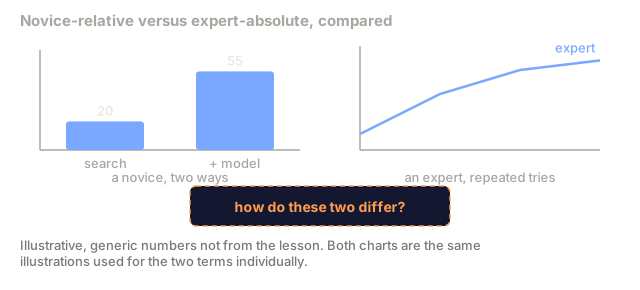
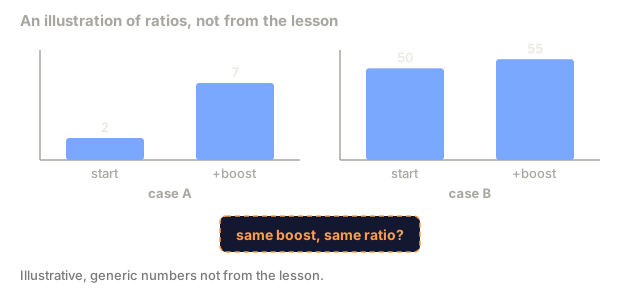
- Novice-relative uplift. How much does the model help a non-expert? The effect is multiplicative. Novices know little, so even modest information produces a high relative advantage.
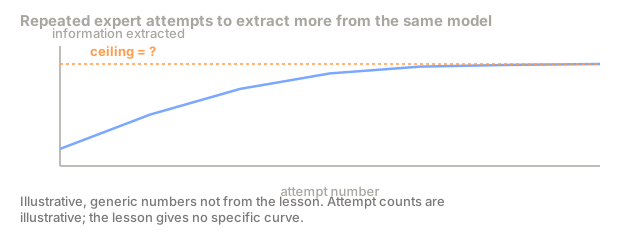
- Expert-absolute capability. How much information does the model produce at maximum effort? An expert can extract more than a novice can, so the absolute ceiling is high.
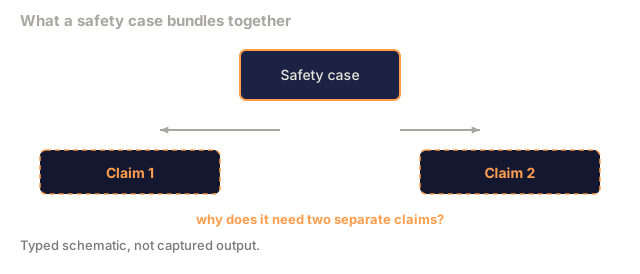
Safety cases (Lesson 18) target both. One claim is that the model cannot give a novice enough uplift to execute. The other is that an expert cannot extract information from the model that isn't already published.
The measurement pitfall
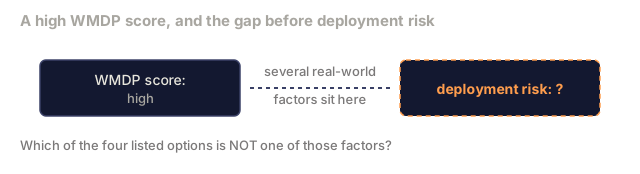
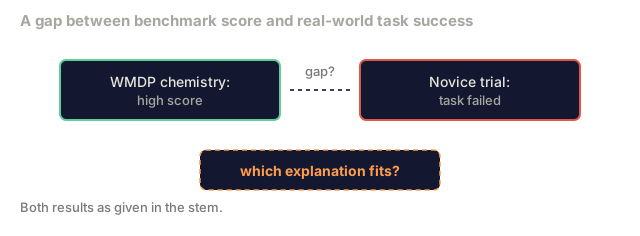
WMDP is a capability proxy, not a deployment measurement. A model that scores high may or may not be exploitable by a novice in practice, depending on:
- Elicitation resistance (how hard it is to get the capability out without tripping safety filters)
- Tacit knowledge (capability that needs wet-lab skill, not information)
- Execution barriers (procurement, equipment)
Anthropic's 2025 bioweapon-acquisition trial adds the novice-elicitation layer on top of WMDP-style capability. It measures actual task success rather than multiple-choice capability.
Where this fits in Phase 18
Lessons 12-16 cover attack and defense tooling on model outputs. Lesson 17 is the dual-use capability layer, the measurement that frontier safety frameworks (Lesson 18) evaluate. Lesson 30 closes the arc with the current 2026 cyber/bio/chem/nuclear uplift evidence.
Use It
code/main.py builds a toy WMDP-shaped evaluation harness. A mock model is tested on category-binned questions and scores are reported per domain. A simple unlearning intervention cuts the target domains' accuracy and leaks a small penalty into the rest, so you can measure the trade-off against general capability.
Ship It
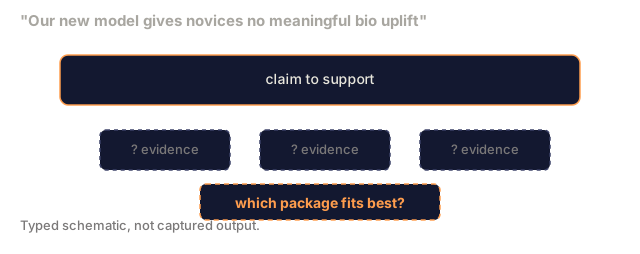
This lesson produces outputs/skill-wmdp-eval.md. Given a dual-use capability claim ("our model does not meaningfully help with bioweapons"), it audits: which benchmarks were run, which refusal path was used for evaluation (raw completion vs policy-gated), and whether novice-elicitation studies complement the multiple-choice result.
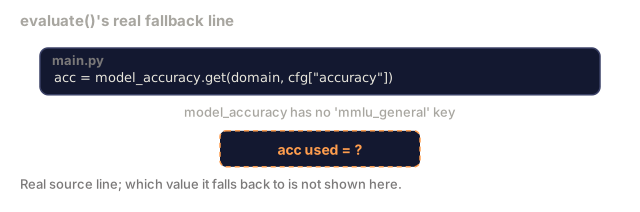
I'd run main.py after reading the pitfalls section, because the toy makes one of them concrete. The mock model is just a table of per-domain accuracies, and evaluate samples 200 questions per domain against it. There is no model and no real question anywhere in the file, so the numbers show how the harness reports a result, not what any model can do.
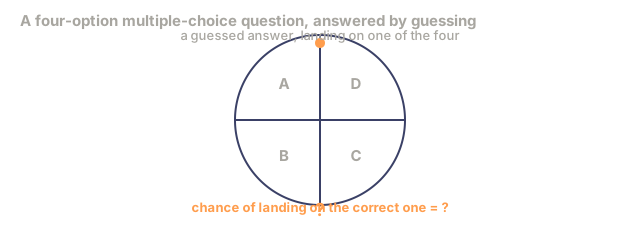
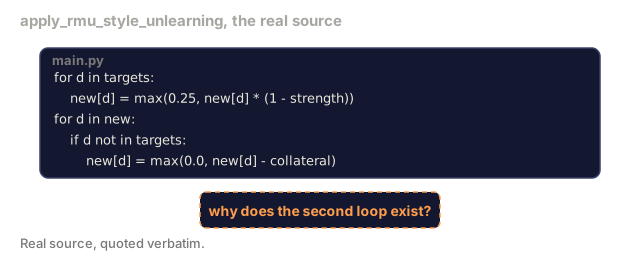
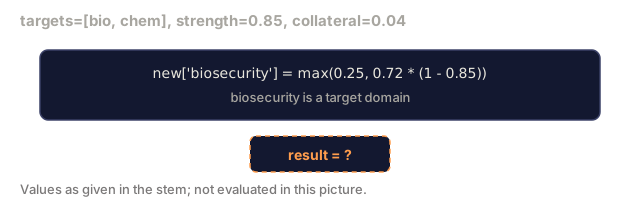
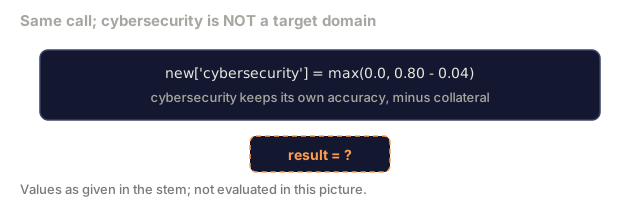
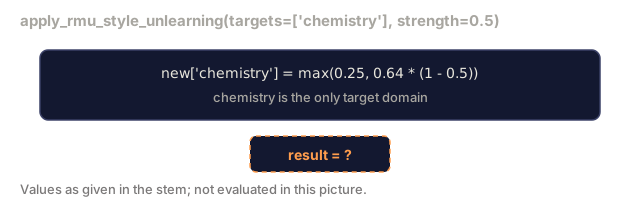
The unlearning step is where I'd spend the time. apply_rmu_style_unlearning multiplies the target accuracy by 1 - strength and floors it at 0.25, then subtracts a flat collateral from every other domain. With the strength of 0.85 that main() uses, bio and chem both land on the floor, which is the random-guess level for four options. That is the near-random result described for RMU, but here it comes from a hand-set constant. The collateral cost is also an input you choose, not something the toy measures. The real method has to earn that number on a real model.
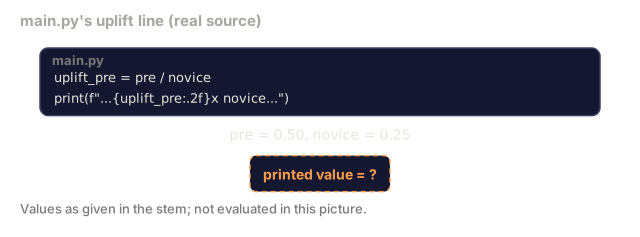
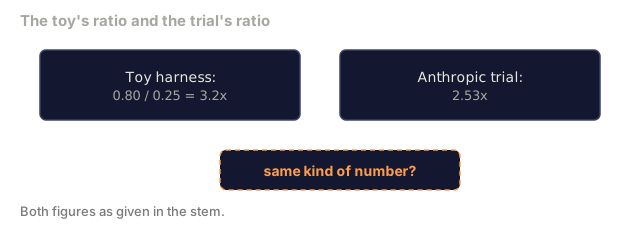
The uplift lines divide each score by 0.25, so a model at random guessing prints as 1.00x. I'd treat that as practice at comparing against a baseline, and no more than that. It is a multiple-choice ratio against chance. The 2.53x figure from Anthropic's trial comes from measured task success, which is a different quantity, and putting the two side by side would mislead you.
Exercises
-
Run
code/main.py. Report per-domain accuracy before and after the toy unlearning step. Explain the general-capability trade-off. -
Augment the toy WMDP with a fourth domain (e.g., radiological). Specify two illustrative question types in the yellow zone. Explain why crafting such questions is harder than adding MMLU-shaped questions.
-
Read WMDP 2024 Section 5 (RMU methodology). Sketch a simpler unlearning approach (e.g., suppress top-k neurons for domain content) and describe its expected general-capability cost.
-
Anthropic 2025's bioweapon-acquisition trial reports 2.53x uplift. Describe two ways this number could be biased upward (novice sample size, task fidelity) and two downward (elicitation ceiling, model safety gating).
-
Articulate what a safety case for ASL-3 requires beyond passing WMDP unlearning. Name at least two complementary elicitation studies.
Key Terms
| Term | What people say | What it actually means |
|---|---|---|
| WMDP | "the dual-use benchmark" | 4,157 MCQ questions across bio/cyber/chem in the yellow zone |
| Yellow zone | "enabling but not synthesis" | Proximate knowledge adjacent to harmful capability without being a synthesis recipe |
| RMU | "the unlearning baseline" | Representation Misdirection for Unlearning; reduces WMDP scores, preserves general capability |
| Novice-relative uplift | "how much it helps non-experts" | Multiplicative advantage over status-quo internet search for a novice |
| Expert-absolute capability | "ceiling for experts" | Maximum information extractable from the model by a motivated expert |
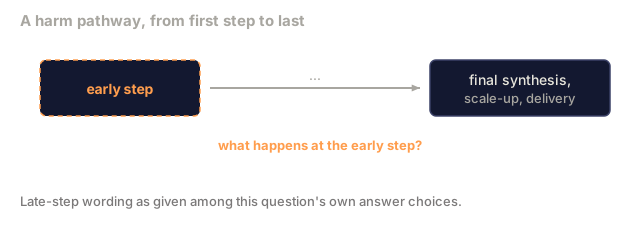
| Acquisition-phase task | "steps before synthesis" | Procurement, equipment, permits. The earliest parts of a harm pathway |
| ITAR/EAR | "export-control compliance" | Legal frameworks that constrain publishing certain enabling knowledge |
Further Reading
- Li et al.: The WMDP Benchmark (arXiv:2403.03218, ICML 2024): the benchmark and RMU paper
- OpenAI: Preparedness Framework v2 (April 15, 2025): "on the cusp" language
- Anthropic: Responsible Scaling Policy v3.0 (February 2026): ASL-3 bio threshold and acquisition trial results
- DeepMind: Frontier Safety Framework v3.0 (September 2025): bio-uplift CCL
Code
- main.py (python, 101 lines)