Frontier Safety Frameworks — RSP, PF, FSF
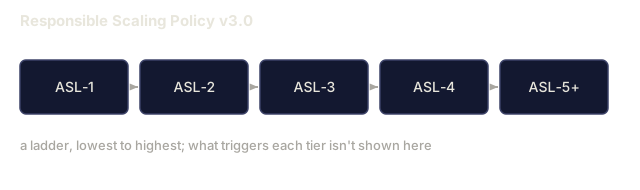
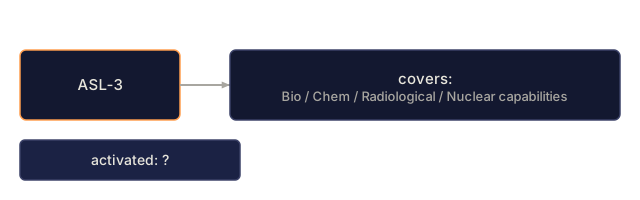
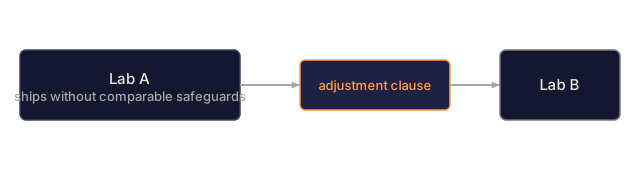
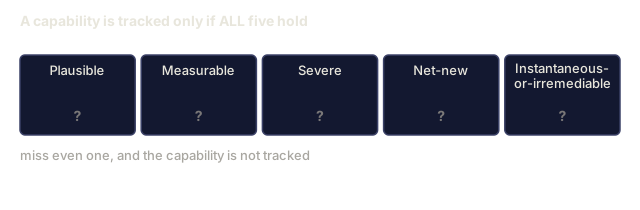
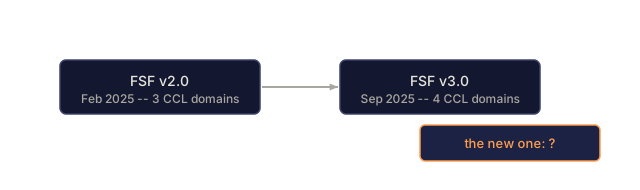
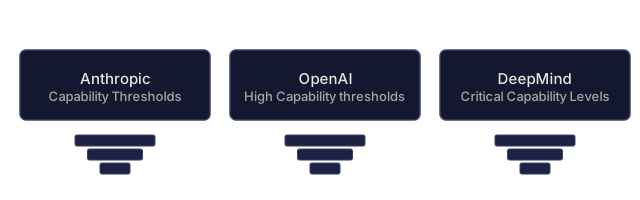
Three labs publish the frameworks that govern frontier capability in 2026. Anthropic's Responsible Scaling Policy v3.0 (February 2026) sorts models into AI Safety Levels, ASL-1 through ASL-5+, modeled on biosafety levels, and ASL-3 went active in May 2025 for CBRN-relevant models. OpenAI's Preparedness Framework v2 (April 2025) sets five criteria for tracked capabilities and splits Capabilities Reports from Safeguards Reports. DeepMind's Frontier Safety Framework v3.0 (September 2025) uses Critical Capability Levels and adds a Harmful Manipulation CCL. Each of the three includes a competitor-adjustment clause that lets the lab relax requirements if a peer ships without comparable safeguards. The names differ ("Capability Thresholds," "High Capability thresholds," "Critical Capability Levels") but the structure is analogous.
Learning Objectives
- Describe Anthropic's ASL tier structure and what activated ASL-3.
- Name the five OpenAI Preparedness Framework v2 criteria for tracked capabilities.
- Describe DeepMind's Critical Capability Level structure and the Harmful Manipulation CCL.
- Explain the competitor-adjustment clauses and why they matter for race dynamics.
- Define a safety case and describe the three-pillar structure (monitoring, illegibility, incapability).
The Problem
Lessons 7-17 establish that deception is possible, dual-use capability exists, and evaluation has limits. A lab with a frontier-capable model needs an internal governance structure that does four things:
- Defines thresholds for when new safeguards are required.
- Defines required evaluations before scaling.
- Describes what a safety case looks like.
- Handles the race-dynamic problem: if competitors ship without safeguards, what do you do?
The three 2025-2026 frameworks are the state of the art. They are imperfect and still evolving, but they line up closely enough across labs that the live question is whether the frameworks are adequate, not whether they exist.
The Concept
Anthropic Responsible Scaling Policy v3.0 (February 2026)
ASL structure:
- ASL-1: not a frontier model (subsumed by the weaker-than-frontier baseline).
- ASL-2: current frontier baseline; deployed with usual safeguards.
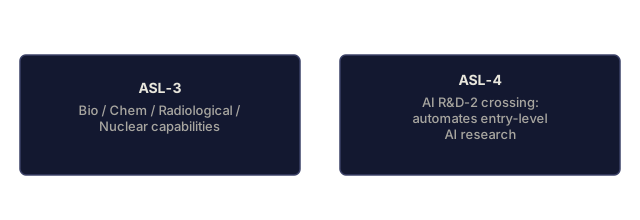
- ASL-3: substantially higher risk of catastrophic misuse; CBRN-relevant capabilities. Activated May 2025.
- ASL-4: AI R&D-2 crossing threshold; models that can automate entry-level AI research.
- ASL-5+: advanced AI R&D; models that dramatically accelerate effective scaling.
New in v3.0:
- Frontier Safety Roadmaps (public in redacted form).
- Risk Reports (quarterly, some externally reviewed).
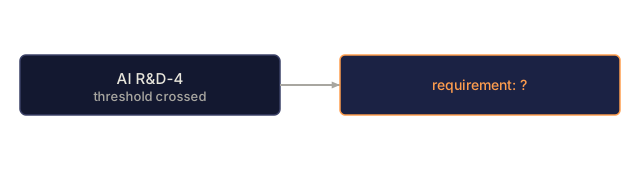
- AI R&D is disaggregated into AI R&D-2 and AI R&D-4.
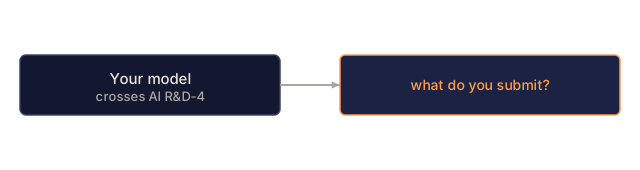
- Once AI R&D-4 is crossed, an affirmative safety case is required, identifying misalignment risks from models pursuing misaligned goals.
OpenAI Preparedness Framework v2 (April 15, 2025)
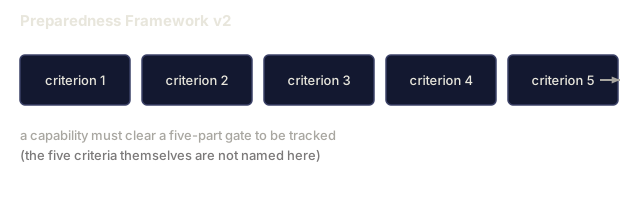
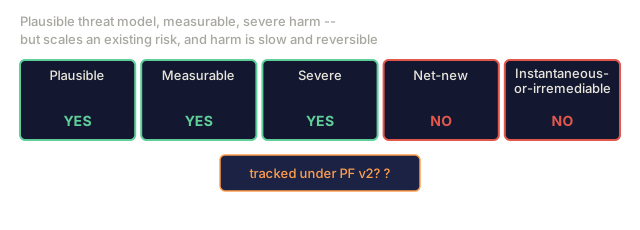
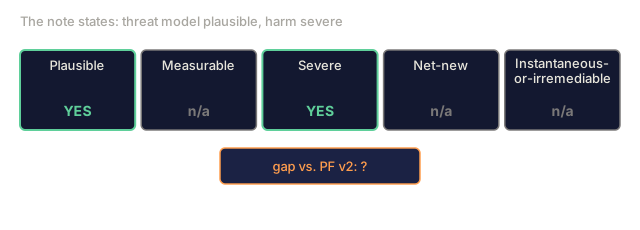
Five criteria for tracked capabilities:
- Plausible. Reasonable threat model exists.
- Measurable. Empirical evaluation possible.
- Severe. Harm is large.
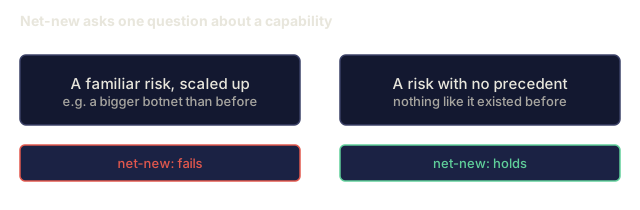
- Net-new. Not a pre-existing risk scaled up.
- Instantaneous-or-irremediable. Harm occurs fast or cannot be undone.
A capability is tracked only if it meets all five.
Other PF v2 structure:
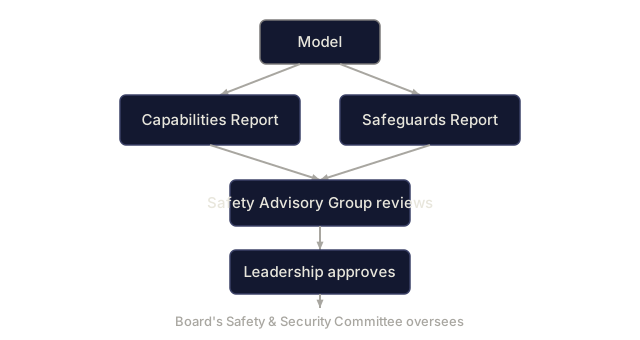
- Separate Capabilities Reports (what the model can do) from Safeguards Reports (what controls exist).
- Safety Advisory Group reviews.
- Leadership approves; Board's Safety & Security Committee oversees.
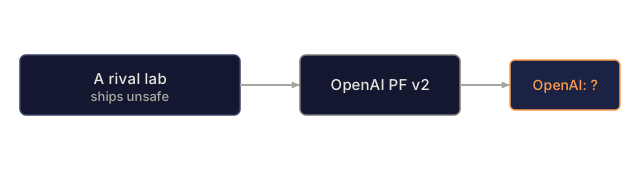
- "Adjustment clause": OpenAI may reduce requirements if another lab ships without comparable safeguards.
DeepMind Frontier Safety Framework v3.0 (September 2025)
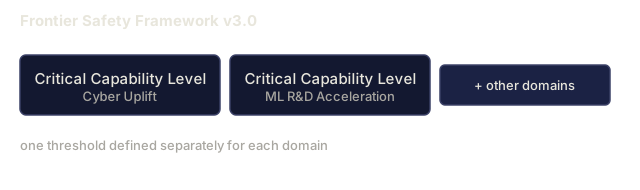
Critical Capability Levels (CCLs) by domain:
- Bioweapon Uplift
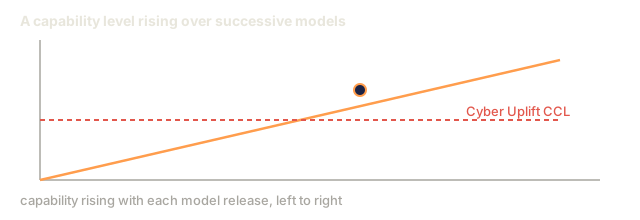
- Cyber Uplift
- ML R&D Acceleration
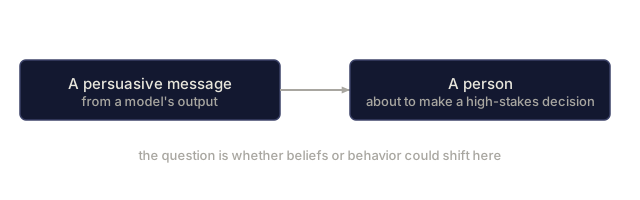
- Harmful Manipulation (new in v3.0): models that could substantially change beliefs/behavior in high-stakes contexts.
v2.0 (February 2025) added a Deceptive Alignment section and higher security levels for ML R&D CCLs.
Cross-lab alignment
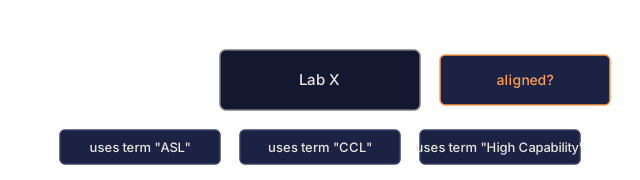
- Anthropic "Capability Thresholds."
- DeepMind "Critical Capability Levels."
- OpenAI "High Capability thresholds."
There is no industry-standard terminology. The structure is aligned, though: three tiers of frontier capability with published evaluation criteria, and a competitor-adjustment clause in each framework (2025 onward).
Safety cases
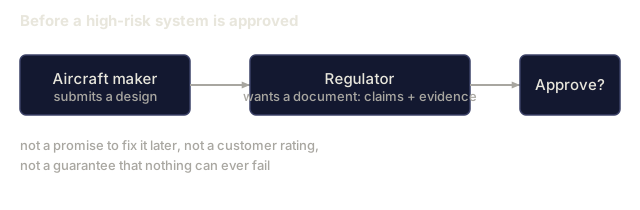
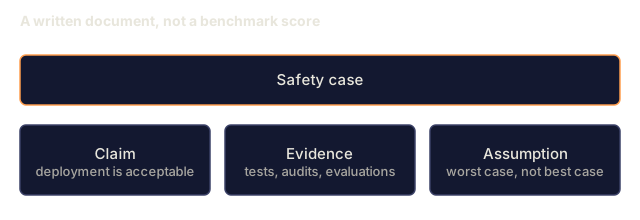
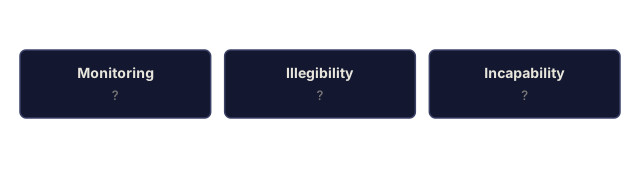
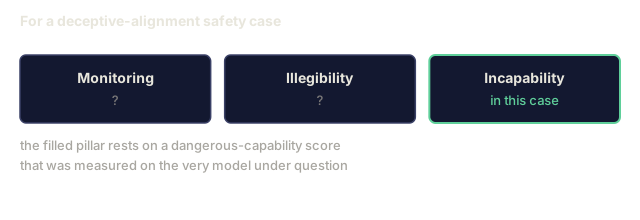
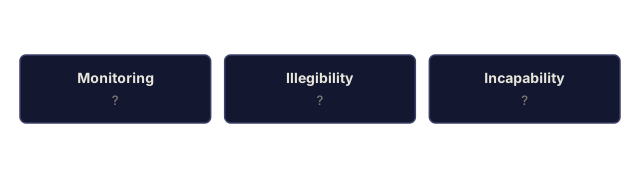
A safety case is a written argument that a deployment is acceptably safe under worst-case assumptions. The standard structure targets three pillars:
- Monitoring. Can we detect bad behaviour if it occurs?
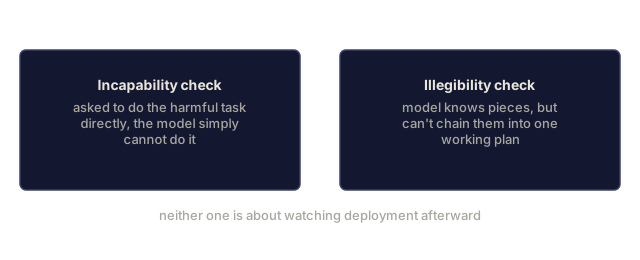
- Illegibility. Does the model lack the ability to execute a coherent plan to cause harm?
- Incapability. Does the model lack the capability to cause the harm in question?
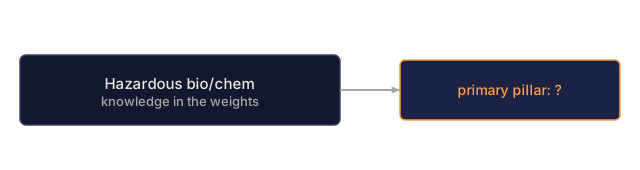
Different safety cases target different pillars. For an ASL-3 CBRN case, incapability (via unlearning) is the primary target. For deceptive alignment, monitoring and illegibility are targets. For cyber uplift, all three are relevant.
The race-dynamic problem
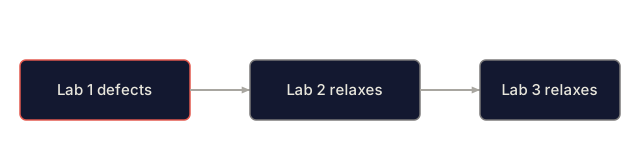
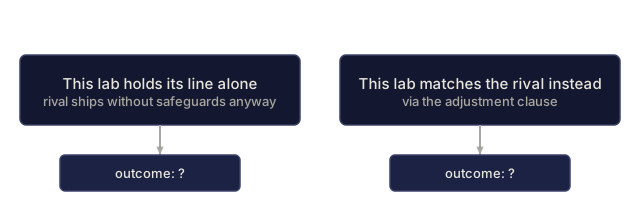
Competitor-adjustment clauses are controversial. Critics say they create a race to the bottom: if every lab will relax requirements when a competitor defects, the equilibrium shifts toward defection. Defenders say the alternative, unilateral safeguards, produces worse outcomes when the defecting lab is less safety-conscious.
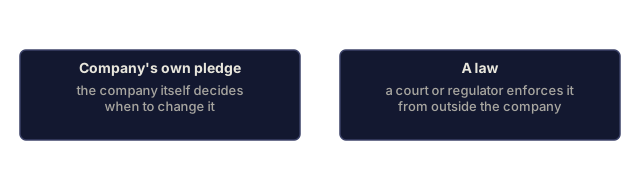
UK AISI, US CAISI, and EU AI Office (Lesson 24) are the external governance counterparts. The lab frameworks are voluntary; the regulatory frameworks are emerging.
Where this fits in Phase 18
Lessons 17-18 are the measurement-and-governance layer on top of the deception and red-team analyses. Lessons 19-24 cover welfare, bias, privacy, watermarking, and regulatory structure. Lesson 28 maps the research ecosystem (MATS, Redwood, Apollo, METR) that operationalizes the evaluations.
Use It
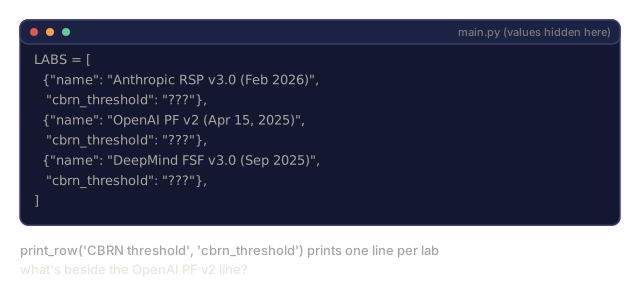
Read the three primary sources: RSP v3.0, PF v2, FSF v3.0. Map each lab's tier structure to the others and identify one threshold each lab defines that the others do not. main.py prints a hardcoded side-by-side table of the three frameworks. It simulates nothing, so use it as a map and check each entry against the sources.
Ship It
This produces outputs/skill-framework-diff.md. Given a safety framework or release note, it compares the framework's threshold definitions, evaluations required, and safety-case structure against RSP v3.0, PF v2, FSF v3.0 and flags cross-lab gaps.
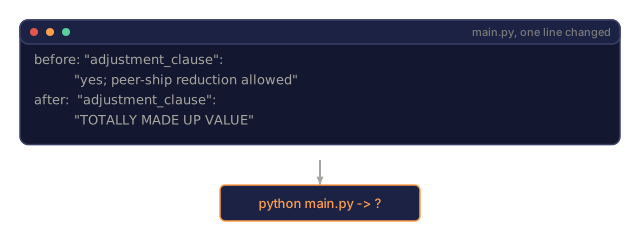
I'd run main.py alongside the primary sources, but only as a map. It is a hardcoded table that prints five rows for each framework: tier structure, CBRN threshold, AI R&D threshold, adjustment clause, and safety case. It simulates nothing and reads no files, so the output is exactly as good as the entries, and I'd check each one against the source documents.
The row I'd stare at is the adjustment clause. Every entry in the table says yes, and that is where the race-dynamic argument lives. Whichever side you take in Exercise 2, name the assumption you are leaning on.
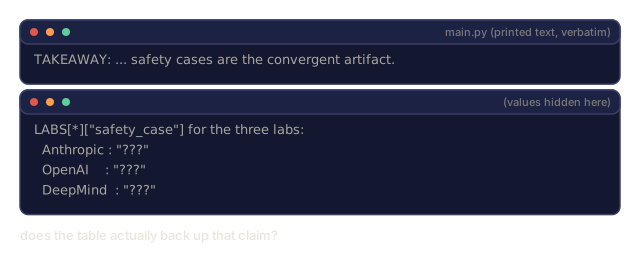
I'd also read the safety-case row with some suspicion. Anthropic's entry ties it to the AI R&D-4 crossing, OpenAI's splits it into two reports, and DeepMind's attaches it per CCL. The takeaway line at the bottom of the script calls safety cases the convergent artifact, but those three entries are not the same thing yet.
Exercises
-
Read RSP v3.0, PF v2, and FSF v3.0. Compile a table of each lab's CBRN threshold, each's AI R&D threshold, and each's required pre-deployment evaluation.
-
The competitor-adjustment clause is in all three frameworks (2025+). Write one paragraph arguing for it; write one paragraph arguing against. Identify the assumption each position depends on.
-
Design a safety case for a model crossing Anthropic's AI R&D-4 threshold. Name the evidence each of the three pillars (monitoring, illegibility, incapability) requires.
-
DeepMind's FSF v3.0 introduces a Harmful Manipulation CCL. Propose three empirical measurements that would indicate a model has crossed this threshold.
-
Read METR's "Common Elements of Frontier AI Safety Policies" (2025). Name the three strongest cross-lab convergences and the two largest divergences.
Key Terms
| Term | What people say | What it actually means |
|---|---|---|
| RSP | "Anthropic's framework" | Responsible Scaling Policy; ASL tiers; v3.0 February 2026 |
| PF | "OpenAI's framework" | Preparedness Framework; five criteria; v2 April 2025 |
| FSF | "DeepMind's framework" | Frontier Safety Framework; CCLs; v3.0 September 2025 |
| ASL-3 | "biosafety level 3-analog" | Anthropic tier for CBRN-relevant capabilities; activated May 2025 |
| CCL | "critical capability level" | DeepMind's threshold construct; per-domain |
| Safety case | "the formal argument" | Written argument that deployment is acceptably safe under worst-case U |
| Adjustment clause | "competitor defection allowance" | Framework provision for reducing requirements if competitors ship without comparable safeguards |
Further Reading
- Anthropic: Responsible Scaling Policy v3.0 (February 2026): ASL tiers, roadmaps, AI R&D disaggregation
- OpenAI: Updating the Preparedness Framework (April 15, 2025): five criteria, adjustment clause
- DeepMind: Strengthening our Frontier Safety Framework (September 2025): CCL v3.0, Harmful Manipulation
- METR: Common Elements of Frontier AI Safety Policies (2025): cross-lab comparison
Code
- main.py (python, 73 lines)