Anthropic Responsible Scaling Policy v3.0
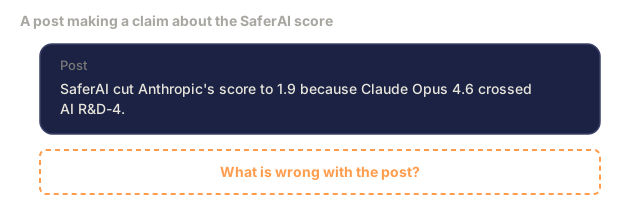
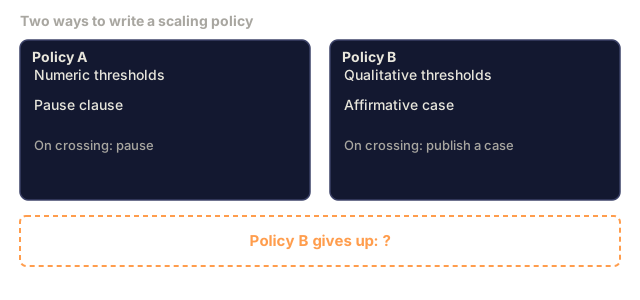
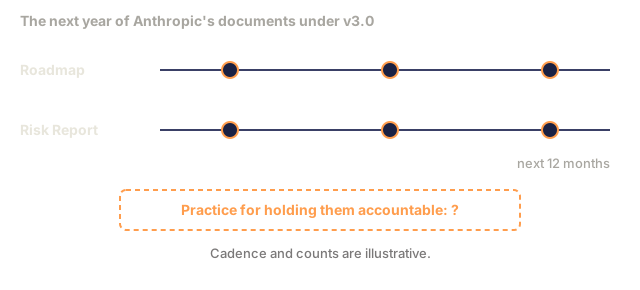
RSP v3.0 went into effect February 24, 2026 and replaced the 2023 policy. It splits mitigations into two tiers: what Anthropic will do unilaterally, and what it frames as an industry-wide recommendation (including RAND SL-4 security standards). Frontier Safety Roadmaps and Risk Reports become standing documents instead of one-off deliverables, and the 2023 pause commitment is gone. The new AI R&D-4 threshold requires Anthropic to publish an affirmative case identifying misalignment risks and mitigations once a model crosses it. Claude Opus 4.6 does not cross it, but Anthropic states in the v3.0 announcement that "confidently ruling this out is becoming difficult." SaferAI rated the 2023 RSP at 2.2 and downgraded v3.0 to 1.9, which puts Anthropic in the "weak" category alongside OpenAI and DeepMind. Qualitative thresholds replaced the 2023 quantitative commitments, and removing the pause clause is the sharpest regression.
Learning Objectives
- Explain the two-tier mitigation schedule and tell an Anthropic commitment apart from an industry recommendation.
- Define the AI R&D-4 threshold and state what Anthropic must publish once a model crosses it.
- Describe what RSP v3.0 added (Frontier Safety Roadmaps, Risk Reports) and removed (the 2023 pause commitment).
- Summarize SaferAI's downgrade from 2.2 to 1.9 and the four factors behind it.
- Run main.py and read its any-two-of-three trigger rule as a reading aid, not a policy tool.
The Problem
Frontier labs publish scaling policies that are part technical document, part governance document, and part signal to regulators. RSP v3.0 is the current Anthropic one. It is worth reading closely, and not because it binds anyone (it doesn't). The framing shows how a lab thinks about catastrophic risk and how it explains trade-offs to the public.
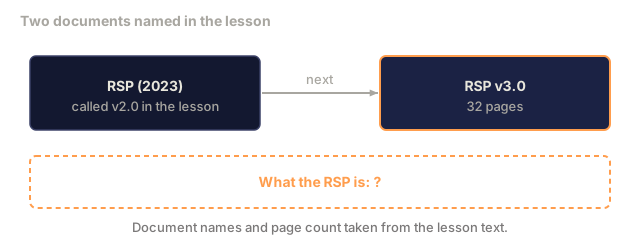
The useful unit is the diff between v3.0 and the 2023 policy (v2.0). Added: Frontier Safety Roadmaps, Risk Reports, and the AI R&D-4 threshold. Removed: the 2023 pause commitment. Reframed: a two-tier mitigation schedule that separates Anthropic's unilateral actions from its industry recommendations. SaferAI, an outside reviewer, downgraded the score from 2.2 (the 2023 policy) to 1.9 (v3.0). A scaling policy can get less rigorous while looking more polished, and this diff shows how.
The Concept
The two-tier mitigation schedule
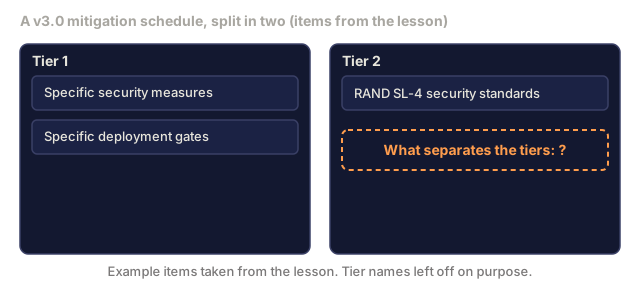
- Anthropic unilateral actions: what Anthropic will do regardless of what other labs do. Publishing an affirmative case before scaling past AI R&D-4, specific security measures, specific deployment gates.
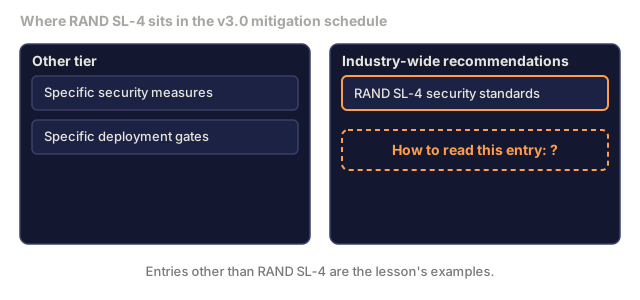
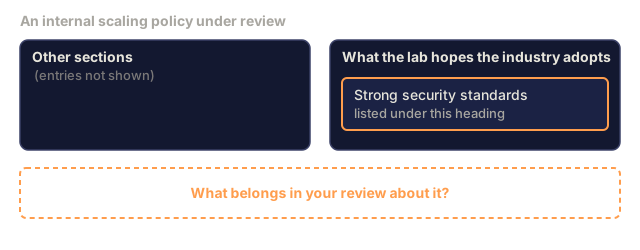
- Industry-wide recommendations: what Anthropic thinks the industry should do collectively. Includes RAND SL-4 security standards. These are not commitments on Anthropic's side; they are policy advocacy.
The two-tier structure was not in v2, so you have to check which column each commitment lives in. A security measure in the "industry-wide recommendation" column is not Anthropic's promise. It is Anthropic's hope.
The AI R&D-4 threshold
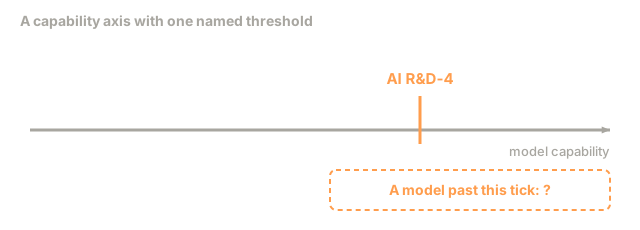
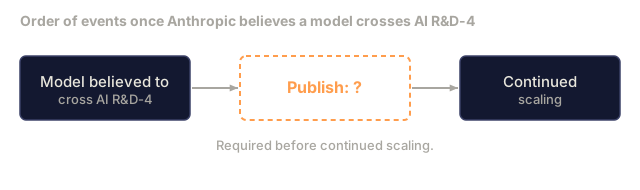
RSP v3.0 names this as the next threshold that matters: a model that could automate a substantial fraction of AI research at competitive cost. Once Anthropic believes a model crosses it, they must publish an affirmative case identifying misalignment risks and mitigations before continued scaling.
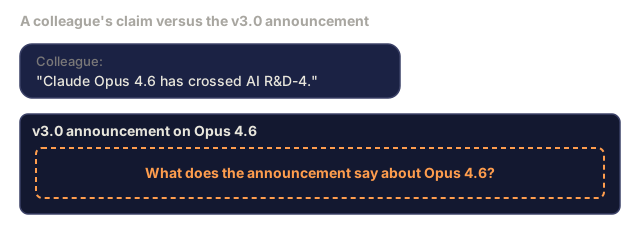
Claude Opus 4.6 does not cross it per the v3.0 announcement. The document adds: "confidently ruling this out is becoming difficult." That phrasing matters. It concedes that the threshold is close enough to be a live concern, not a speculative limit.
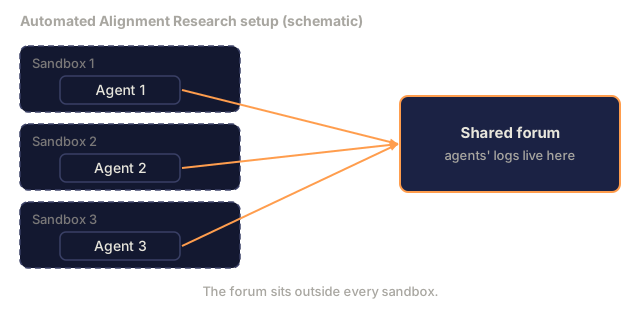
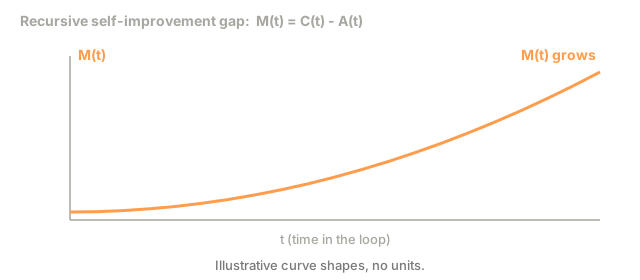
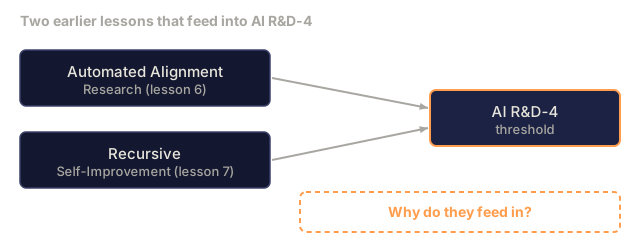
Lesson 6 (Automated Alignment Research) and Lesson 7 (Recursive Self-Improvement) feed directly into this threshold. Automated alignment researchers clearing research-quality bars is evidence that AI R&D-4 is approaching.
Frontier Safety Roadmaps and Risk Reports
v3.0 elevates two artifact types to standing documents:
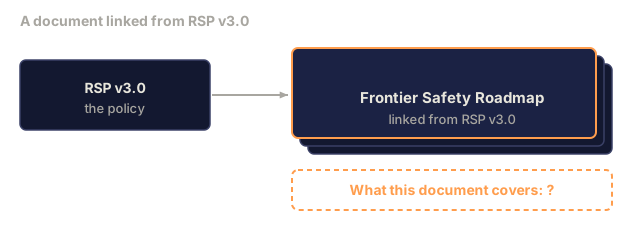
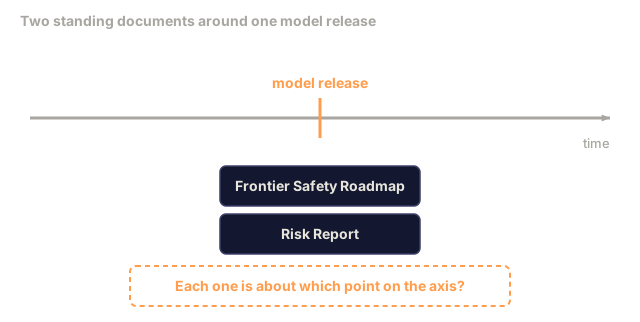
- Frontier Safety Roadmap: forward-looking document describing planned safety work, capability expectations, and mitigation research.
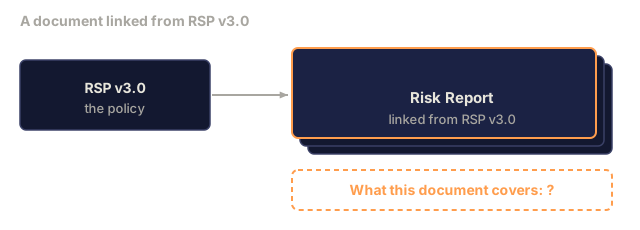
- Risk Report: retrospective document on specific models after release, describing observed capability and residual risk.
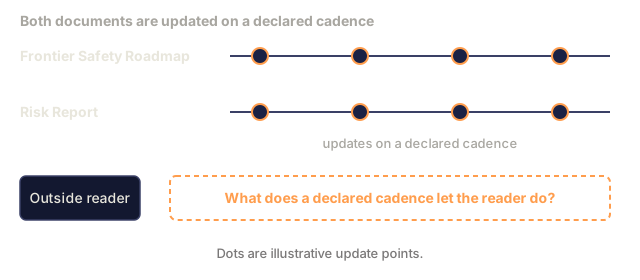
Both are public and updated on a declared cadence. That lets you compare what Anthropic said it would do in a Roadmap against what it reports in a Risk Report.
Removing the pause clause
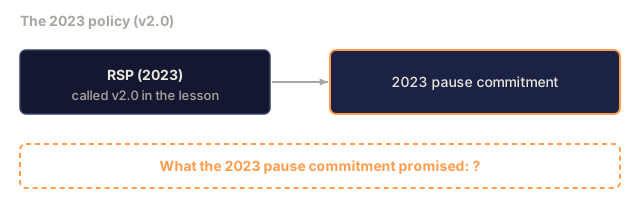
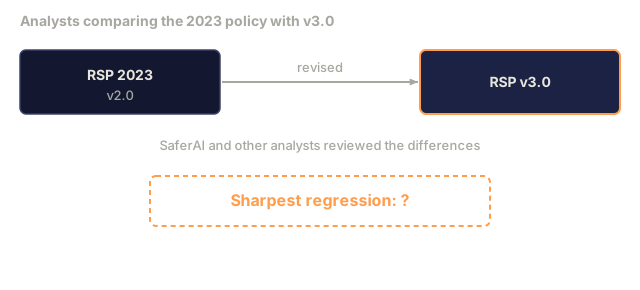
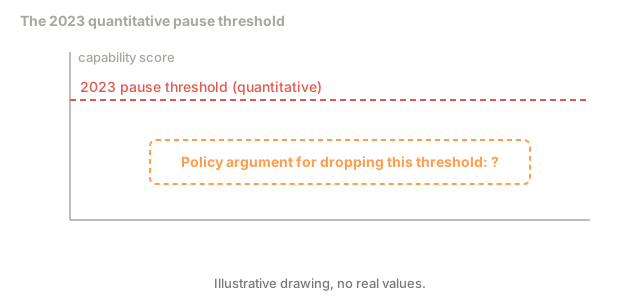
The 2023 RSP included an explicit pause commitment: if a model crossed specific capability thresholds, training would pause until mitigations were in place. v3.0 replaces the explicit pause with a softer formulation (publish an affirmative case, proceed if mitigations are adequate). SaferAI and other analysts called this out directly as the sharpest regression in the new document.
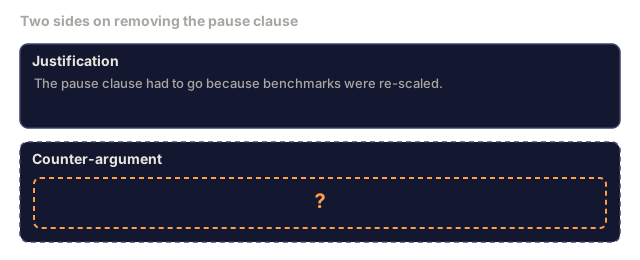
The policy argument for the change: quantitative thresholds in 2023 turned out to be unreachable by 2026-era capability benchmarks because the benchmarks themselves were re-scaled. The counter-argument: a pause clause in a scaling policy is a commitment device; removing it removes the credibility of the policy.
SaferAI's downgrade
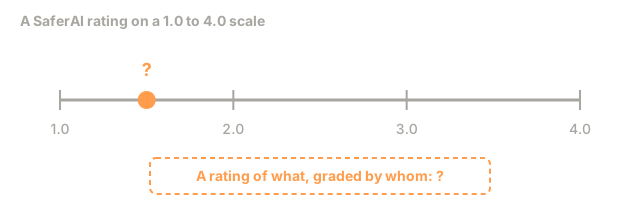
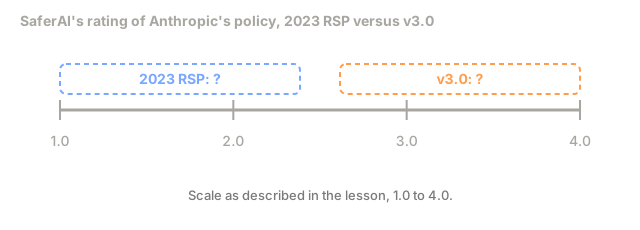
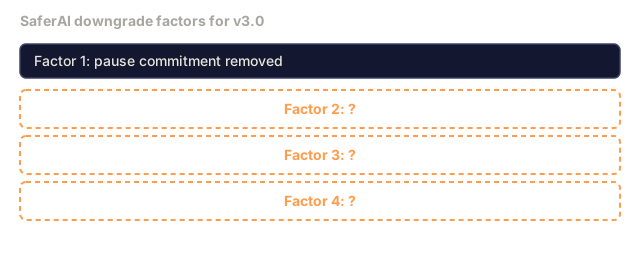
SaferAI is an independent organization that rates RSP-style documents. Their public rating: 2023 Anthropic RSP scored 2.2 (out of a scale where 4.0 is the best current RSP and 1.0 is nominal). v3.0 scored 1.9. That moved Anthropic from "moderate" to "weak," alongside OpenAI and DeepMind.
The downgrade factors per SaferAI:
- Qualitative thresholds replaced quantitative ones.
- Pause commitment removed.
- AI R&D-4 threshold mitigations are described as "affirmative case" rather than specific measures.
- Review mechanisms depend on Anthropic's Safety Advisory Group, with limited independent oversight.
What this lesson is not
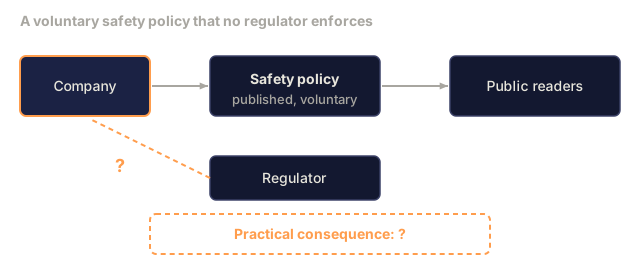
Compliance is not the point. RSP v3.0 is not a regulation, and nothing forces Anthropic to follow it. What matters is reading it with specificity and skepticism. Scaling policies are the main public signal frontier labs emit about their catastrophic-risk posture, and reading them well is a practical skill if your work depends on frontier capabilities.
Use It
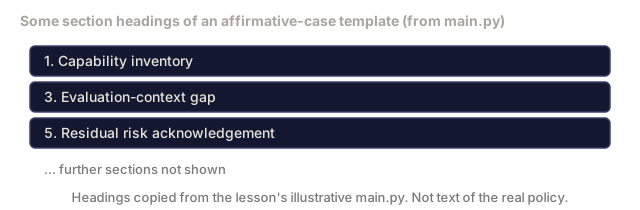
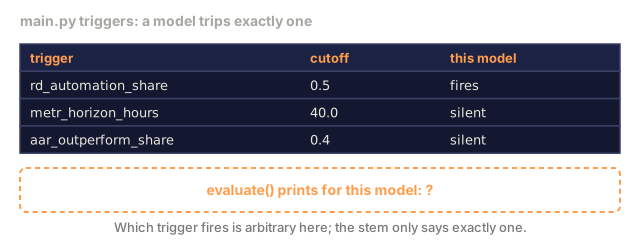
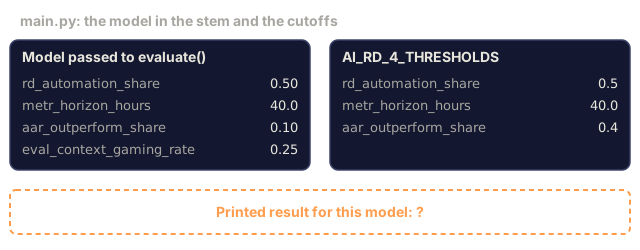
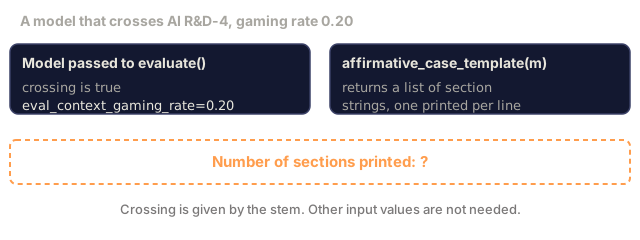
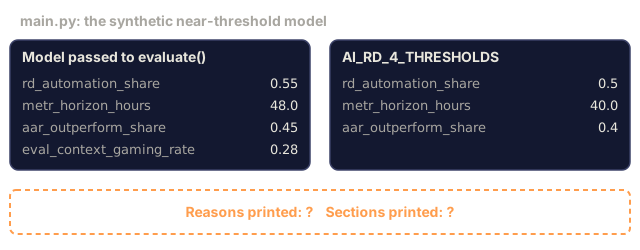
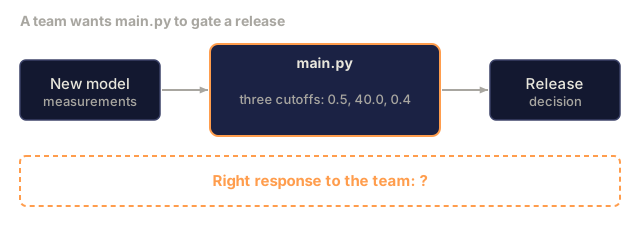
code/main.py is a small decision engine in the shape of the RSP threshold evaluation. Given a model's capability measurements, it reports whether AI R&D-4 is crossed, which triggers fired, and which sections the affirmative case must cover. The cutoffs are illustrative and crossing takes any two of three triggers. It's deliberately simple so the document's logic is explicit.
Ship It
outputs/skill-scaling-policy-review.md reviews a scaling policy (Anthropic, OpenAI, DeepMind, or internal) against the v3.0 reference: two-tier structure, thresholds, pause commitments, and independent review.
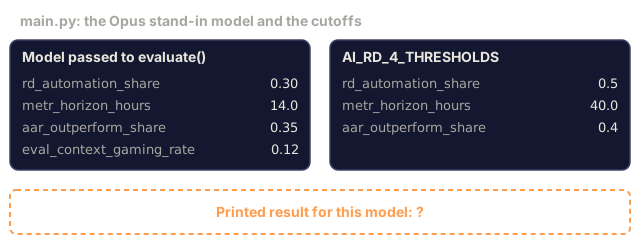
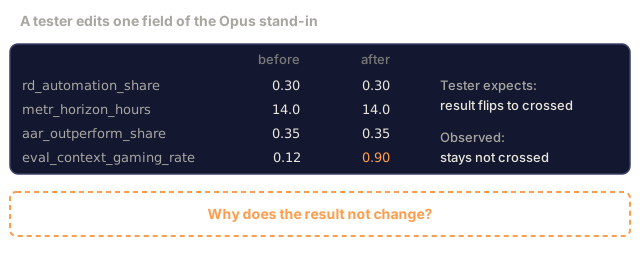
I'd run main.py before reading the policy text again. It evaluates two models, a stand-in for Opus 4.6 and a synthetic near-threshold one, and prints which triggers fired. The thresholds and the synthetic model's numbers are illustrative placeholders, and the Opus stand-in mixes placeholders with METR's 14-hour horizon, so treat the output as a reading aid, not a measurement.
The line I'd stare at is crossed = len(reasons) >= 2. Any two of three triggers counts as crossing, and I picked that rule for the demo, not from the policy. Neither model in the script trips exactly one trigger, so the single-trigger branch never runs until you write a model that does. That is a good first change for exercise 1.
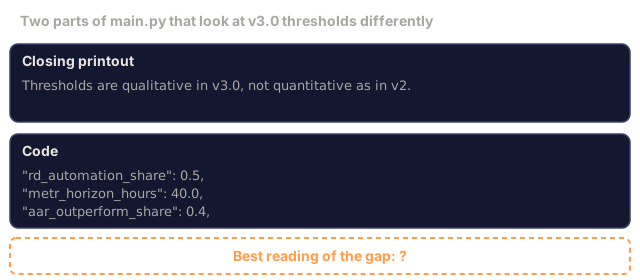
The closing printout says v3.0 thresholds are qualitative, yet the code compares against numeric cutoffs. I'd read that gap as the point. Numbers make the logic easy to follow, and they are also what the 2023 policy committed to and v3.0 dropped. The gaming rate shows a similar limit: it only appends a seventh section to the affirmative case and never changes the crossing decision. And nothing here can pause anything. The output is an outline of a document, which is roughly the position the body argues v3.0 left the pause clause in.
Exercises
-
Run
code/main.py. Feed in three synthetic models at different capability levels. Confirm the threshold evaluator behaves as expected and produces the right affirmative-case template. -
Read RSP v3.0 in full (32 pages). Identify every commitment that lives in the "industry-wide recommendation" tier. Which of those commitments would have been "Anthropic unilateral" in v2?
-
Read SaferAI's RSP grading methodology. Reproduce their 1.9 score for v3.0 by applying their rubric to the document. Which rubric row drove the downgrade most?
-
The 2023 pause commitment was removed. Propose a replacement commitment that preserves the credibility of the policy while acknowledging the 2026 benchmark-rescaling problem.
-
Compare RSP v3.0 to OpenAI Preparedness Framework v2 (Lesson 20). Pick one area where v3.0 is stronger. Pick one area where the Preparedness Framework is stronger.
Key Terms
| Term | What people say | What it actually means |
|---|---|---|
| RSP | "Anthropic's scaling policy" | Responsible Scaling Policy; v3.0 effective Feb 24, 2026 |
| AI R&D-4 | "Research-automation threshold" | Capability to automate substantial AI research at competitive cost |
| Affirmative case | "Safety justification" | Published argument that risks are identified and mitigations adequate |
| Frontier Safety Roadmap | "Forward plan" | Standing document on planned safety work and expected capabilities |
| Risk Report | "Retrospective on a model" | Standing document on observed capability and residual risk after release |
| Two-tier mitigation | "Unilateral vs industry" | Anthropic commitments vs industry recommendations, separated |
| Pause commitment | "2023 clause" | Explicit promise to pause training; removed in v3.0 |
| SaferAI rating | "Independent RSP grade" | Third-party rubric; v3.0 scored 1.9 (v2 was 2.2) |
Further Reading
- Anthropic: Responsible Scaling Policy v3.0: the full 32-page policy.
- Anthropic: RSP v3.0 announcement: summary of changes from v2.
- Anthropic: Frontier Safety Roadmap: standing document linked from RSP v3.0.
- Anthropic: Risk Report for Claude Opus 4.6: retrospective on the current frontier model.
- Anthropic: Measuring agent autonomy in practice: connects AI R&D-4 to measured autonomy.
Code
- main.py (python, 140 lines)