Open-Vocabulary Vision — CLIP
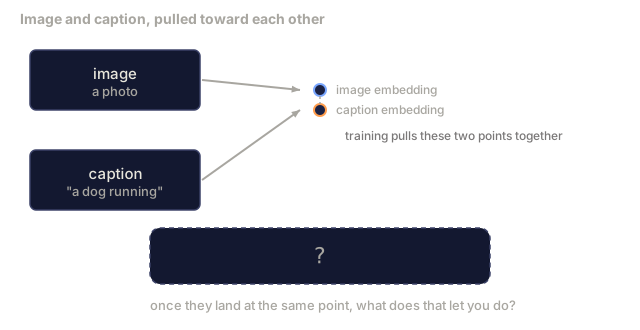
Train an image encoder and a text encoder together until matching (image, caption) pairs land at the same point in a shared space. That's the whole trick.
Learning Objectives
- Explain CLIP's two-tower architecture and contrastive training objective
- Use a pretrained CLIP (or SigLIP) for zero-shot classification without any task-specific training
- Implement zero-shot classification from scratch: encode class prompts, compute cosine similarity, take argmax
- Distinguish CLIP, SigLIP, OpenCLIP, and LLaVA/LLaMA-vision models — what each is for in 2026
The Problem
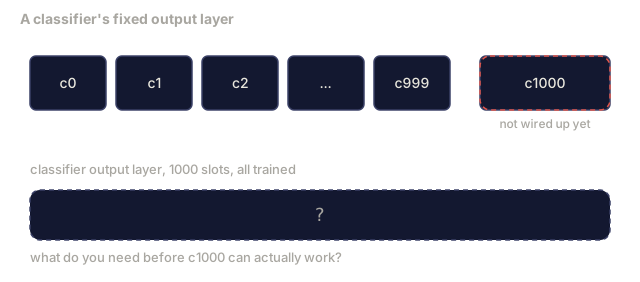
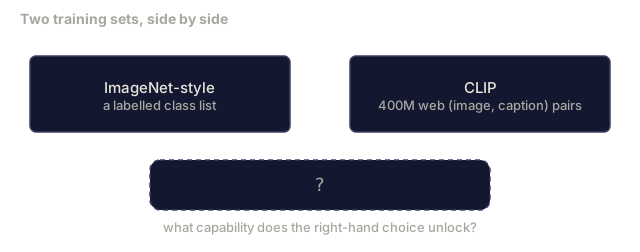
Traditional classifiers are closed-vocabulary. A 1000-class ImageNet model can only ever predict 1000 labels, and every new category means new labelled data and a retrained head.
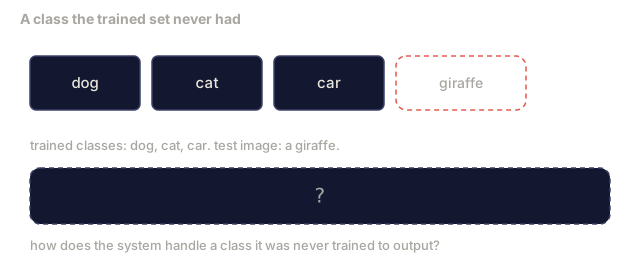
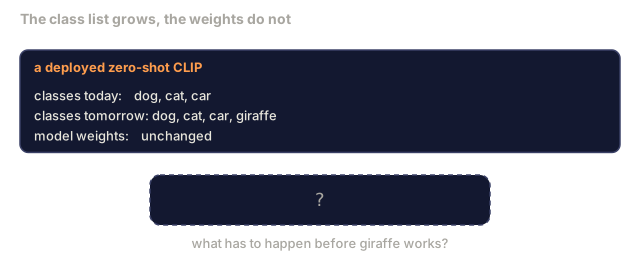
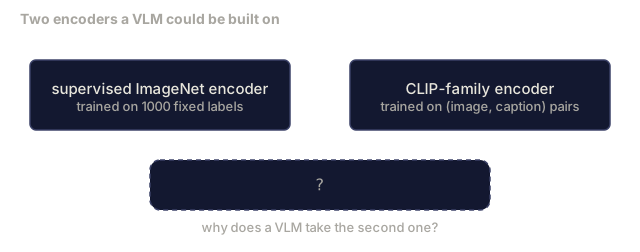
CLIP (Radford et al., OpenAI 2021) broke that constraint. Train on 400M (image, caption) pairs scraped from the web and you get a model that classifies into any set of categories at inference, described purely in natural language. Give it a new class by writing a sentence, nothing else.
That's zero-shot transfer, and it's why every modern vision system starts with a CLIP-family checkpoint. Detection (Grounding DINO, OWL-ViT), segmentation (CLIPSeg, SAM), retrieval, content moderation, VLMs, and text-to-image generation all build on CLIP-style joint embeddings.
The Concept
Two towers
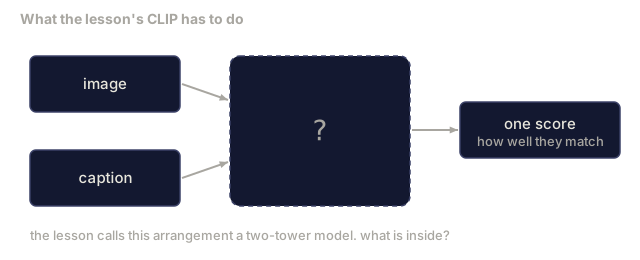
CLIP is two encoders trained as one system: an image tower and a text tower, pushed until matching pairs land at the same point in a shared embedding space.

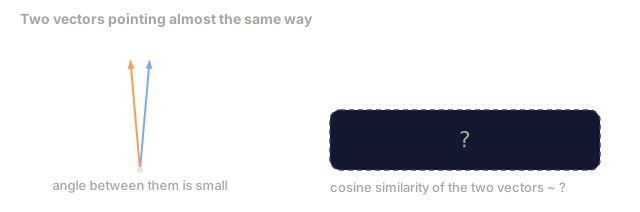
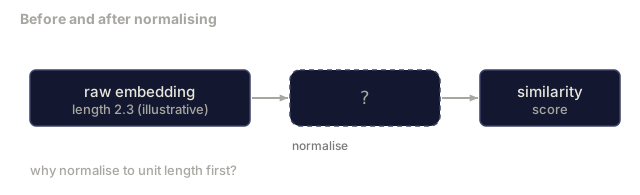
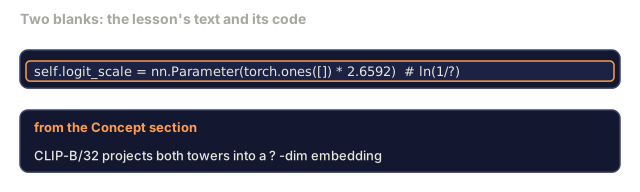
Both towers end in a linear projection to that shared dimension (512 for CLIP-B/32, 1024 for CLIP-L/14), then get L2-normalised so a plain cosine similarity is all that's left to compute.
The objective
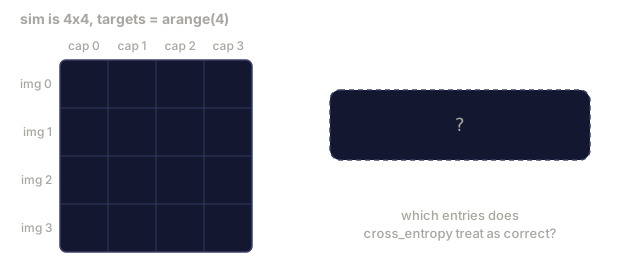
Take a batch of N (image, caption) pairs and build an NxN similarity matrix. Train both encoders so the diagonal (the matching pairs) comes out high and everything off the diagonal comes out low.
sim_matrix = image_embeddings @ text_embeddings.T / tau

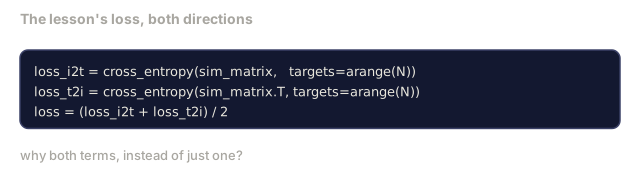
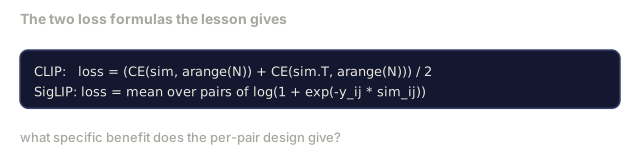
loss_i2t = cross_entropy(sim_matrix,       targets=arange(N))
loss_t2i = cross_entropy(sim_matrix.T,     targets=arange(N))
loss = (loss_i2t + loss_t2i) / 2
The loss is symmetric because both directions need to work at inference: image-to-text and text-to-image retrieval. tau (temperature) is typically a learned scalar, initialised to 0.07.
SigLIP: a better loss
SigLIP (Zhai et al., 2023) swaps the softmax for a per-pair sigmoid:
loss = mean over pairs of log(1 + exp(-y_ij * sim_ij))
y_ij = +1 if matching, -1 otherwise
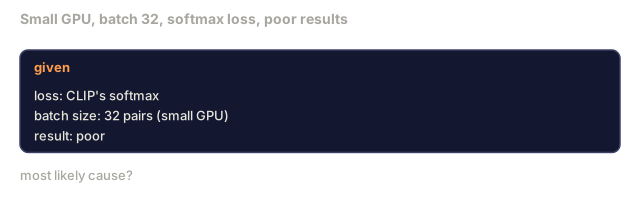
Because the loss is per-pair, it drops the batch-level normalisation CLIP's softmax needs. That lets SigLIP train well at small batch sizes, and it matches or beats CLIP given equal data.
Zero-shot classification
Given a trained CLIP:
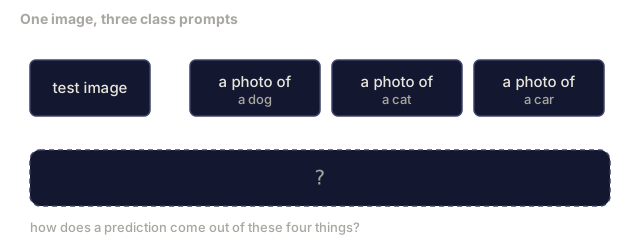
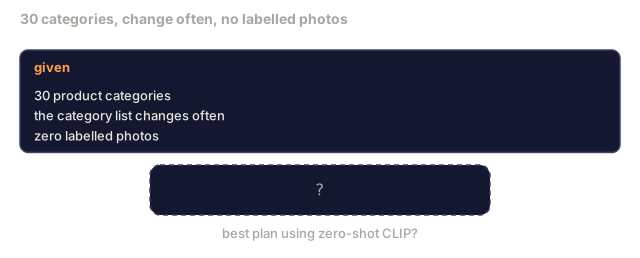
- For each class, compose a prompt: "a photo of a {class}".
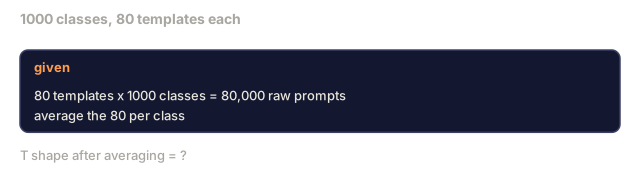
- Encode all class prompts with the text encoder ->
Tshape (C, d). - Encode the test image ->
Ishape (1, d). - Similarity =
I @ T.Tshape (1, C). - Argmax -> predicted class.
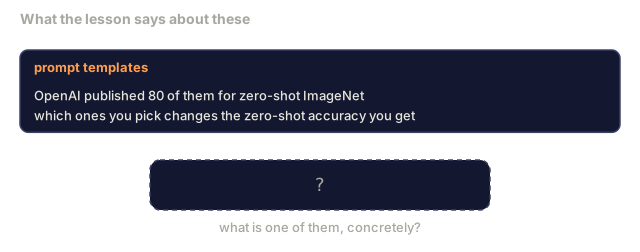
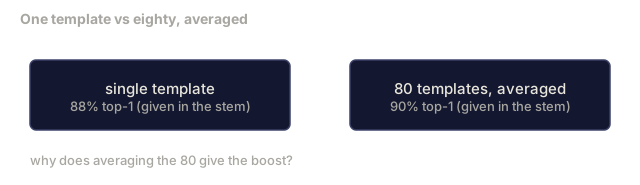
Prompt engineering matters here. OpenAI published 80 prompt templates for ImageNet ("a photo of a {}", "a blurry photo of a {}", "a sketch of a {}", ...), and averaging the embeddings of all templates per class buys an extra 1-3% top-1 accuracy.
Where CLIP-style models are used in 2026
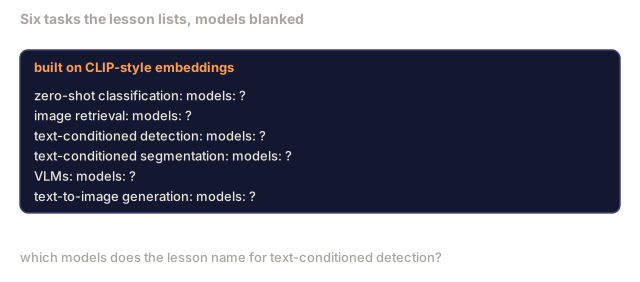
- Zero-shot classification: direct use.
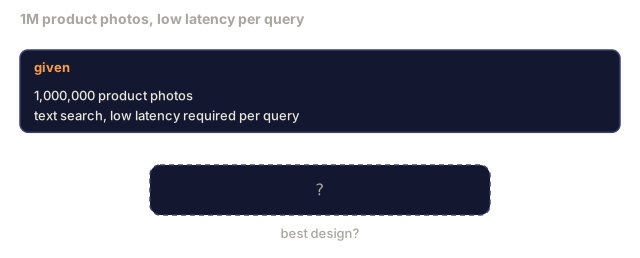
- Image retrieval: encode all images once, embed the query at inference.
- Text-conditioned detection: Grounding DINO and OWL-ViT wrap a CLIP text tower around a detector.
- Text-conditioned segmentation: CLIPSeg; SAM also takes text-prompt inputs via CLIP.
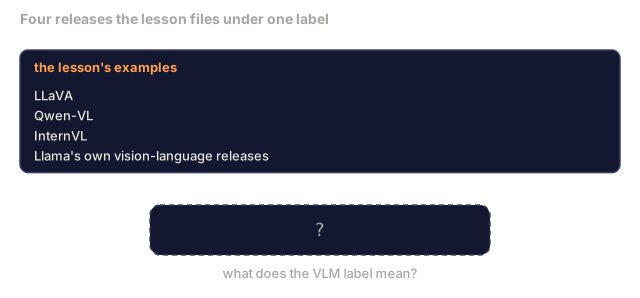
- VLMs: LLaVA, Qwen-VL, InternVL, and Llama's own vision-language releases all wire a CLIP-family vision encoder into an LLM.
- Text-to-image generation: Stable Diffusion and DALL-E 3 condition on CLIP text embeddings.
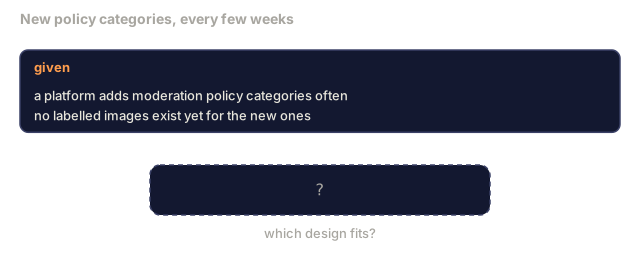
- Content moderation: safety classifiers score an image against CLIP embeddings of policy categories instead of training a bespoke classifier per policy.
Once you have a shared embedding space, every vision+language task becomes a distance computation.
Build It
Step 1: A tiny two-tower model
Real CLIP pairs a ViT with a transformer. Here the towers are small MLPs over pre-extracted features, so the training signal stays visible on CPU.
import torch
import torch.nn as nn
import torch.nn.functional as F


class TwoTower(nn.Module):
    def __init__(self, img_in=128, txt_in=64, emb=64):
        super().__init__()
        self.image_proj = nn.Sequential(nn.Linear(img_in, 128), nn.ReLU(), nn.Linear(128, emb))
        self.text_proj = nn.Sequential(nn.Linear(txt_in, 128), nn.ReLU(), nn.Linear(128, emb))
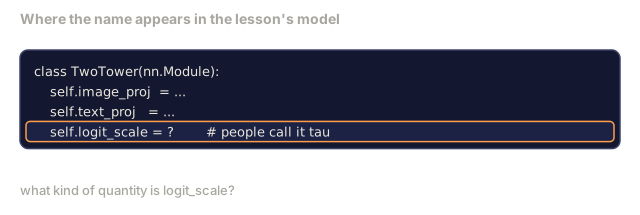
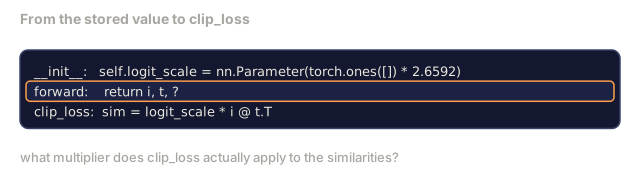
        self.logit_scale = nn.Parameter(torch.ones([]) * 2.6592)  # ln(1/0.07)

    def forward(self, img_feats, txt_feats):
        i = F.normalize(self.image_proj(img_feats), dim=-1)
        t = F.normalize(self.text_proj(txt_feats), dim=-1)
        return i, t, self.logit_scale.exp()
Two projections, a shared output dimension, a learned temperature: same shape as the real CLIP API, just smaller.
Step 2: Contrastive loss
The two towers only learn anything once a loss rewards matching pairs and punishes mismatched ones. This is the symmetric objective from the Concept section, translated directly into PyTorch:
def clip_loss(image_emb, text_emb, logit_scale):
    N = image_emb.size(0)
    sim = logit_scale * image_emb @ text_emb.T
    targets = torch.arange(N, device=sim.device)
    l_i = F.cross_entropy(sim, targets)
    l_t = F.cross_entropy(sim.T, targets)
    return (l_i + l_t) / 2
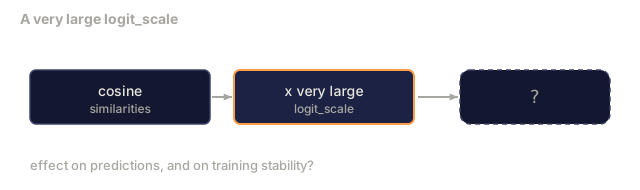
A higher logit_scale sharpens the softmax: more confident predictions, but also more risk of instability.
Step 3: Zero-shot classifier
Once the towers are trained, classification needs no retraining at all. This is the five-step zero-shot procedure from the Concept section, translated directly into code:
@torch.no_grad()
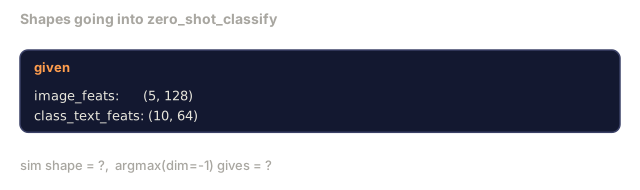
def zero_shot_classify(model, image_feats, class_text_feats, class_names):
    """
    image_feats:      (N, img_in)
    class_text_feats: (C, txt_in)   one averaged embedding per class
    """
    i = F.normalize(model.image_proj(image_feats), dim=-1)
    t = F.normalize(model.text_proj(class_text_feats), dim=-1)
    sim = i @ t.T
    pred = sim.argmax(dim=-1)
    return [class_names[p] for p in pred.tolist()]
One line per step, and it's exactly what you'd call against a production CLIP checkpoint.
Step 4: Sanity check
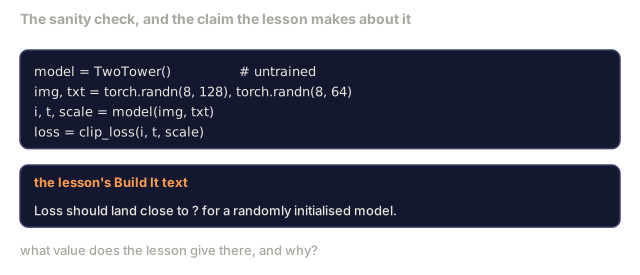
Before training on anything real, confirm the loss behaves the way the math predicts on random weights:
torch.manual_seed(0)
model = TwoTower()

img = torch.randn(8, 128)
txt = torch.randn(8, 64)
i, t, scale = model(img, txt)
loss = clip_loss(i, t, scale)
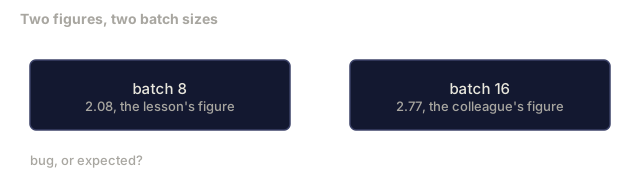
print(f"batch size: {i.size(0)}   loss: {loss.item():.3f}")
Loss should land close to log(N) = log(8) = 2.08 for a randomly initialised model. That's the symmetric cross-entropy target when no structure has been learned yet.
Use It
OpenCLIP is the community default in 2026:
import open_clip
import torch
from PIL import Image

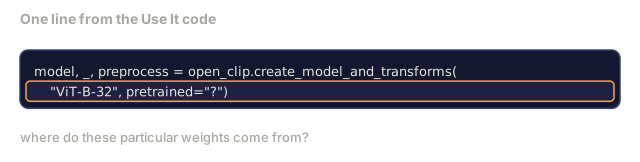
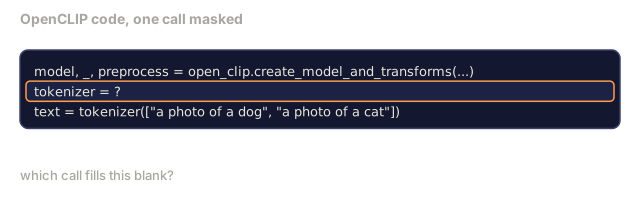
model, _, preprocess = open_clip.create_model_and_transforms("ViT-B-32", pretrained="laion2b_s34b_b79k")
tokenizer = open_clip.get_tokenizer("ViT-B-32")

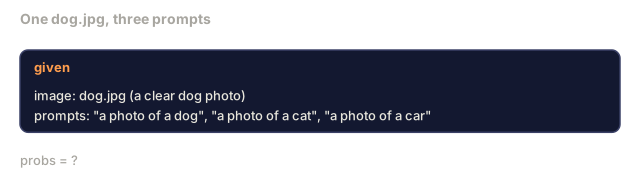
image = preprocess(Image.open("dog.jpg")).unsqueeze(0)
text = tokenizer(["a photo of a dog", "a photo of a cat", "a photo of a car"])

with torch.no_grad():
    image_features = model.encode_image(image)
    text_features = model.encode_text(text)
    image_features = image_features / image_features.norm(dim=-1, keepdim=True)
    text_features = text_features / text_features.norm(dim=-1, keepdim=True)
    probs = (100.0 * image_features @ text_features.T).softmax(dim=-1)

print(probs)
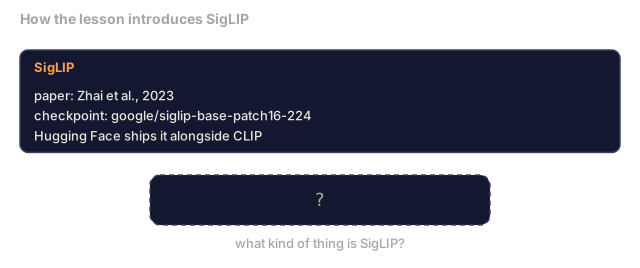
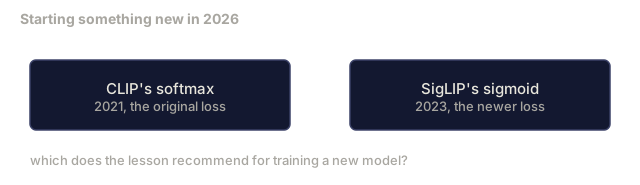
SigLIP is newer, trains better at small scales, and is the better pick for new work: google/siglip-base-patch16-224. Hugging Face ships both.
Ship It
This lesson produces:
outputs/prompt-zero-shot-class-picker.md, a prompt that designs class templates for zero-shot CLIP given a list of classes and a domain.outputs/skill-image-text-retriever.md, a skill that builds an image embedding index with any CLIP checkpoint and supports query-by-text and query-by-image.
The gap between CLIP's zero-shot numbers and how it behaves on your own class list is where people get burned. CLIP is closer to a bag-of-words matcher than a model that understands a scene: it's excellent at "is this a dog or a cat," and it quietly falls apart on anything that needs counting, spatial relationships (left of, on top of, inside), or telling two classes apart by a fine-grained attribute instead of a different object entirely. If zero-shot accuracy tanks on a new domain, check whether the task secretly needs compositional reasoning before you blame the prompt templates.
The other thing worth knowing going in: by 2026, SigLIP is the default for anyone training a new joint embedding model from scratch. CLIP is mostly what you inherit as the vision tower inside an existing VLM or diffusion pipeline. Learn both, but if you're training something new, start from SigLIP's loss, not CLIP's.
Exercises
- (Easy) Use a pretrained OpenCLIP ViT-B/32 and do zero-shot classification on CIFAR-10 with the 80-template prompt set. Report top-1 accuracy; it should be around 85-90%.
- (Medium) Compare single-template ("a photo of a {}") vs 80-template averaged embeddings on the same CIFAR-10 task. Quantify the gap and explain why templates help.
- (Hard) Build a zero-shot image retrieval index: embed 1,000 images with CLIP, build a FAISS index (Meta's library for fast nearest-neighbor vector search), query with a natural language description. Report retrieval recall@5 for 20 held-out queries you write by hand.
Key Terms
| Term | What people say | What it actually means |
|---|---|---|
| Two-tower | "Dual encoder" | Separate image and text encoders ending in a shared-dim projection head |
| Zero-shot | "No task-specific training" | Classify into classes described only by text at inference; no labels touched |
| Temperature / logit_scale | "tau" | Learned scalar that scales the similarity matrix before softmax |
| Prompt template | "A photo of a {}" | Natural-language wrapper around class names; averaging many templates boosts zero-shot accuracy |
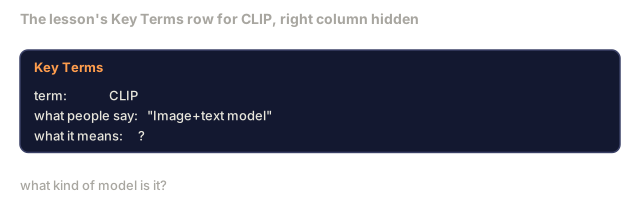
| CLIP | "Image+text model" | The 2021 OpenAI model; vocabulary of the field in 2026 |
| SigLIP | "Sigmoid CLIP" | Swaps softmax for per-pair sigmoid; trains better at small batches |
| OpenCLIP | "Open reproduction" | Community-trained CLIP variants on LAION; production default for open-source pipelines |
| VLM | "Vision-language model" | A CLIP-family encoder plus an LLM, trained to answer questions about images |
Further Reading
- CLIP: Learning Transferable Visual Models from Natural Language Supervision (Radford et al., 2021)
- SigLIP: Sigmoid Loss for Language-Image Pre-Training (Zhai et al., 2023)
- OpenCLIP, the community codebase
- DINOv2 vs CLIP vs MAE: a features comparison, an HF guide with side-by-side use cases
Code
- main.py (python, 89 lines)