Multi-Region LLM Serving and KV Cache Locality
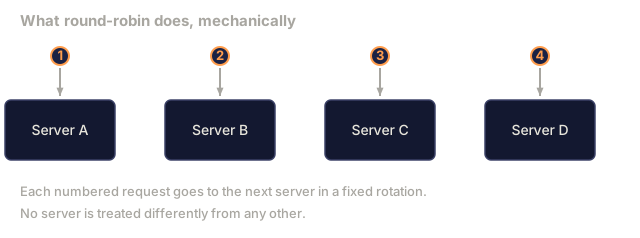
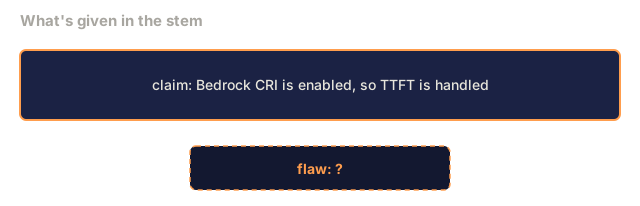
Round-robin load balancing is harmful for cached LLM inference. A request that does not land on the node holding its prefix pays full prefill cost: roughly 800 ms at P50 on a long prompt versus ~80 ms with a cache hit. In 2026 the production pattern is a cache-aware router (vLLM Router in Rust, llm-d router) that consumes KV-cache events and routes on prefix-hash match. Recent research (GORGO) makes cross-region network latency an explicit term in the routing objective. Commercial "cross-region inference" offerings (Bedrock cross-region inference, GKE multi-cluster gateways) treat inference as opaque, so they handle availability and not TTFT. JPMorgan and Mayo Clinic ran us-east-1 failover in Nov 2024 at ~22 minutes. The DR reality: 32% of LLM DR failures come from teams backing up weights but forgetting tokenizer files or quantization configs.
Learning Objectives
- Explain why round-robin load balancing breaks cached inference and quantify the TTFT penalty.
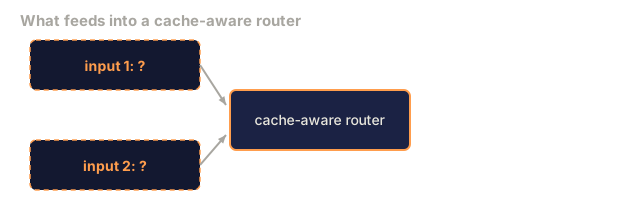
- Diagram a cache-aware router: inputs (KV-cache events), algorithm (prefix-hash match), tie-breaker (GPU utilization).
- Name the 32% DR failure driver for LLMs (missing tokenizer files / quantization configs) and state a three-file DR checklist.
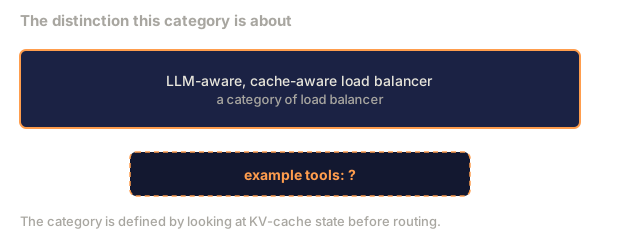
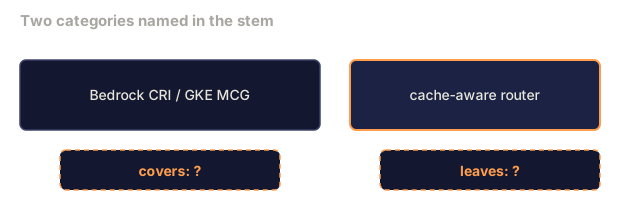
- Distinguish commercial cross-region offerings (Bedrock CRI, GKE Multi-Cluster Gateway) from KV-aware routing.
The Problem
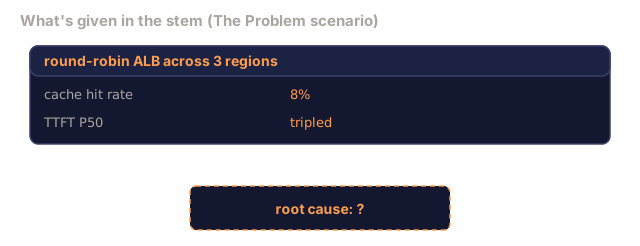
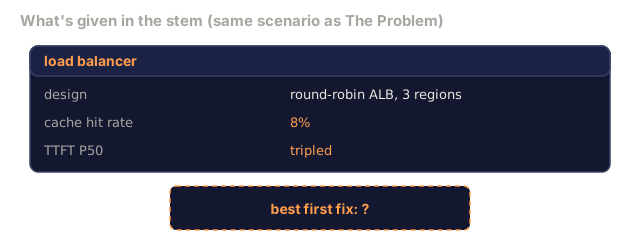
Your service runs in us-east-1, us-west-2, and eu-west-1. You put an ALB in front with round-robin. Prefix cache hit rate in production drops to 8% and TTFT P50 triples. Your vLLM logs show requests paying full prefill cost almost across the board.
Round-robin is optimal for stateless services. LLM inference is stateful by design, because the KV cache encodes what the model has already seen. Routing blind means routing into the wrong cache.
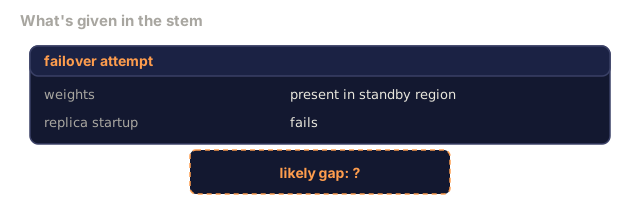
Separately, your team has a DR plan. You back up model weights to S3 cross-region. A regional outage hits, you attempt failover, and the replica refuses to start. The tokenizer.json, the quantization config, and the RoPE scaling config lived in a separate bucket you didn't sync.
Multi-region LLM serving is a cache problem, a routing problem, and a DR-hygiene problem. The load balancer is the smallest part of it.
The Concept
Cache-aware routing
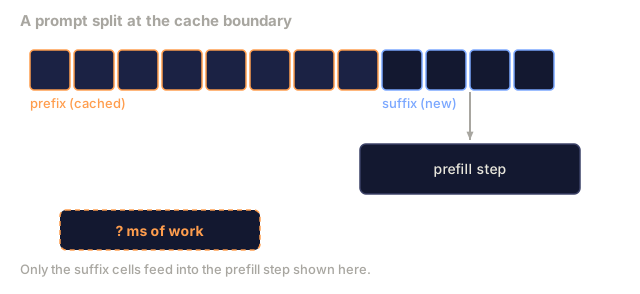
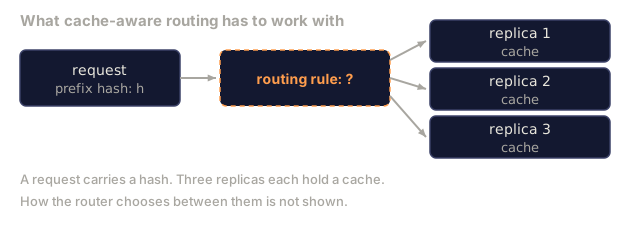
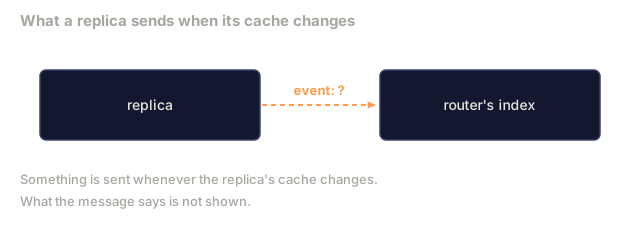
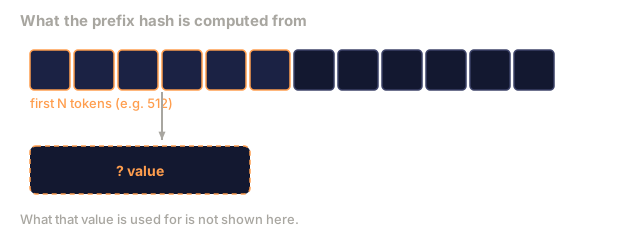
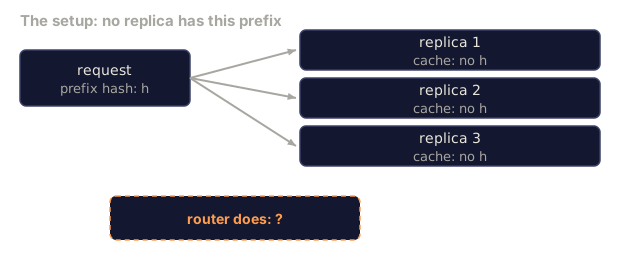
A request arrives with a prompt. The router hashes the prefix (say, the first 512 tokens) and asks each replica whether it has that prefix cached. Replicas publish KV-cache events on a pub/sub channel as they allocate and evict blocks. The router picks the replica with the match and falls through to a GPU-util-based tie-breaker if none has it.
vLLM Router (Rust, 2026 production-stack) subscribes to kv.cache.block_added events, maintains a prefix-hash → replica index, and routes with an O(1) lookup. It falls through to least-queue-depth when nothing matches.
llm-d router follows the same pattern but is Kubernetes-native. It publishes events via the ControlPlane API.
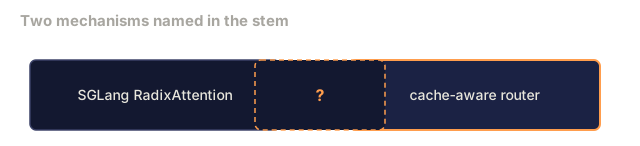
SGLang RadixAttention (Phase 17 · 06) is the intra-replica equivalent. Cross-replica routing sits upstream of it.
Numbers
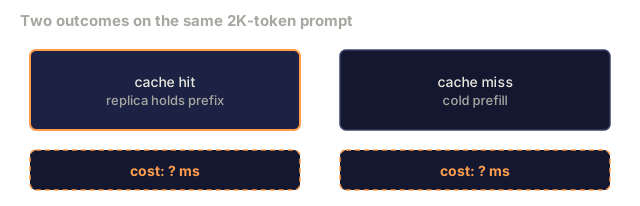
TTFT P50 on a 2K-token prompt, Llama 3.3 70B FP8, H100:
- Cache hit (same replica, prefix resident): ~80 ms.
- Cache miss (cold prefill): ~800 ms.
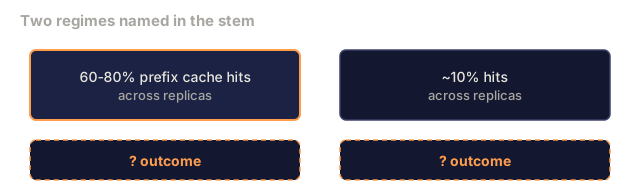
That is a 10x gap. If your router hits 60-80% of prefix cache across replicas, you approximate single-replica performance at N-replica capacity. At 10% you approximate naive scaling.
Cross-region adds a constraint: network latency
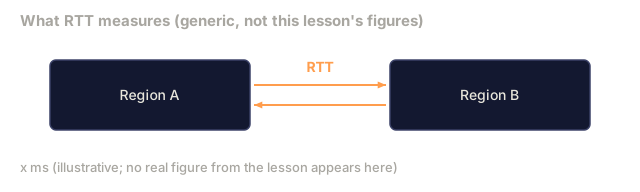
Inter-region RTT:
- us-east-1 ↔ us-west-2: ~65 ms.
- us-east-1 ↔ eu-west-1: ~75 ms.
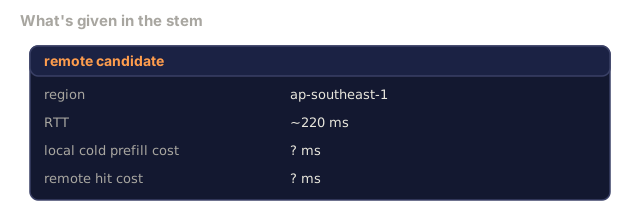
- us-east-1 ↔ ap-southeast-1: ~220 ms.
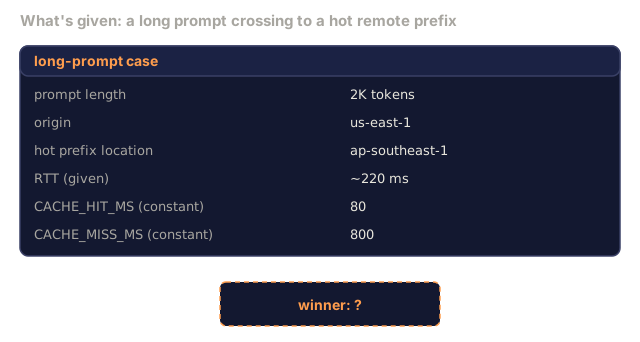
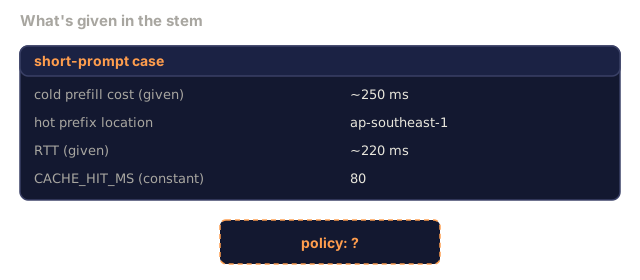
Say routing sends a request from us-east-1 to a hot prefix in ap-southeast-1. On a 2K-token prompt the hit still wins: 80 ms plus a 220 ms RTT is 300 ms, against 800 ms for a cold prefill. On a short prompt where a cold prefill costs 250 ms, the 170 ms saved does not cover the round trip, and the remote hit loses. GORGO (2026 research) makes this explicit: minimize prefill_time + network_latency jointly, not prefill alone. Often the answer is to keep routing regional, and cross regions only for very long prefixes where prefill dominates.
Commercial "cross-region inference" does not help here
AWS Bedrock cross-region inference routes requests to other regions during capacity pressure. It optimizes availability, not TTFT, and treats inference as opaque. GKE Multi-Cluster Gateway does the same at the service level: failover with no awareness of the KV cache.
You still want an app-layer cache-aware router on top of these. They cover the "us-east-1 is on fire" case, and cache-aware routing covers the TTFT case.
DR hygiene: the 32% missing-files problem
A widely cited 2026 stat says 32% of LLM DR failures happen because teams backed up weights but forgot:
tokenizer.jsonortokenizer.model- Quantization configs (
quantize_config.json, AWQ scales, GPTQ zero-points) - Model-specific configs (RoPE scaling, attention masks, chat templates)
- Engine config (
vllm_config.yaml, sampling defaults, LoRA adapter manifests)
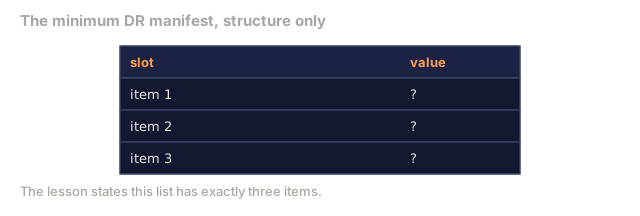
The fix is a three-file minimum DR manifest:
- All files under the HF model repo (weights + configs + tokenizer).
- Engine-specific serving config.
- Deployment manifest (K8s YAML, Dockerfile, dependency lock).
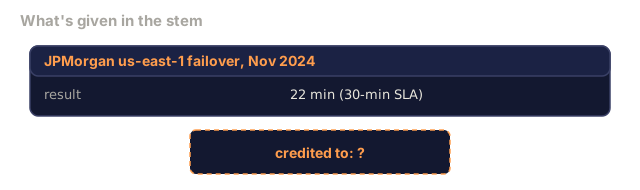
Then run a DR drill quarterly. The JPMorgan us-east-1 failover in Nov 2024 recovered in 22 minutes against a 30-minute SLA, and a rehearsed playbook is what makes a number like that possible.
Data residency is orthogonal
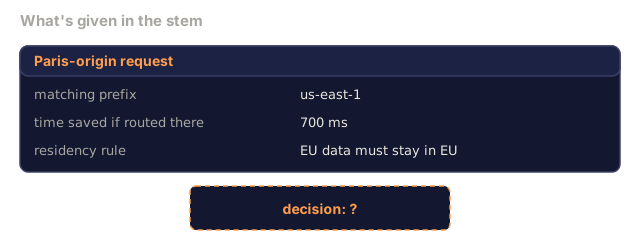
EU customer PHI is not allowed to leave the EU. If your cache-aware router sends a Paris-originated request to us-east-1 for a prefix match, you have violated GDPR regardless of the TTFT gain. Partition routers by residency boundary before you optimize for cache.
Numbers to remember
- Cache hit vs miss TTFT gap: ~10x (80 ms vs 800 ms on a 2K prompt).
- Inter-region RTT US-EU: ~75 ms.
- DR failure: 32% miss tokenizer/quant configs.
- JPMorgan us-east-1 failover, Nov 2024: 22 minutes (30-min SLA).


Use It
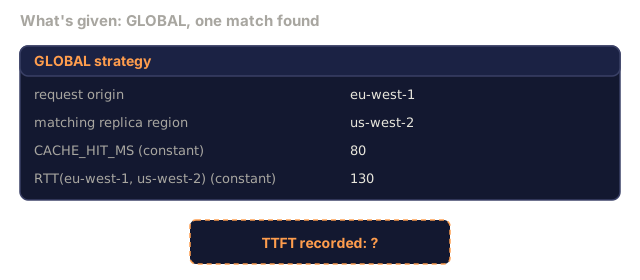
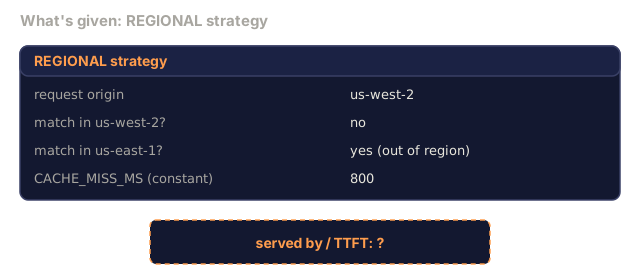
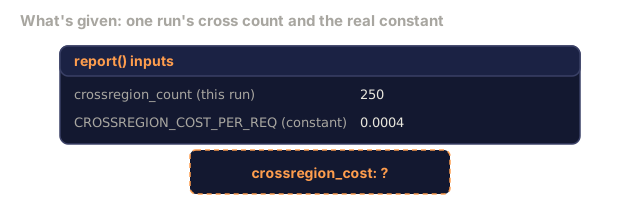
code/main.py simulates three routing strategies (round-robin, cache-aware regional, cache-aware global) on a multi-region workload. It reports cache hit rate, TTFT P50/P99, and the cross-region bill.
Ship It
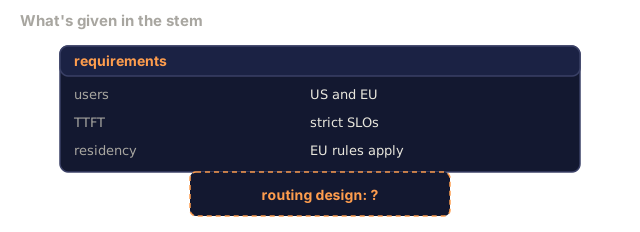
This lesson produces outputs/skill-multi-region-router.md. Given regions, residency constraints, and an SLA, it designs a routing plan.
I'd run main.py before trusting any of the numbers above. It is stdlib Python with 4 replicas in each of three regions and a 1000-request workload, and it prints hit rate, mean, P50, P99, cross-region count, and cost for each strategy. The 80 ms and 800 ms figures and the RTT table are constants at the top of the file, so what you are testing is the routing logic and not real hardware.
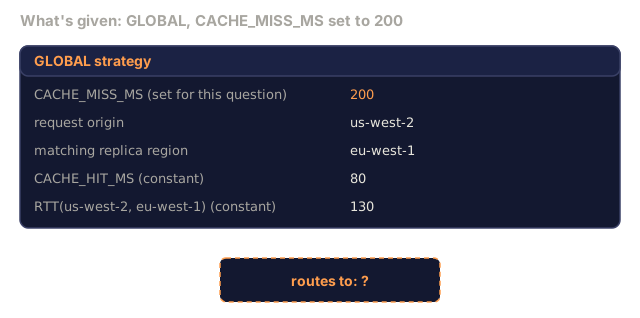
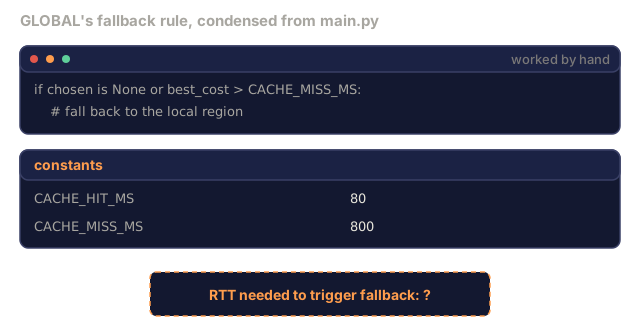
The part worth poking at is the GLOBAL branch. It prices a remote match as hit cost plus RTT and only falls back to the local region when that total exceeds the miss cost. With an 800 ms miss, that takes an RTT above 720 ms, which no pair in the table comes near. So this toy tilts toward crossing regions. The regional-wins case from the Concept section only shows up if you shrink CACHE_MISS_MS toward a short-prompt prefill, closer to CACHE_HIT_MS plus an RTT.
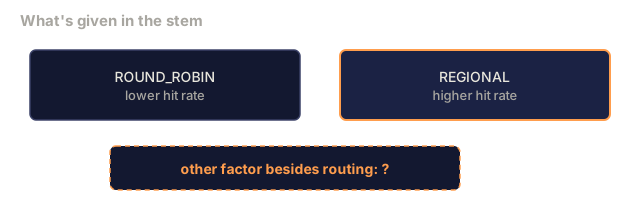
Two places the toy departs from the prose. The tie-breaker is queue_depth, a counter nudged by a random draw, not GPU utilization. And each replica holds at most 12 prefixes against 40 hot ones, evicting arbitrarily, so cache capacity shapes the hit rate as much as routing does. Residency partitioning and the DR manifest are not modeled at all. If I were building this for real, the residency split would come first, before any cache tuning.
Exercises
- Run
code/main.py, then lowerCACHE_MISS_MS(a stand-in for shorter prompts) until the GLOBAL strategy stops beating REGIONAL on mean TTFT. At what miss cost does cross-region routing stop paying off, given the RTT table? - Your cache hit rate drops from 70% to 12%. Diagnose three possible causes and the observables that would confirm each.
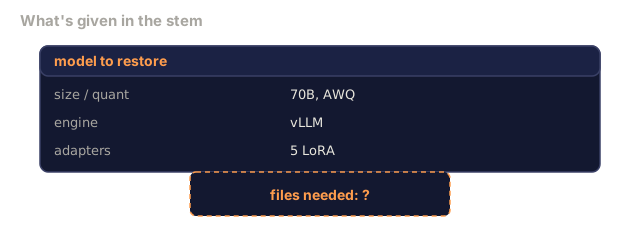
- Design a DR manifest for a 70B AWQ-quantized model served in vLLM with 5 LoRA adapters. List every file and config.
- Argue whether Bedrock cross-region inference is "enough" for a fintech with strict TTFT SLOs. Cite specific behaviors.
- A Paris-origin request matches a prefix in us-east-1. Do you route it? Write the policy.
Key Terms
| Term | What people say | What it actually means |
|---|---|---|
| Cache-aware routing | "smart LB" | Route on prefix-hash match to KV-cache-holding replica |
| KV-cache events | "cache pub-sub" | Replicas publish block add/evict; router indexes |
| Prefix hash | "cache key" | Hash of first N tokens used as router lookup |
| GORGO | "cross-region routing research" | arXiv 2602.11688; network latency as explicit term |
| Cross-region inference | "Bedrock CRI" | AWS product; availability failover, not TTFT awareness |
| DR manifest | "the backup list" | Every file needed to restore, not just weights |
| Data residency | "GDPR boundary" | Legal constraint on which region sees user data |
| RTT | "round-trip time" | Network latency; 75 ms US-EU, 220 ms US-APAC |
| LLM-aware LB | "cache-hit LB" | Cache-aware router as a product category |
Further Reading
- BentoML: Multi-cloud and cross-region inference
- arXiv: GORGO (2602.11688): cross-region KV-cache reuse with network latency term.
- TianPan: Multi-Region LLM Serving Cache Locality
- AWS Bedrock Cross-Region Inference: availability failover documentation.
- vLLM Production Stack Router: cache-aware router source.
Code
- main.py (python, 158 lines)