Build a Complete Vision Pipeline — Capstone
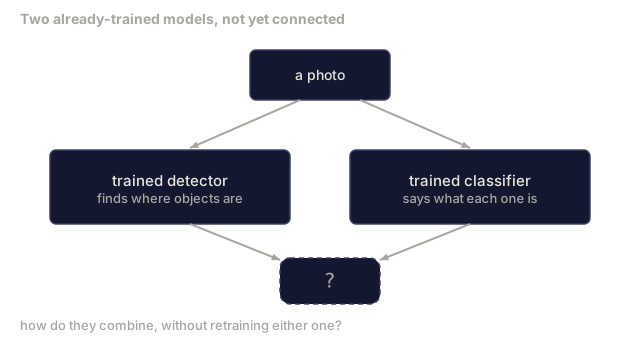
A production vision system is a chain of models and rules held together by data contracts, not one clever model doing everything. Every piece already exists earlier in this phase. This capstone's only job is wiring them into a service that runs end to end.
Learning Objectives
- Design a production vision pipeline that detects objects, classifies them, and emits structured JSON — with every failure path handled
- Plug a detector (Mask R-CNN or YOLO), a classifier (ConvNeXt-Tiny), and a data contract (Pydantic) into one service
- Benchmark the end-to-end pipeline and identify the first bottleneck (usually preprocessing, then the detector)
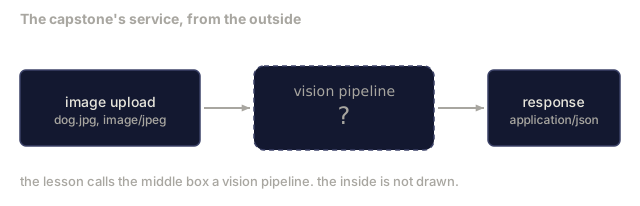
- Ship a minimal FastAPI service that accepts an image upload, runs the pipeline, and returns detections with classifications
The Problem
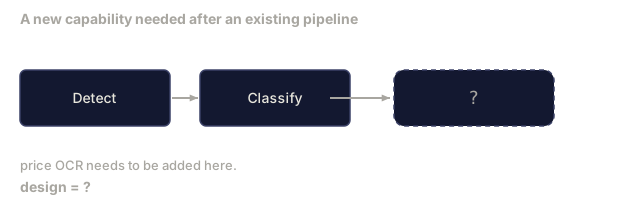
Individual vision models are useful. Vision products are chains of them. A retail shelf audit is a detector plus a product classifier plus a price-OCR pipeline. Autonomous driving chains a 2D detector, a 3D detector, a segmenter, a tracker, and a planner. A medical pre-screen chains a segmenter, a region classifier, and a clinician UI.
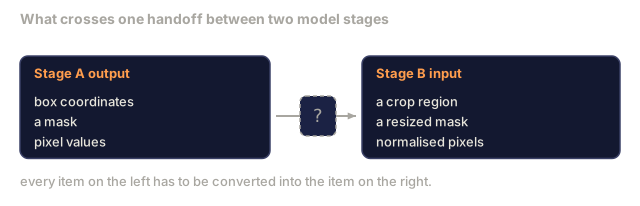
Wiring those chains is what separates an ML prototype from a product. Every interface between models is a new place for bugs: every coordinate transform, every normalisation, every mask resize is a silent-failure candidate. A pipeline is only as strong as its weakest interface.
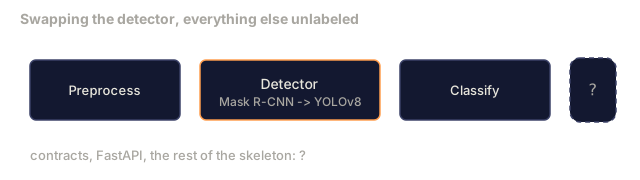
This capstone builds the minimum viable pipeline: detection, classification, structured output, and a serving layer. Everything else in Phase 4 slots into this skeleton. Swap Mask R-CNN for YOLOv8, add an OCR head, add a segmentation branch, add a tracker: the architecture stays stable, only the pieces change.
The Concept
The pipeline
A vision pipeline is an ordered chain of preprocessing, inference, and postprocessing stages, each one connected to the next by a typed interface.

Seven stages in total. The two model stages are the expensive ones; the other five are where the bugs live.
Data contracts with Pydantic
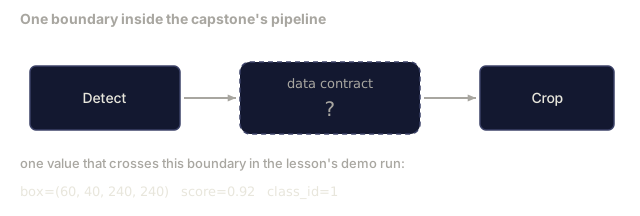
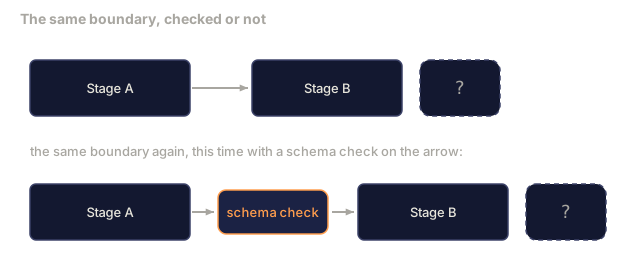
Every model boundary becomes a typed object, so silent failures turn into loud ones.
Detection(
    box: tuple[float, float, float, float],   # (x1, y1, x2, y2), absolute pixels
    score: float,                              # [0, 1]
    class_id: int,                             # from detector's label map
    mask: Optional[list[list[int]]],           # RLE-encoded if present
)

PipelineResult(
    image_id: str,
    detections: list[Detection],
    classifications: list[Classification],
    inference_ms: float,
)
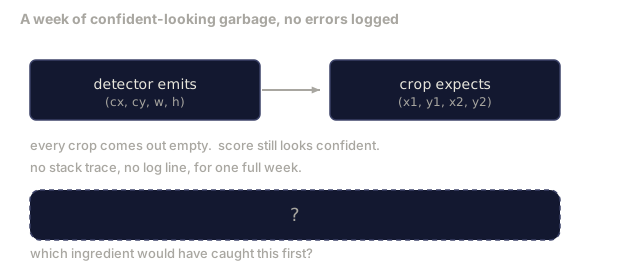
When a detector returns boxes in (cx, cy, w, h) instead of (x1, y1, x2, y2), Pydantic's validation fails at the boundary and you find out immediately instead of debugging a downstream crop that silently returns empty regions.
Where latency goes
Three truths hold in nearly every vision pipeline:
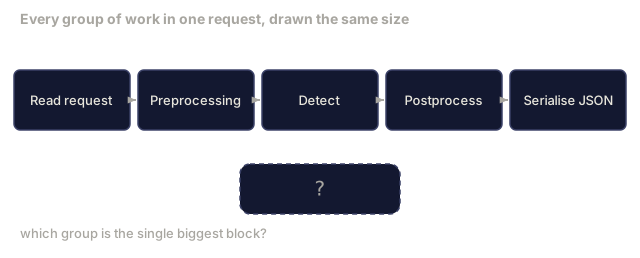
- Preprocessing is often the biggest single block. Decoding JPEGs, converting colour spaces, and resizing are all CPU-bound work, and it's easy to forget they're even part of the budget.
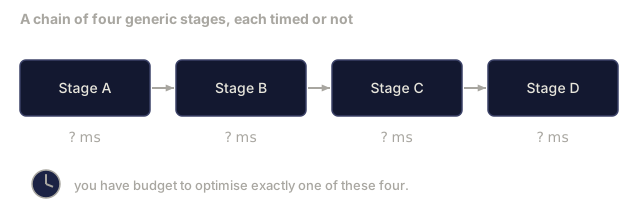
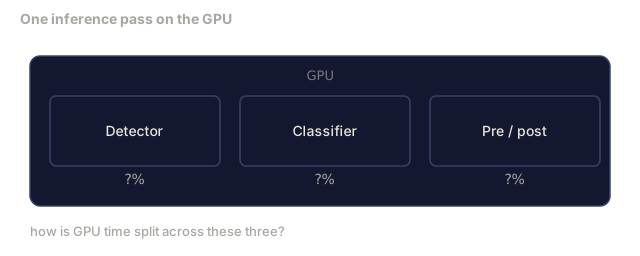
- The detector dominates GPU time. 70-90% of GPU time sits in the detection forward pass.
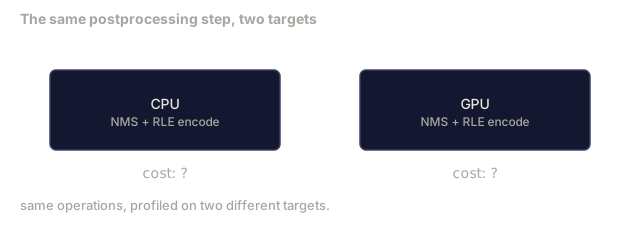
- Postprocessing is cheap on GPU, expensive on CPU. NMS and RLE encode/decode fall in this bucket. Always profile on the actual target.
Knowing that distribution up front is what turns optimisation into a prioritised list instead of a guessing game.
Failure modes
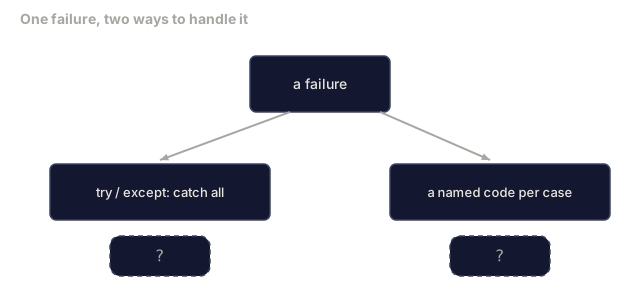
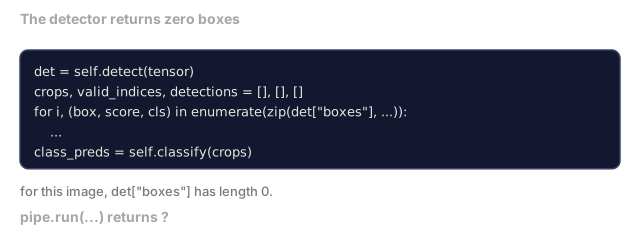
- Empty detections: return an empty list, don't crash. Log it.
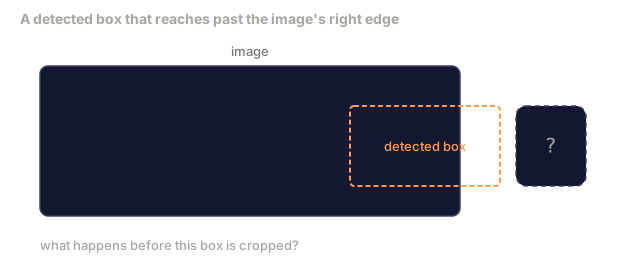
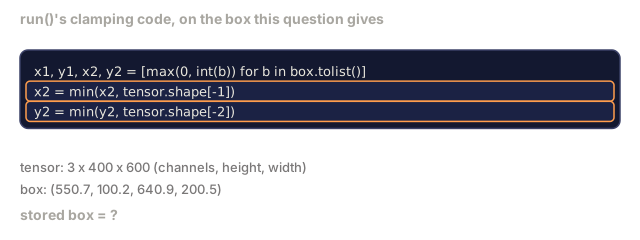
- Out-of-bounds boxes: clamp to image size before cropping.
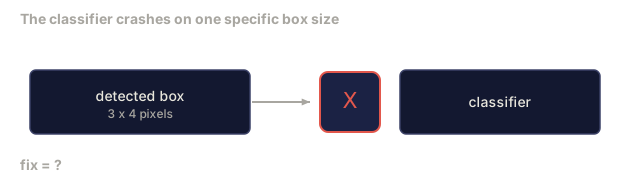
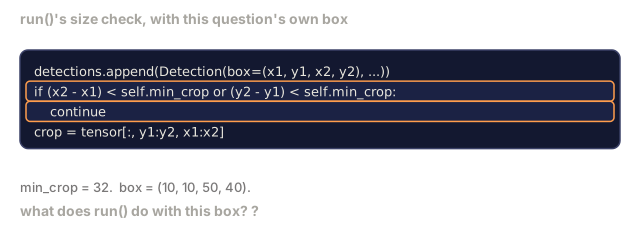
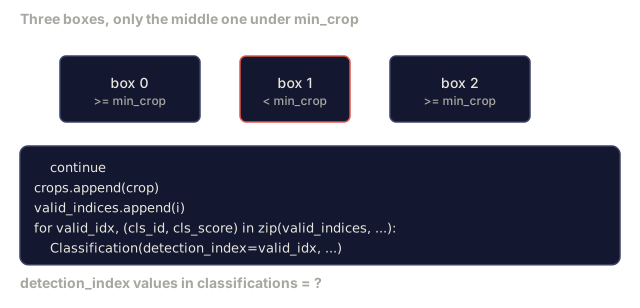
- Tiny crops: skip classification for boxes smaller than the classifier's minimum input.
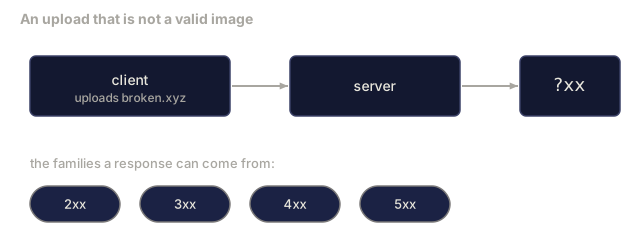
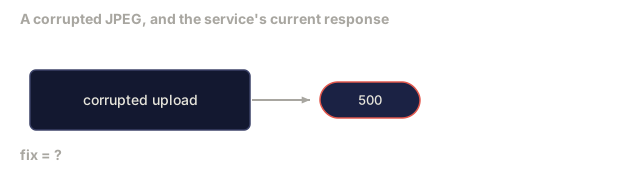
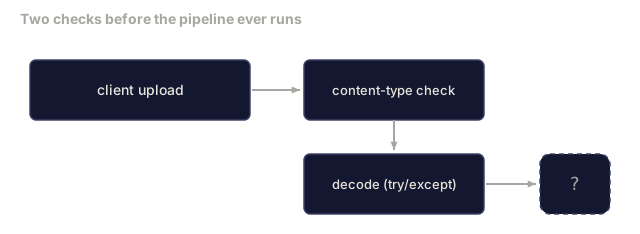
- Corrupt upload: return a 400 with a specific error code, not a 500.
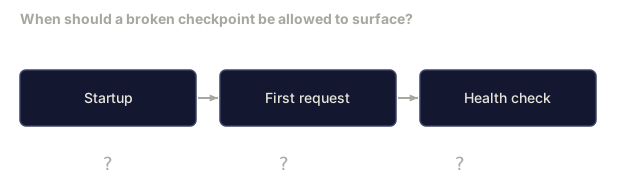
- Model load failure: fail at service startup, not on the first request.
A production pipeline handles each of these without a generic try/except that swallows the failure. Every failure gets a named code and a real response.
Batching
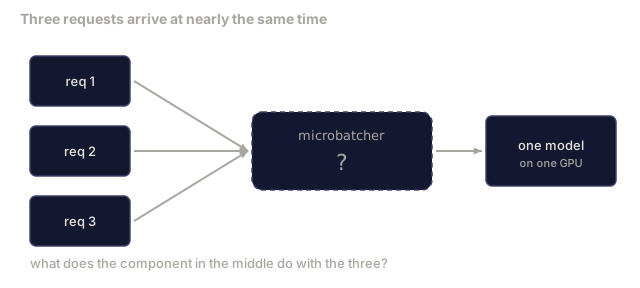
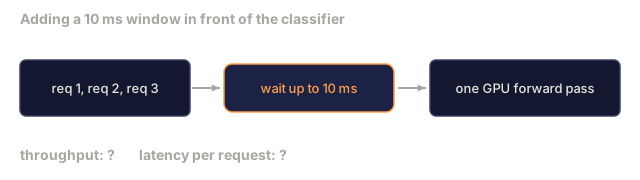
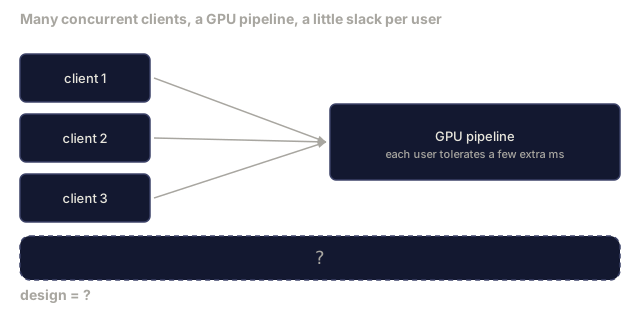
A production service serves multiple clients at once. Batching detections and classifications across requests multiplies throughput; the trade-off is extra latency while a batch fills. A typical setup collects requests for up to 20ms, batches them, processes the batch, and distributes the responses back out. torchserve and triton do this natively. Smaller services with predictable load roll their own micro-batcher.
Build It
Step 1: Data contracts
from pydantic import BaseModel, Field
from typing import List, Optional, Tuple

class Detection(BaseModel):
    box: Tuple[float, float, float, float]
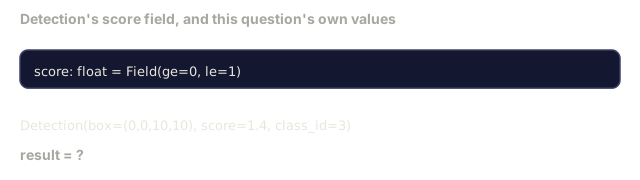
    score: float = Field(ge=0, le=1)
    class_id: int = Field(ge=0)
    mask_rle: Optional[str] = None


class Classification(BaseModel):
    detection_index: int
    class_id: int
    class_name: str
    score: float = Field(ge=0, le=1)


class PipelineResult(BaseModel):
    image_id: str
    detections: List[Detection]
    classifications: List[Classification]
    inference_ms: float
This costs five seconds to type and saves an hour of debugging on any pipeline that sees real traffic.
Step 2: A minimal Pipeline class
import time
import numpy as np
import torch
from PIL import Image

class VisionPipeline:
    def __init__(self, detector, classifier, class_names,
                 device="cpu", min_crop=32):
        self.detector = detector.to(device).eval()
        self.classifier = classifier.to(device).eval()
        self.class_names = class_names
        self.device = device
        self.min_crop = min_crop

    def preprocess(self, image):
        """
        image: PIL.Image or np.ndarray (H, W, 3) uint8
        returns: CHW float tensor on device
        """
        if isinstance(image, Image.Image):
            image = np.asarray(image.convert("RGB"))
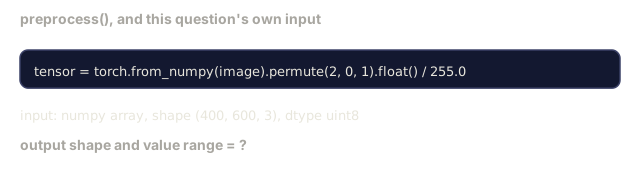
        tensor = torch.from_numpy(image).permute(2, 0, 1).float() / 255.0
        return tensor.to(self.device)

    @torch.no_grad()
    def detect(self, image_tensor):
        return self.detector([image_tensor])[0]

    @torch.no_grad()
    def classify(self, crops):
        if len(crops) == 0:
            return []
        batch = torch.stack(crops).to(self.device)
        logits = self.classifier(batch)
        probs = logits.softmax(-1)
        scores, cls = probs.max(-1)
        return list(zip(cls.tolist(), scores.tolist()))

    def run(self, image, image_id="anonymous"):
        t0 = time.perf_counter()
        tensor = self.preprocess(image)
        det = self.detect(tensor)

        crops = []
        detections = []
        valid_indices = []
        for i, (box, score, cls) in enumerate(zip(det["boxes"], det["scores"], det["labels"])):
            x1, y1, x2, y2 = [max(0, int(b)) for b in box.tolist()]
            x2 = min(x2, tensor.shape[-1])
            y2 = min(y2, tensor.shape[-2])
            detections.append(Detection(
                box=(x1, y1, x2, y2),
                score=float(score),
                class_id=int(cls),
            ))
            if (x2 - x1) < self.min_crop or (y2 - y1) < self.min_crop:
                continue
            crop = tensor[:, y1:y2, x1:x2]
            crop = torch.nn.functional.interpolate(
                crop.unsqueeze(0),
                size=(224, 224),
                mode="bilinear",
                align_corners=False,
            )[0]
            crops.append(crop)
            valid_indices.append(i)

        class_preds = self.classify(crops)

        classifications = []
        for valid_idx, (cls_id, cls_score) in zip(valid_indices, class_preds):
            classifications.append(Classification(
                detection_index=valid_idx,
                class_id=int(cls_id),
                class_name=self.class_names[cls_id],
                score=float(cls_score),
            ))

        return PipelineResult(
            image_id=image_id,
            detections=detections,
            classifications=classifications,
            inference_ms=(time.perf_counter() - t0) * 1000,
        )
Every interface here is typed, and every failure path has a specific handling decision instead of a shrug.
Step 3: Wire a detector and a classifier
from torchvision.models.detection import maskrcnn_resnet50_fpn_v2
from torchvision.models import convnext_tiny

# Use ImageNet-pretrained weights for a realistic pipeline without training
detector = maskrcnn_resnet50_fpn_v2(weights="DEFAULT")
classifier = convnext_tiny(weights="DEFAULT")
class_names = [f"imagenet_class_{i}" for i in range(1000)]

pipe = VisionPipeline(detector, classifier, class_names)

# Smoke test with a synthetic image
test_image = (np.random.rand(400, 600, 3) * 255).astype(np.uint8)
result = pipe.run(test_image, image_id="demo")
print(result.model_dump_json(indent=2)[:500])
Step 4: FastAPI service
from fastapi import FastAPI, UploadFile, HTTPException
from io import BytesIO

app = FastAPI()
pipe = None  # initialised on startup

@app.on_event("startup")
def load():
    global pipe
    detector = maskrcnn_resnet50_fpn_v2(weights="DEFAULT").eval()
    classifier = convnext_tiny(weights="DEFAULT").eval()
    pipe = VisionPipeline(detector, classifier, class_names=[f"c{i}" for i in range(1000)])

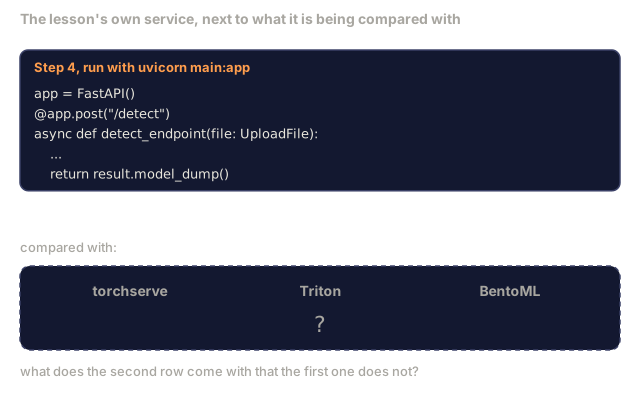
@app.post("/detect")
async def detect_endpoint(file: UploadFile):
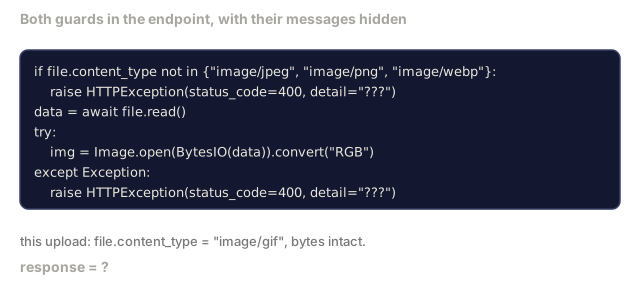
    if file.content_type not in {"image/jpeg", "image/png", "image/webp"}:
        raise HTTPException(status_code=400, detail="unsupported image type")
    data = await file.read()
    try:
        img = Image.open(BytesIO(data)).convert("RGB")
    except Exception:
        raise HTTPException(status_code=400, detail="cannot decode image")
    result = pipe.run(img, image_id=file.filename or "upload")
    return result.model_dump()
Run with uvicorn main:app --host 0.0.0.0 --port 8000. Test with curl -F '[email protected]' http://localhost:8000/detect.
Step 5: Benchmark the pipeline
import time

def benchmark(pipe, num_runs=20, image_size=(400, 600)):
    img = (np.random.rand(*image_size, 3) * 255).astype(np.uint8)
    pipe.run(img)  # warm up

    stages = {"preprocess": [], "detect": [], "classify": [], "total": []}
    for _ in range(num_runs):
        t0 = time.perf_counter()
        tensor = pipe.preprocess(img)
        t1 = time.perf_counter()
        det = pipe.detect(tensor)
        t2 = time.perf_counter()
        crops = []
        for box in det["boxes"]:
            x1, y1, x2, y2 = [max(0, int(b)) for b in box.tolist()]
            x2 = min(x2, tensor.shape[-1])
            y2 = min(y2, tensor.shape[-2])
            if (x2 - x1) >= pipe.min_crop and (y2 - y1) >= pipe.min_crop:
                crop = tensor[:, y1:y2, x1:x2]
                crop = torch.nn.functional.interpolate(
                    crop.unsqueeze(0), size=(224, 224), mode="bilinear", align_corners=False
                )[0]
                crops.append(crop)
        pipe.classify(crops)
        t3 = time.perf_counter()
        stages["preprocess"].append((t1 - t0) * 1000)
        stages["detect"].append((t2 - t1) * 1000)
        stages["classify"].append((t3 - t2) * 1000)
        stages["total"].append((t3 - t0) * 1000)

    for stage, times in stages.items():
        times.sort()
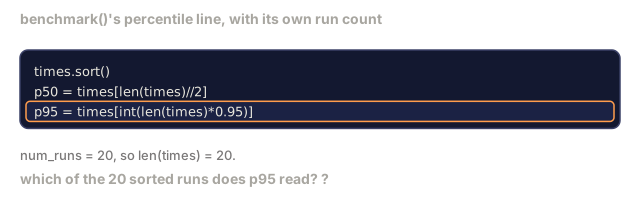
        print(f"{stage:12s}  p50={times[len(times)//2]:7.1f} ms  p95={times[int(len(times)*0.95)]:7.1f} ms")
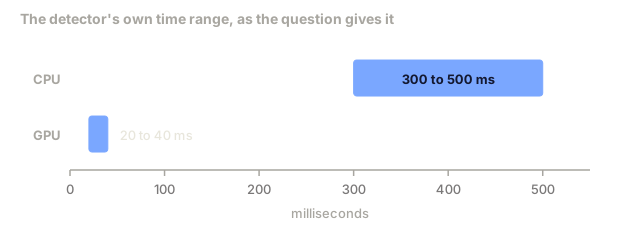
Typical numbers on CPU: preprocess ~3 ms, detect 300-500 ms, classify 20-40 ms, total 350-550 ms. Move to GPU and detect drops to 20-40 ms, at which point preprocessing and classification start eating a much bigger share of the total.
Use It
Production templates converge on the same structure, plus a handful of additions:
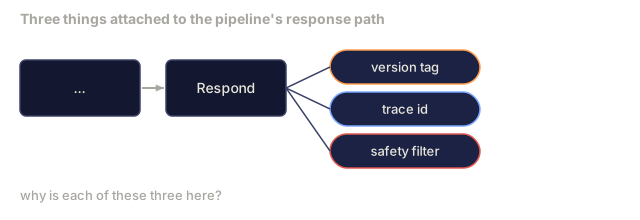
- Model versioning: always log the model name and weights hash in the response.
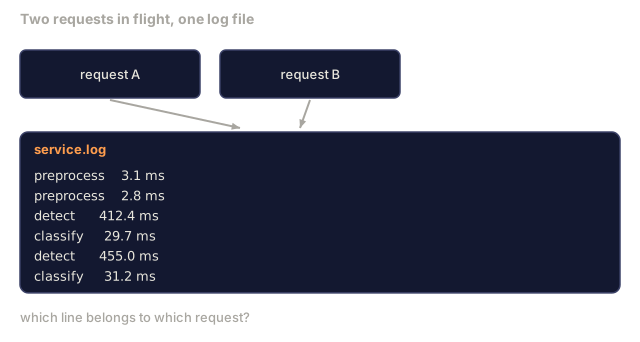
- Per-request trace IDs: log every stage's timing for every request so a slow response can be traced back to the stage that caused it.
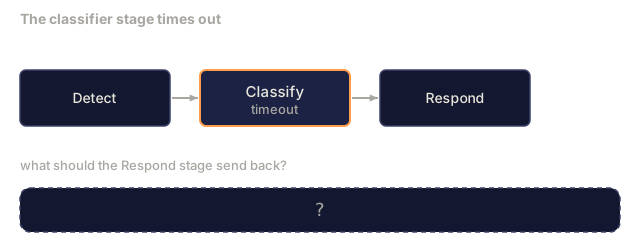
- Fallback path: if the classifier times out, return the detections without classifications instead of failing the whole request.
- Safety filters: NSFW and PII filters run after classification, before the response leaves the service.
- Batch endpoint: a
/detect_batchroute that accepts a list of image URLs for bulk processing.
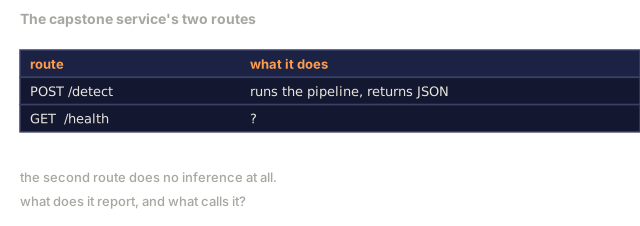
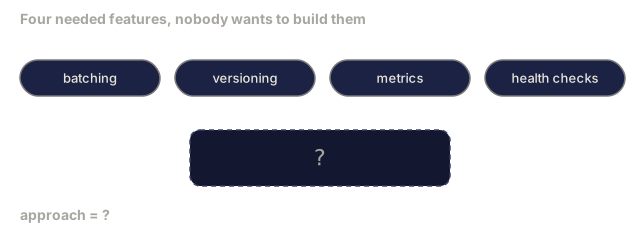
For production serving, torchserve, Triton Inference Server, and BentoML handle batching, versioning, metrics, and health checks out of the box. Running FastAPI directly is fine for a prototype or a small-scale product; it just won't grow those features on its own.
Ship It
This lesson produces:
outputs/prompt-vision-service-shape-reviewer.md: a prompt that reviews a vision service's code for contract and response-shape violations and names the first breaking bug.outputs/skill-pipeline-budget-planner.md: a skill that takes a target latency and throughput and assigns a time budget to every pipeline stage, then flags which stage will miss its budget first.
The part of this lesson that matters most is the one nobody wants to spend time on: the data contract. I've watched a detector ship (cx, cy, w, h) into code that expected (x1, y1, x2, y2), and the bug didn't crash anything — it just quietly cropped every image down to an empty rectangle and returned confident-looking garbage for a week before anyone noticed. There was no stack trace pointing at the real problem, because there was no stack trace at all. That's the specific danger of a vision pipeline: it fails by being wrong, not by breaking.
If you only take one habit from this lesson, take this one. Type every boundary. It costs a few minutes per interface, and it turns next month's silent regression into today's loud, obvious error.
Exercises
- (Easy) Run the pipeline on 10 images from any open dataset. Report the average time per stage and the distribution of detection counts per image.
- (Medium) Add a mask output field to
Detectionand encode it as RLE. Verify the JSON stays under 1MB even for a 10-object image. - (Hard) Add a micro-batcher in front of the classifier: collect crops for up to 10 ms, classify them all in one GPU call, return results per request. Measure the throughput gain at 5 concurrent requests per second and the latency added.
Key Terms
| Term | What people say | What it actually means |
|---|---|---|
| Pipeline | "The system" | An ordered chain of preprocessing, inference, and postprocessing steps with a typed interface between each pair |
| Data contract | "The schema" | Pydantic / dataclass definitions that every stage input and output conforms to; catches integration bugs at the boundary |
| Preprocessing | "Before the model" | Decoding, colour conversion, resizing, normalising; usually the biggest CPU time sink |
| Postprocessing | "After the model" | NMS, mask resize, threshold, RLE encode; cheap on GPU, expensive on CPU |
| Microbatcher | "Collect then forward" | Aggregator that waits a fixed window for multiple requests, runs a single batched forward pass |
| Trace ID | "Request id" | Per-request identifier logged at every stage so slow requests can be traced end-to-end |
| Failure code | "Named error" | Specific error code per failure class instead of generic 500; enables client retry logic |
| Health check | "Readiness probe" | Cheap endpoint that reports whether the service can answer; loadbalancers rely on this |
Further Reading
- Full Stack Deep Learning — Deploying Models: the canonical overview of production ML deployment
- BentoML docs: a serving framework with batching, versioning, and metrics built in
- torchserve docs: PyTorch's official serving library
- NVIDIA Triton Inference Server: high-throughput serving with batching and multi-model support
Code
- main.py (python, 211 lines)